

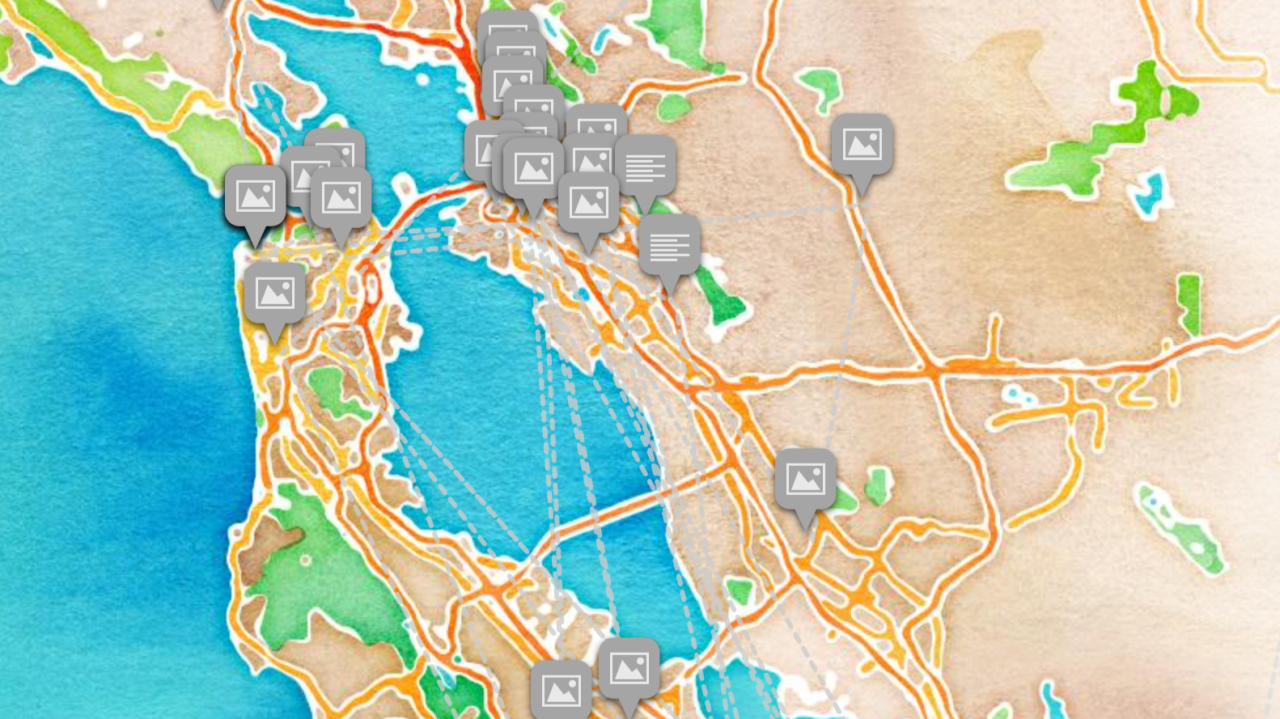
J. launched a project last fall that maps antisemitic incidents in Northern California K-12 schools that are confirmed by official investigations, our reporters or other news outlets.
We were initially able to verify 20 incidents that took place between Oct. 7, 2023, and the map’s launch. Since then, we have added another 17. The map is a work in progress, as we learn of and confirm more incidents.
Related: Explore J.’s interactive map of antisemitic incidents in K-12 schools
The purpose of this project is not to claim that we know of every antisemitic incident at every school across the region. Before the map’s launch, we were sure that there were many incidents we weren’t aware of. So we created an email address — [email protected] — to centralize the tips we receive.
We want to ensure that the map is as complete, accurate and informative as possible, so we invite the public to continue telling us about incidents.
Since we launched this project, we have received many questions about how we update the map. Here is a glimpse into our process:
When we receive a tip, journalistic standards require us to verify it as extensively as we are able.
If a source tells us about an incident that has already been investigated by a school district according to the Uniform Complaint Procedures or has been appealed to the California Department of Education, we ask for copies of the official reports.
If the incident has not yet been investigated by these institutions, we will look into it ourselves and add it to our antisemitism map if and when we nail down the facts. This usually requires speaking with people who were directly involved or finding evidence to verify the claim.
As a first step, we respond to the source to assess several things: their proximity to the incident (whether they or their child experienced it themselves, or whether they heard about it secondhand), what pieces of evidence they can share with us (such as photos, emails and documents), what other sources they can connect us to, and their comfort level as a source of this information.
We also seek comment from the school or district where the alleged incident occurred.
Reporting on incidents involving minors requires particular sensitivity. Oftentimes, sources speak to us on the condition of anonymity to protect their privacy or the privacy of their children.
While we do work with anonymous sources, it’s important that the source is not anonymous to us. We also request an explanation as to why the source is speaking on the condition of anonymity.
In this process, we also discuss how we can refer to a source without using their name so that their credibility on the matter is clear to the reader (for example: “a parent of a student at the school,” “a teacher in the school,” “a district employee,” etc.). When we grant anonymity, it applies to the entire reporting process.
If you have tips or questions about the map or our reporting process, please reach out to us at [email protected].