

The Torah column is supported by a generous donation from Eve Gordon-Ramek in memory of Kenneth Gordon.
Passover
Exodus 33:12-23
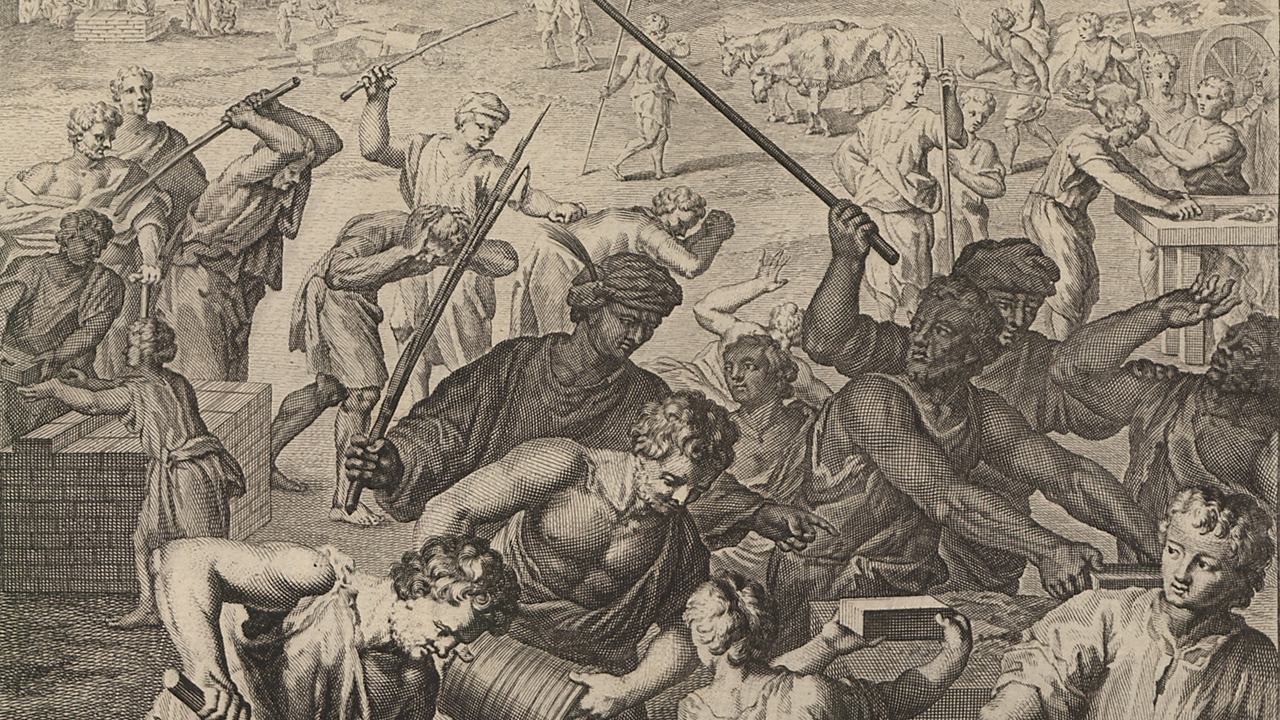
We arrive at a strange moment in the seder. We are telling a story about Egypt. About slavery. About Pharaoh. About brick and mortar. And suddenly, the haggadah interrupts itself:
“In every generation, those who hate the Jewish people rise up to destroy them.”
It feels out of place. We are no longer speaking about Egypt. We are speaking about something much larger, much darker, much more enduring. Why does the haggadah do this?
Not to deepen our sense of tragedy, but to deepen our understanding.
If we confined ourselves to Egypt, we would search for explanations within Egypt. We would say: “The Jews were enslaved because they were foreigners, or poor, or too distinct, or perhaps too successful.” Each explanation has its logic. None survives the test of history.
Antisemitism does not behave like other forms of conflict. It appears under conditions that contradict one another. Jews have been hated when they were poor and when they were prosperous, when they were segregated and when they were integrated, when they were powerless and when they wielded influence. It persists in exile, and it does not vanish even when Jews return to their own land.
The mind searches for a pattern, for a cause that will make sense of it. But the usual categories fail. The explanations contradict one another. The question deepens.
Imagine a doctor trying to understand a mysterious illness. In one city, he studies the afflicted and concludes: it must be the water — the supply is contaminated.
Then the same illness appears elsewhere, where the water is perfectly clean. So he revises his theory. Perhaps it is the climate — the cold, the harshness. But then the illness appears again, in a place warm and gentle, untouched by such extremes.
At that moment, if he is honest, he must change the question. No longer can he ask, “What is different here?” He must ask, “What is the same?” For when every condition changes and yet the phenomenon remains, the cause is not in what varies. It is in what endures.
So too with antisemitism.
If it were the result of poverty, it would vanish with prosperity. If it were the result of separateness, it would dissolve with integration. If it were the result of weakness, it would disappear with strength. But it does not. And so we are compelled to look deeper.
What is it that has remained constant? What is it that the Jewish people have carried with them through every land, under every condition? It is not power. It is not wealth. It is not land. It is something far more dangerous. It is an idea. A vision. A moral insistence that has entered history and refuses to leave.
From the days of Abraham and Sarah, the Jewish people have borne witness to truths that were, and remain, revolutionary:
That there is a God who stands above all human authority.
That no ruler is ultimate.
That every human being carries within them a sacred worth.
That justice is not the invention of kings but the demand of Heaven.
That conscience is not to be silenced, even in the presence of power.
These are not merely articles of faith. They are the foundation of a moral universe.
And precisely because they are so, they have always been unsettling.
Any system that seeks to make itself absolute, any regime that demands unquestioned allegiance, must find these ideas intolerable. They limit power. They challenge authority. They remind rulers that they, too, are judged.
And so, across centuries and civilizations, we see a recurring drama. Different empires, different languages, different doctrines, but a strikingly familiar response.
Pharaoh cannot tolerate it. Haman cannot tolerate it. The Inquisition cannot tolerate it. Hitler and Stalin cannot tolerate it. Nor can the Ayatollahs. Nor can Hamas.
Antisemitism is not random. It is a reaction to something that refuses to bend.
The Passover haggadah teaches us to see this. It takes the story of Egypt and sets it within a larger horizon. It tells us: Do not be misled by appearances. Do not imagine that this began here, or that it will end here. There is a deeper current at work. And so it declares: “In every generation, they rise against us to destroy us.”
Yet the haggadah does not end there. It adds: “But God saves us from their hand.”
Empires have risen with great force and declared themselves eternal. They have marshaled armies, issued decrees, built monuments to their own permanence. And they have passed. The Jewish people have remained.
The seder, therefore, leaves us not with fear, but with perspective. Do not define yourself by those who hate you. Antisemitism is not the essence of the Jewish story. It is the shadow cast by a light that has not gone out. The story is what you carry.
If one must draw meaning from it, let it be this: When the greatest tyrants in history hate you, it is a badge of honor.
To live as a Jew, then, is not merely to remember what has been done to us. It is to continue what has been entrusted to us. To carry forward a faith in justice, in the holiness of mitzvah, in the sacred worth of every human soul.
Hatred may rise. It does not have the final word. For the story of the Jewish people is not the story of those who sought to destroy them. It is the story of a people who endured. And of a truth that still lives.