

The evening of April 27, 1986, began with a call from Jim Schumacher, deputy principal officer of the U.S.consulate in Leningrad where I was serving as vice consul. “Dan,” he said, “I’ve just had a kind of strange call from the Swedish Consulate, regarding radioactivity in our region. Have you heard anything about that?” I had not.
Chernobyl? Today it may be a household name, a meme signifying unmitigated disaster, but at that time my colleagues and I didn’t even know in which Soviet Republic it was located. Nor did we understand how devastating the accident had actually been, releasing more radiation than the atomic bombs dropped on Hiroshima and Nagasaki.
Suddenly, we were getting American tourists out as fast as possible while getting in Soviet children who had been evacuated from Belarus and Ukraine. Within days, we were visited by a delegation from the Environmental Protection Agency bearing iodine tablets, Geiger counters, microrem meters and personal dosimeters. The idea that we’d have to measure our level of “absorbed radiation” was terrifying.
We were advised to avoid fresh produce and milk products, as everything in the region was radioactive. We began receiving free food shipments from abroad to compensate for the lack of available local options. The Jolly Green Giant loomed large in my kitchen. Charlie the Tuna was on regular rotation. Spaghetti-O’s worked for me in second grade, and they were still gettin’ the job done. But the Soviet people weren’t aware of the catastrophe’s magnitude, and they certainly weren’t warned about the irradiated grass that cows were eating and passing along in the form of dairy.
I was invited to dinner at the Kalendaryovs’ place. Mikhail and Evgeniya were middle-aged refuseniks (Jews who were refused permission to emigrate to Israel and then targeted with serious harassment), a couple who had survived the infamous Leningrad Blockade during WWII. Their son, Boris, was also joining us, having returned from a sentence of two years of forced labor for evading conscription to the army. Always generous hosts, they welcomed me with one of my favorite dishes — cheese blintzes slathered in sour cream. I couldn’t touch it.
They had no idea that their blintzes, let alone their sour cream, butter, meat, and God knows what else, might slowly be poisoning them. I could politely pass, but it would be unbelievable that I’d ever turn down my comfort food of choice. I could tell them the truth, drastically reducing their already limited dietary options, making them worry with every swallow, and forcing them to decide whether or not to tell their friends. Or I could stay silent and live with those consequences.
I had to come clean. And I had to do it knowing that I was getting my food via Finland, where the contamination concern was being addressed, while these people had virtually no alternative.
“Would you like to start with four blintzes? We haven’t seen you for a while so I am sure you have missed them!”
“Well,” I stammered, “I’m gonna pass today.”
“Ah, so just three to begin!” They thought I was joking.
“To be honest,” I should have practiced this ahead of time as I had no friggin’ idea how to finish the sentence, “we’ve um, we’ve been advised against consuming Russian milk products.” Evgeniya was still offering me the platter as I tried to explain. “Our government is concerned that the cows may pass along radiation by eating contaminated grass.” If there was a way I could feel any worse, I’d have been hard-pressed to find it. “I’m so sorry. I mean… I’m just… so sorry”
The Kalendaryovs looked puzzled. “So you’re saying we should not eat this either?”
“I really can’t say. And I know how lucky I am that I can get food from the West.” Nobody made eye contact. We simply sat in excruciating silence until Evgeniya picked up the platter of homemade blintzes, took it back to the kitchen, and threw it all away.
This month marks 40 years since Chernobyl. The debacle had powerful political consequences. It deepened the alienation of Ukrainians who felt that they had again been subjected to a disproportionate degree of pain from decisions made in Moscow. At a time when Soviet leader Mikhail Gorbachev was fervently trying to burnish the reputation of the USSR as a responsible player on the global stage, the accident, and especially the repeated lies from the Soviet government, undid much of his work.
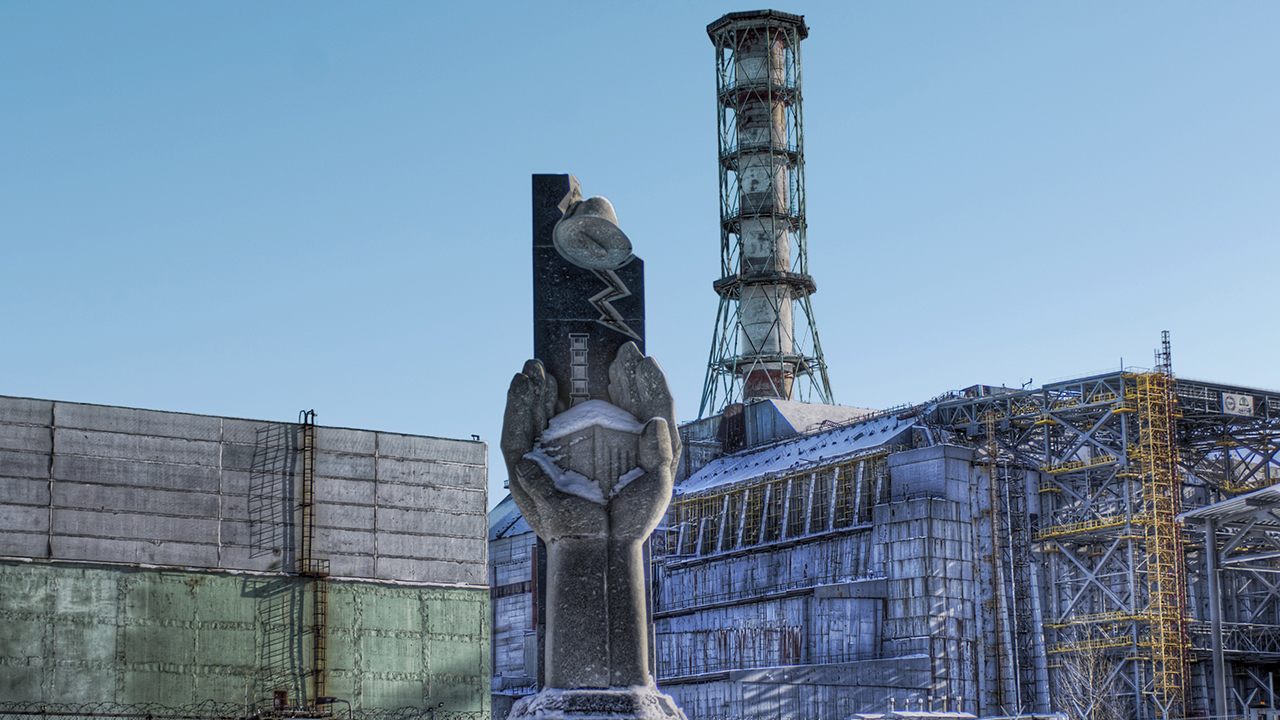
The rusting hulk of the former plant and the entombed reactor are an apt metaphor for the fate of the USSR. Perhaps for this reason, Ukrainian President Volodymyr Zelensky had planned to someday enable tours to show their heirs the enormity of the crime committed in the name of saving face. But whether or not Putin’s brazen invasion of Ukraine in 2022 actually prevails, the world has already been confronted with a far greater disaster than Chernobyl.
The Center for Strategic and International Studies assesses that Ukraine has suffered 600,000 total casualties in the war, including approximately 100,000 to 140,000 dead as of December 2025. These numbers represent a 1-in-16 ratio of deaths, injuries and missing cases for men between 18 and 49. The United Nations reports that 15,000 Ukrainian civilians, 3,000 of them children, have also been killed. There’s more: The Humanitarian Research Lab at the Yale School of Public Health concludes that Ukrainians have endured the kidnapping of approximately 35,000 of their children, who have disappeared into Putin’s Russia for “reeducation” and coerced adoption.
Lives have been obliterated, generations of Ukrainians and Russians have been traumatized, and the rest of us are only beginning to fathom the peril in how geo-politics have shifted — all thanks to one dead-eyed dictator.
As Russia’s brutal attack on Ukraine underscores, the USSR may be dead and buried, but the arrogance and deception that defined it continue to thrive.