
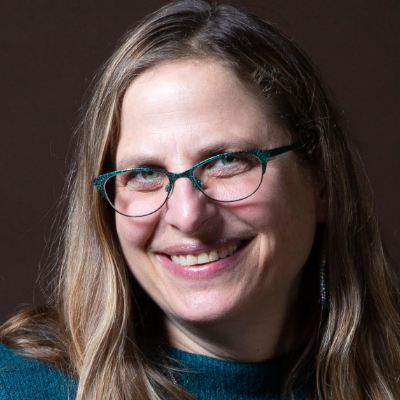
Rabbi Judah Dardik does not want to be known as Rabbi Howard Zack’s replacement; he prefers the word “successor.”
“I can’t replace him,” said the 26-year-old Dardik. “But this is a shul that can really love a rabbi, and assuming I can get them to do that, it means they have the capacity for it.”
The shul he’s referring to is Oakland’s Beth Jacob Congregation, where Dardik will become spiritual leader on Sunday.
Dardik, who comes from Tenafly, N.J., was ordained from Yeshiva University in New York in June. He also graduated with a master’s degree in Jewish education.
He will be joined by his wife, Naomi, 24, and their 1-year-old son, Aharon Akiba.
Naomi Dardik, née Fichtenberg, is originally from Berkeley; her parents were married at Congregation Beth Israel. She will teach at the new Jewish Community High School of the Bay in Tiburon.
Both Dardiks are equally excited about their move, Naomi because she’s missed the Bay Area, and Judah because he loves to go camping and hiking. But even more than those reasons, it was the atmosphere of Beth Jacob itself that propelled them to put their plans to move to Israel on hold.
A congregation “had to be really perfect for us, and if it is, we’ll go for it. Anything short of that,” he said, and they would have made aliyah.
When they visited Beth Jacob, they loved what they saw, and felt it was, indeed, really perfect. “We were looking for a congregation that was into education and youth education, and we found a lot of that there,” Dardik said.
They also found the congregation especially gracious and warm. When they went to be interviewed, Dardik said, “we expected to be tested and treated in a tough manner. But they were all open arms and welcoming.”
And perhaps most of all, they preferred a congregation in which members have varying levels of observance. Everywhere else they had visited, the membership was strictly Orthodox.
Dardik grew up in a Jewish “mixed marriage.” His father was raised observant, his mother less so and they met somewhere in the middle. They sent their children to Jewish day schools and attended a modern Orthodox synagogue, but they drove there on Shabbat.
Dardik became fully observant as he got older. “The guiding principal in my house was, ‘This is what we do, but you’ll choose what you want when you grow up,'” he said.
He described his own increased observance as coming “from a certain intuitive spiritual sense.”
When he began entertaining the idea of becoming a rabbi, he wasn’t yet fully observant. So he went to seek counsel from his congregation’s rabbi, Rabbi Shmuel Goldin, who has emerged as an Orthodox leader who supports pluralism.
“As an Orthodox rabbi, he couldn’t tell me it was OK to drive on Shabbos, but he told me the most important thing is what direction you’re going, not where you are.”
It’s an open-minded approach Dardik has adopted himself.
For example, in a non-Orthodox synagogue, he said, “People come to shul not because they have to be there. It’s because they woke up that morning and thought, ‘I want to go to shul,’ which is totally cool.”
Dardik’s journey to the rabbinate evolved from an interest in teaching and psychology; he realized that in being a rabbi, he could combine both those interests. While at first having a pulpit did not appeal to him, later he changed his mind.
“Being a congregational rabbi is walking through people’s lives,” he said. “You get to be with them for good times and bad times, for the births, bar mitzvahs and weddings, but also in sickness and death. It’s really far richer than teaching, as you get to be with people not just in a classroom for a year but throughout their lives. That’s amazing.”
Zack spent a lot of time with Dardik before he left, imparting the knowledge about the inner workings of the synagogue. But Dardik is still a little daunted by the enormous shoes his predecessor left for him to fill.
“Nobody wants to follow the funniest comedy act in the group,” said Dardik. “But people who are dealing with a certain amount of pain over Rabbi Zack leaving opened up and welcomed us. I’m paying more attention to the fact that they really can embrace a rabbi, than that they are losing a rabbi they love.”