
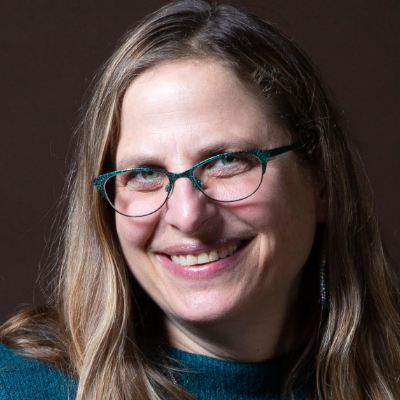
Rose Esther Fox had a tumultuous childhood in a poor New York neighborhood, but for years, it wasn’t something she talked about.
“I’m sure I got that from my upbringing,” she said. “You carry your burden. I never shared anything with anyone else, we lived isolated lives, with a mistrust of the outside. Women just didn’t have that kind of permission.”
With her new memoir “A Rose Grew in Brooklyn,” the El Cerrito therapist, 78, has given herself permission.
While Fox had written poetry before, as well as a dissertation for her doctorate, she had never tried her hand at autobiographical nonfiction. “In those days it was more about survival than being creative,” she said. She began writing about her life in a memoir class in 1995, motivated by the desire that her children come to know her better.
Nevertheless, “I was self-conscious about trying.”
Once she began writing though, “I was very surprised when the first story seemed to write itself.”
After putting that first memory down on paper, others sprang forth. “I wrote every single day,” she said. “I found it very easy.” Fox had not repressed these memories; although she had not spoken much of them over the years, they were just below the surface.
Fox grew up the child of poor immigrants in the Brownsville section of Brooklyn, during the Great Depression. Her family was Orthodox, but to Fox, it felt devoid of spirituality; it was about the fear of God and what she was forbidden to do.
“I remember wanting to learn Hebrew, but a girl wasn’t encouraged,” she said. She did go to class a few times, but after she transposed English to Hebrew letters, the rabbi humiliated her and she never returned.
She had panic disorder as a child and suffered neglect at the hands of her mother.
Fox came to forgive her mother, though, because even as a child, she realized that her mother was extremely unhappy.
“All along I knew why she was the way she was,” said Fox. “I felt sorry for her because she worked so hard for so little reward.”
Fox can recall something ominous taking place in the kitchen when she was about 12; it was one of at least two abortions her mother had on the kitchen table. After an especially traumatic miscarriage, a doctor gave Fox’s mother a hysterectomy without her permission. She was 36.
“Part of the oppression, of course, in those days was that there was absolutely no TV, no way that information ever got to anybody,” said Fox. “There was no therapy, no self-help books. My mother was illiterate until she was 60. There was no way she could explore another point of view.”
Even when Fox became an adult, her relationship with her mother remained difficult. For example, her mother did not approve of Fox going to work after she had children. Fox did it anyway.
Later, Fox’s mother moved in with her daughter’s family after her husband died. As soon as her mother remarried and moved out, Fox stopped keeping a kosher home.
“She was appalled,” said Fox. “We lived in a Jewish neighborhood and I used to hang my clothes on Shabbos, and my clothesline was attached to a rabbi’s window. I had to get my cleaning done, but she was horrified.” Finally, however, she and her mother came to a resolution.
“I was in my 40s, and it was resolved in an unspoken way,” she said. “Our relationship just changed and grew closer. Once I was a mother myself, there was an affinity that was felt and understood but not spoken.”
Fox underwent years of therapy, which helped her immensely. In conversation, she reveals that she has done her real living in the latter years of her life. Never having gone to college, Fox took courses over the years but became a full-time student in her 50s, and then went on to get a doctorate.
“I was 65 when I got my Ph.D. and it was one of the hardest things I ever did,” she said. “I was post-menopausal and didn’t have the memory I used to have.”
And after divorcing her husband, Fox married the man she considers her soul mate, a fellow therapist, who died last May.
“Our relationship was a lot about the two children that found each other,” she said. “We were so engaged and so accepting that we could talk about anything. We never got tired talking about our backgrounds.” But tragedy also struck the mother of two. Her son died unexpectedly in 1996.
This turn of events caused her to embrace Judaism once again, becoming an adult bat mitzvah two years ago at Temple Beth Hillel in Richmond. “It was a fabulous experience,” she said, “with touching the Torah and reading from it, I had come full circle. Here it was proactive and inclusive.”
Fox wrote her memoir in a child’s voice, to give a voice to that little girl who never had one.
And writing in her later years gave her the benefit of hindsight. “Wisdom does come with age,” she said. “In looking back, there’s a whole different point of view, when you can connect the dots and see the value of the struggles and how it formed your character. Some of the gifts didn’t seem like gifts at the time.”
She continued, “The most valuable, important thing you can do is honor your own experiences.”
Rose Esther Fox will read from her memoir at 7:30 p.m. Monday, and at noon Monday, March 4 at Berkeley Richmond Jewish Community Center, 1414 Walnut St., Berkeley. Information: (510) 848-0237. She also will read at 10:30 a.m. Sunday, March 17 at Lehrhaus Judaica 2736 Bancroft Way, Berkeley. Information: (510) 845-6420.
“A Rose Grew in Brooklyn” by Rose Esther Fox (304 pages, Manto Press, $15.95).