
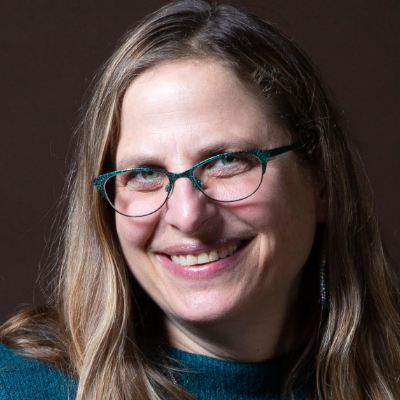
In all of his 22 years living in Israel, this is the worst it’s ever been.
That’s what Herb Keinon, the diplomatic correspondent for The Jerusalem Post had to say a few hours after learning about the bomb last week that killed seven at Hebrew University.
“I’ve been here through the Lebanon War, the first intifada and the Gulf War, but then you didn’t get this sense of daily constant fear you have now,” said Keinon, who is originally from Denver.
“I have four kids, and the idea of death is always with us, right here,” he said, slapping his forehead for emphasis. “You’re constantly thinking about dying in some gruesome attack.”
Keinon described this daily fear to a group of about 200 who came July 31, the day of the bombing, to hear him at San Francisco’s Congregation Emanu-El.
Keinon lives in Ma’aleh Adumim on the West Bank. With a population of 30,000, it’s the largest of all the settlements, and is widely considered a suburb of Jerusalem. In the Camp David accords, it was considered part of the 5 percent of the West Bank that would have been incorporated into Israel in exchange for 5 percent of the Negev.
Though Keinon wears the knitted kippah of many Orthodox settlers, he said he did not move there for ideological reasons.
Of the 230,000 settlers, he believes 60,000 belong to the hard-core ideological right, but most are like him, he said, people who moved there in search of more affordable housing.
But for those who think the settlements are the sticking point in any agreement with the Palestinians, Keinon strongly disagreed.
“Unfortunately, what’s happened in America is that people look at it as if we’d just remove the settlements, we’d live in peace. If the Israeli public believed removing the settlements would bring peace, they would do it, they would support removing them as they did in Camp David.”
But two years of the intifada and continuous terrorist attacks have changed that. “The public doesn’t buy that anymore,” he said. “The last two years of being kicked in the teeth kicks down the notion that settlements are the problem.”
Keinon believes it was the Palestinian right of return that was the sticking point, meaning the Arabs are still holding out for a Middle East with no Jewish state.
And while reservations about “Arik the Bulldozer” and “the architect of Sabra and Shatila” were heard before Ariel Sharon was elected, the country is remarkably unified behind him now.
“That he is getting these kinds of numbers across the board shows how far the country has traveled,” said Keinon, predicting that the prime minister will be re-elected at the end of next year. “Nobody will touch Sharon.”
According to Keinon, fear and insecurity are what will motivate those in the voting booth.
“People are not talking about peace; they are talking about wanting to send their kids on the bus and not worrying.”
Keinon believes that Sharon is handling the situation as well as he can, given the circumstances. And while the economy could hurt him, Keinon said elections in Israel have not generally been focused on the economy.
“At a time of crisis, at a time of war, it’s hard for me to believe that the economy will be something that will bring him down.”
As bad as things are now — and they are bad, Keinon kept emphasizing — leaving Israel to return to the States is not an option for him.
“Everyone who sits in that tension thinks about it, but one thing that speaks well of Israeli society is the lack of people leaving,” he said. “We’ve all been pleasantly surprised by the resilience of the Israelis.”
Summarizing his commitment, he said, “I moved to Israel knowing where I was going. I moved out of the firm belief that the Jews need a Jewish state.” The current situation is proof that the state of Israel is no longer a given, he added. “If there are no Jews in the Jewish state, there won’t be one. This has only strengthened my Zionist resolve.”