
Congregation Beth Sholom has hired its first full-time rabbi, capping a transitional period during which it affiliated with the Reform movement and gained a new vision of the future.
Phil Fram, president of the 50-year-old Napa congregation, said that after conducting a series of focus groups within the membership, “we realized what we wanted more than anything else was someone to work with us to build a vision of what we wanted — to move from a family-centered to a rabbinical-centered congregation.” Beth Sholom has been using the part-time services of Rabbi David White for the last eight years.
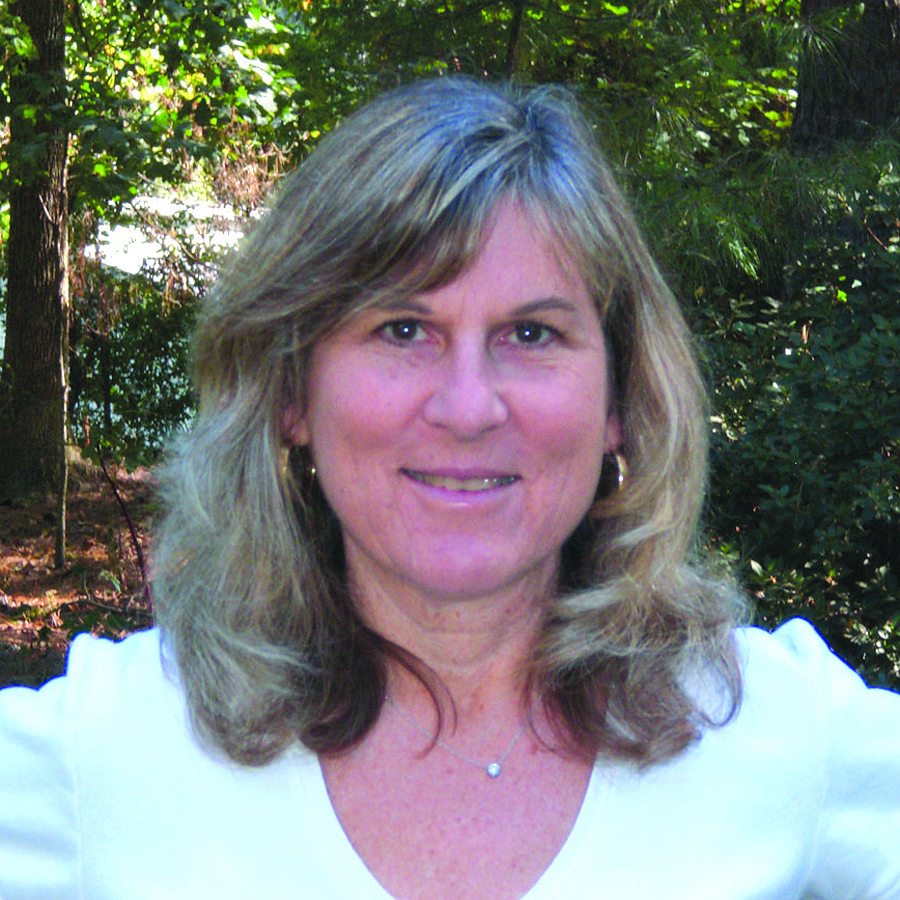
The new spiritual leader, who will come aboard in August, is a 42-year-old architect-turned-rabbi currently serving a Houston-area Reform congregation.
Rabbi James Moss Brandt says the move to Napa will be “in many ways, a homecoming.” He grew up in West Los Angeles and “developed a love for Northern California” as a student at U.C. Berkeley, where he studied environmental design. With an interest in architecture and community development, he went on to get his master’s in architecture at MIT in Cambridge, Mass., and in 1986, began working as an architect in Boston.
His focus, however, began to shift after a small congregation engaged him to restore its historic synagogue and build a child-care center. As a result of the strong relationship that developed between Brandt and the congregation, he was offered a newly created post of executive director. Brandt accepted, thinking he would “serve the Jewish community a few years” before returning to architecture.
Those plans never materialized. “In a short time I came to appreciate the unique satisfaction that I received working for the Jewish community.”
Before his 1998 ordination at Hebrew Union College in Cincinnati, Brandt worked as a senior campaign associate for the Jewish Federation of Greater Los Angeles and then as a student counselor at a high school in Hod Ha’sharon, Israel. It was the latter experience — specifically, “working with young people” in the Jewish community, “that called me to the rabbinate,” he explained.
As a rabbi at Congregation Beth Shalom since 1998 in The Woodlands, Texas, Brandt said he is “particularly proud” of a program that he founded with his congregation. Called Gesher Houston, it serves eighth- and ninth-grade religious-school students and combines formal and informal education. A collaboration among his and other Houston-area congregations and the Jewish Federation of Greater Houston, Gesher Houston appears to be sustaining teens’ interests as Jews. “Currently,” said Brandt, “95 percent of our hig school students remained engaged in our education program through the 12th grade.”
During his tenure the Texas congregation’s membership has doubled.
Brandt’s ability to implement change — without ruffling feathers — is exactly
what Napa’s Beth Sholom needs, according to Fram. Looking at Brandt’s accomplishments as what Napa’s Beth Sholom needs, according to Fram. Looking at Brandt’s accomplishments as executive director of the Cambridge congregation and in his current position reveals “he has a history of being able to make change for the better,” said Fram. “Also, we needed someone who could work well with younger and older members” of the congregation’s 140 families.
He credits White with presiding faithfully at lifecycle events and holiday services, helping with adult education and Sunday school, and doing an outstanding job of guiding the congregation through the yearlong process of joining the Reform stream.
In January, nearly the entire membership voted overwhelmingly to approve Brandt’s nomination, culminating a six-month national search.
The vote capped a period of soul-searching for Beth Sholom, which lost some members who started their own, unaffiliated congregation last year. The seeds of change were planted a few years ago, Fram said, when founding member George Rosenberg — “the core of the congregation” — died. “We realized that we needed to do something different to continue.”
During discussions about bringing aboard a full-time spiritual leader, he said, “When we got down to it, our congregation didn’t want the more learned, studied, intellectual rabbi. They didn’t want just the greatest speaker from the pulpit…
“They wanted a mensch, someone who could work on a one-on-one basis and bring us to the next level. We’re beginning to build on our history, into a new paradigm.”
Hiring a full-time rabbi requires a huge financial commitment, but Fram is heartened thus far by pledges that should ensure solid footing for the near future.
As for Brandt, who will be moving to the area with wife Lauren, 5-year-old daughter Noa and dog Berkeley, he is excited by the prospects ahead. He believes the congregation “is poised to become a vibrant religious, education and cultural center for the Jewish community of Napa Valley,” adding that he hopes to work with the synagogue’s leadership “to develop a variety of programs to reach out” to unaffiliated Jews.
That welcoming attitude typifies Brandt’s approach to Judaism. He grew up attending a Conservative congregation near his Beverlywood home. “I became a Reform Jew as an adult,” he said, explaining that he was initially drawn to the movement by its “ongoing commitment to inclusion and social justice.”