
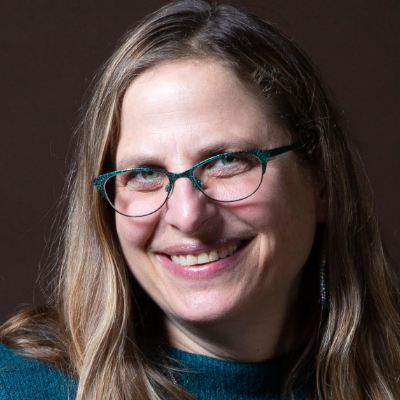
When Rosanne Levitt was growing up in Galveston, Texas, she hardly knew what intermarriage was.
For her generation, it was pretty much known that “you will marry someone Jewish and that’s it. Who ever heard of interfaith marriages?” she asked.
What a difference a generation and a change of location makes.
By the time the 66-year-old Levitt’s Bay Area-raised sons married non-Jewish women, it was hardly surprising.
“My work prepared me for my life,” she said. “It gave me an understanding of the issues they face.”
After 18 years of running Interfaith Connection, Levitt has retired, though the San Mateo resident prefers to call it a “transition” to the next stage of her life. She’ll still lead discussion groups and act as a consultant. And she’s also been asked to be a consultant to Interfaithfamily.com, a Web zine for interfaith families. A search is on to fill her half-time position.
Here in the Bay Area, intermarriage first appeared on the Jewish community’s agenda in the mid-’80s. That was when a task force was convened by the S.F.-based Jewish Community Federation to examine the issue. Some figures have quoted the local intermarriage rate as approaching 70 percent, among the highest in the country.
In response, the Interfaith Connection was launched in 1986. Levitt, who has a degree in counseling, was looking for a part-time job and was hired to head it.
The program started as a joint project of the Jewish Community Center of San Francisco and Jewish Family and Children’s Services. The Jewish Community Endowment Fund originally planned to fund the program for just three years, but eventually made it permanent. Later the Koret Foundation followed suit.
But not without controversy. There were some — mostly Reform Jews — who believed that intermarriage was so commonplace, they questioned whether such a program was even needed.
“Jews have historically been very integrated into the San Francisco community,” Levitt explained. “Even going back to the Gold Rush, Jews were accepted here much more than in other parts of the country.”
And then there were a few Orthodox rabbis who feared the program would encourage intermarriage.
Levitt, of course, disagrees with that take. “We’re not creating intermarriage. It’s a reality, and we’re here to help couples learn about the Jewish community and welcome them in.”
So she went from having practically no experience with the topic to becoming a pioneer in the field. “At the time I was hired, no one had experience with it,” she said. “There were very few programs in the United States. There were maybe three people I could call and talk about it, and I was hired to develop the program. It was kind of a lonely path.”
Levitt said she saw a great change in how intermarriage is perceived by the Jewish community. It used to be that parents felt embarrassed, as if they had failed if their children married non-Jews.
“Now it’s hard to find a family without someone who has intermarried,” she said. “If it’s not your children, it’s within your extended family.”
While the Interfaith Connection offers panels on topics of interest to intermarried couples, it is perhaps best known for its discussion groups.
Levitt stressed that she was not there to make judgments or try to convince the couple that the Jewish path is the right one.
Because of Levitt’s neutrality, “you could have a rational discussion about something very emotional,” said Ginger Roehrig, who attended the discussion series for interfaith couples with her Jewish partner, Drew Chavinson, before they got married.
“She did a great job of making us feel it was a safe place to discuss our feelings, not only with our partner but with six couples we didn’t know.”
Rabbi Helen Cohn of Congregation Emanu-El had many opportunities to work with Levitt over the years. “She was so open and nonjudgmental, and willing to talk to anyone, regardless of their circumstances.”
While intermarriage is much more common these days, Cohn said, providing an entrée into the Jewish community for those Jewish couples who want one is still of utmost importance.