
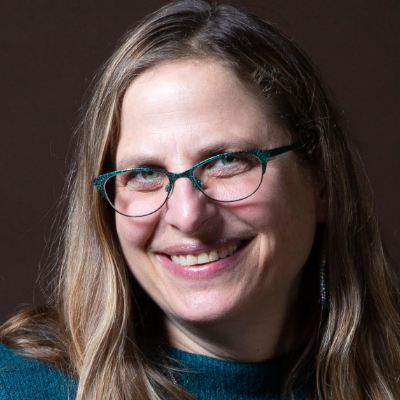
Up until now, Marcus W. Feldman was known for his expertise in biology. But the Stanford University biology professor is hoping his latest scientific efforts will also help advance peace in the Middle East.
Feldman has been chairing the scientific committee for the new Bridging the Rift Center, a collaborative scientific research center to promote the exchange of ideas and knowledge between Israeli and Jordanian scientists on the border of the two countries.
“I want to see hamatzav improved so that everybody in the area can reach a higher standard, of not just living, but security and comfort, too,” said Feldman, referring to “the situation,” as the Israelis call the intifada. “If there’s a little bit that we academics can do to contribute to it, I’m willing to go a long way.”
That means Feldman could be going to the Middle East at least three times a year, plus additional trips to New York. He just returned from his 33rd trip to Israel last week, during which he attended the groundbreaking ceremonies for the new center.
The two countries have each donated 150 acres of land between Eilat and the Dead Sea for the educational and research center, on the very spot where Jordan and Israel signed its peace treaty a decade ago.
A cooperative project between Stanford and Cornell universities, the center — funded by private businessmen based in New York, Israel and Jordan — is the first institution of its kind in the Middle East.
“This patch of land has the border running straight down the middle, and it will have the status of a free education zone, where the border is removed,” said Feldman.
The ceremonies around the groundbreaking brought a small delegation from Stanford, Feldman among them, along with Israeli Prime Minister Ariel Sharon, Jordanian King Abdullah, and a number of ministers from both Mideast countries.
The idea for the center actually came from a farmer in the fertile region of Israel known as the Arava.
“It’s one of the most highly productive agricultural areas,” said Feldman, who is also director of the university’s Morrison Institute for Population and Resource Studies. “Even though deep in the desert, it produces 60 percent of exported vegetables from Israel, using high-tech agriculture.”
The center was originally envisioned as a place that would draw scholars and students from Egypt and the Palestinian territories as well. In fact, the current situation between Israel and the Palestinians was one reason plans for the center were delayed.
“[This farmer] had the idea that it would be very good to have some contacts with people just across the border,” said Feldman.
Once New York-based Israeli businessman Mati Kochavi heard the idea, he ran with it, getting both Cornell and Stanford involved. He is the CEO of the Bridging the Rift foundation.
Several committees have been meeting in the last two years about the multimillion-dollar project.
The idea is that students will be enrolled at either Stanford or Cornell, and conduct their research at the center.
“The general areas of study will be those biological subjects connected with the Dead Sea and desert environment,” said Feldman, adding that they will encompass ecology and physiology among others.
Students will begin studying there as soon as the next academic year, said the Australian-born Feldman, who has been on the Stanford faculty since 1971, and belongs to Palo Alto’s Congregation Kol Emeth.
And while Feldman hopes for some real scientific breakthroughs, an added benefit would be if relations improve between Israel and Jordan, too.
“By arranging these collaborations, the science itself can transform what has been a cold peace between Jordan and Israel into something a bit warmer,” he said. “I think it’s extremely farsighted of King Abdullah and Prime Minister Sharon to see the potential for science to have this effect.”