
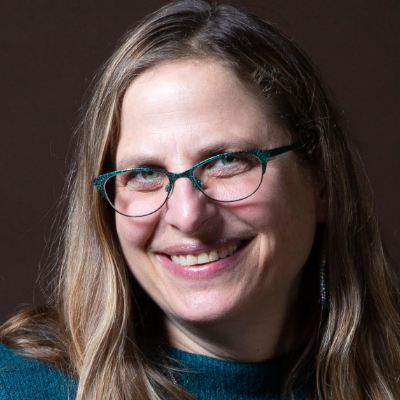
For some 40 years, Marthe Cohn didn’t talk about her past.
She didn’t talk about how she was able to pass as a German because of her blond hair and impeccable language skills. She didn’t talk about how her family helped Jews on the run. She didn’t talk about her own family’s harrowing escape from occupied to non-occupied France. She didn’t talk about the sister killed at Auschwitz. And she didn’t talk about how she posed as a German nurse, asking for information from the Nazis that she would then turn over to help the Allies.
But since the French government recognized her four years ago for her wartime efforts, she’s spoken about her experiences dozens of times. And she will yet again on Tuesday, April 20, at Oakland’s Temple Sinai, for Alameda County’s observance of Yom HaShoah, or Holocaust Memorial Day.
For Cohn, who will be 84 by the time she arrives in the Bay Area, it’s been quite overwhelming at this point in her life to receive such recognition for what happened so long ago.
It all started in 2000, when the French government awarded Cohn with its Medaille Militaire, France’s highest military honor.
“The medal was given to me in Los Angeles by the French Consulate,” said Cohn, speaking from her home in Palos Verdes. “That day was amazing because I never expected any publicity like that, none at all. I wasn’t even sure the L.A. Times would write an article, even though I was interviewed twice.”
But when she was awakened up at 7 a.m. that day by a radio reporter, she knew the L.A. Times had run the story, and things kind of snowballed from there.
Later that day, all of Los Angeles’ media were at the ceremony. Then her house was overrun with reporters.
“It was an absolute madhouse, unbelievable,” she said, in a heavy French accent. “For over 40 years I never talked about it.”
Cohn was born in 1920 in the Alsace-Lorraine region of France, which, at times, was part of Germany. While her parents’ first language was German, she and her siblings grew up equally fluent in French.
During the war, Cohn posed as a German nurse, trying to obtain information about a fictional fiancé. In asking the right questions, she would learn about troop movements, and then be able to alert the Allies.
Though Cohn has had time to heal from her past, she said she speaks about it for a number of reasons — one of which is to prove that, despite what many might think, Jews did fight back.
Yet at the same time, she acknowledges that her family, and French Jews in general, were luckier than most: 75 percent of French Jews survived.
“That’s because so many non-Jews helped us,” she said. “I always emphasize that people who couldn’t fight back had no support, and that an opportunity was given to me that was not given to anybody else.”
Cohn’s immediate family, except for one sister, survived the war.
Even now, after so many years, she gets choked up in talking about the farmers who prayed for them as they made their escape through the fields of occupied France. Cohn fled with her mother and grandmother, who was so feeble that they sat her on a bicycle and pushed her through the dark.
The poverty-stricken farmers who spotted them knew they were Jews on the run, and could easily have turned her family in, receiving generous compensation for doing so. But rather, they prayed for them.
“This is something I can never forget,” she said. “I get very emotional when I talk about it.”
It was Cohn’s ill brother who persuaded her to write her memoirs. She began with the help of Suzanne Singer, a spiritual leader at Oakland’s Temple Sinai whose father lived next door.
Singer helped with the first chapter, but then had to abandon the project to begin rabbinical school. After the medal ceremony, Cohn was contacted by a number of publishers. She signed with Harmony Books, which assigned a British novelist, Wendy Holden, to work with her. Her book, “Behind Enemy Lines: The True Story of a French Jewish Spy in Nazi Germany,” was published in December 2002.
Marthe Cohn will be speaking at 8 p.m. Tuesday, April 20, at Temple Isaiah, 2808 Summit St., Oakland. Information: (510) 839-2900, ext. 253.