
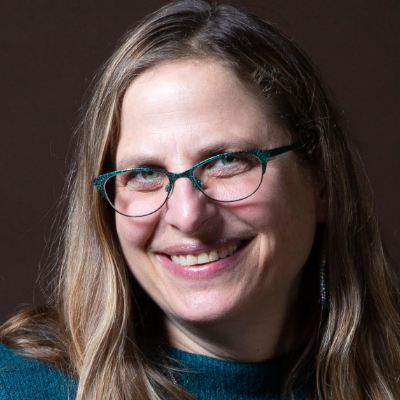
“Water could be what the next war is based on,” Dana Rassas, a Jordanian citizen who is interning with several Bay Area coastal organizations, warned recently.
But, she added, “if the countries work together, it could bring peace, too.”
Rassas is one of six students from Israel’s Arava Institute for Environmental Studies, who is interning with Bay Area environmental organizations this summer. Five of them spoke last week about their areas of expertise at the Berkeley/Richmond Jewish Community Center, at an event sponsored by the Jewish Community Federation of the Greater East Bay.
While each intern shared his or her fields of research, the overriding theme of the evening was that when it comes to the environment, political differences must be put aside — not only the region, but the planet depends on it.
As Jordanian Mohammad Abu Al Taher said, “We live in a very small area, and if there’s pollution in one place, everyone is affected. One country alone cannot do a lot. We need each other, and we have to develop connections.”
Abu Al Taher, who is studying sustainable agriculture, is interning with the Sierra Club, along with Israeli Ilana Malleam. The two of them will soon embark on a road trip from Seattle to Southern California in a hybrid car, to promote the usage of hybrids in the United States.
Malleam’s focus has been on the unrecognized Bedouin villages in southern Israel, and the impact that these villages have on the environment.
Some 80,000 Bedouins are living in these so-called unrecognized villages, meaning the government provides no sewage, garbage retrieval, electricity or water.
“So the Bedouins find solutions for themselves,” said Malleam. “They make cesspits, which overflow and contaminate the water, which then contaminates the livestock, which they then eat.”
Located at Kibbutz Keturah in the Negev desert, the Arava Institute draws students from around the world with its interdisciplinary approach to environmental studies at both the undergraduate and master’s level. Since its founding in 1996, 70 percent of its 250 graduates work in the environmental field.
Israeli Noa Milman, an intern with Pacific Environment, has been studying transportation, and spoke about an Israeli green organization’s work to prevent a major highway from being built in one of Israel’s last open spaces.
And Elan Frankel, another Israeli who is interning here with ACT Now Productions, told how the security barrier Israel is building is wreaking havoc on the environment.
In addition to the hundreds of thousands of trees that had to be uprooted along the route, he said, the barrier is not only preventing humans from getting from place to place, but animals and fauna, too.
While Palestinians study at the institute as well, three students from Gaza were unable to join their colleagues here this summer because travel restrictions prevented them from getting to an American embassy in Tel Aviv or Cairo to obtain visas. Several Palestinians from East Jerusalem — therefore with Israeli identification cards — have internships in other parts of the United States.
While the interns are encouraged to leave their politics at the door when they first arrive at the institute, they have a special seminar in which they tackle all of the most difficult issues. Rassas described one exercise in which the Arabs were told they were Israelis and vice versa, and they had to come up with a solution to the water crisis, keeping their own people’s — meaning the other’s — best interests at heart.
In three hours, they could not come up with a solution.
Milman, an Israeli who worked for the Israeli peace movement Shalom Achshav before attending the institute, was not the only student who said attending the program was life-altering.
“I was a peace activist before, but I never had a sustained relationship with a Palestinian,” she said. “It was the first time I was hearing their stories and understanding their needs and requests. Many of their stories of suffering sounded like the Jewish stories I always heard.”
She continued, “I thought I had all the solutions, but all the solutions I had before collapsed. I now understand things I didn’t before, and I’m still trying to come up with solutions.”