
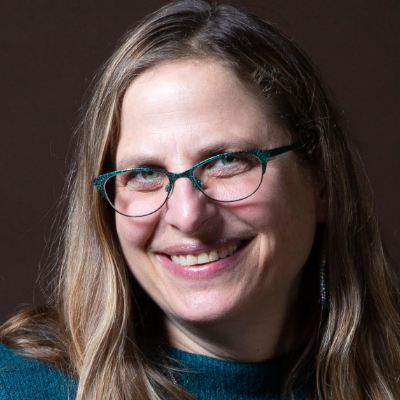
Growing up, Lisa Friedman was one of the few Jewish kids in her town in Missouri. So she feels like she can relate to Amin Mukhaimer, a foreign exchange student who is currently observing Ramadan in her Palo Alto home.
“It’s amazing for us to see what it’s like to not eat while it’s light,” said Friedman. “He’s surrounded by kids eating, and is even cooking in one class.”
The observance, which falls during the ninth month of the Muslim calendar, involves fasting from sunrise to sundown.
“What dedication it takes to stick to your traditions when you’re a minority,” said Friedman.
Friedman, her husband, Herman Gyr, and their son Andy Gyr have adjusted their household rhythm to accommodate Mukhaimer, who will live with them until the end of the school year.
But religion is not the only cultural difference between them. Mukhaimer, 16, is Palestinian, from the West Bank village of Sebastia, near Nablus. The Gyr-Friedmans, who also have a son at Stanford, raised their sons Jewish — both of whom celebrated b’nai mitzvah.
Herman Gyr, a native of Switzerland who isn’t Jewish, first came to the United States as an exchange student, and he lived with a Jewish family. This experience was a formative one, in that he ended up immigrating to the United States and marrying a Jewish woman.
At first, Mukhaimer had been living in San Jose with another host family. But that situation didn’t work out, and Len and Libby Traubman, founders of the Jewish-Palestinian Living Room Dialogue Group in San Mateo, sent out an urgent e-mail that Mukhaimer would have to return home if another family did not immediately offer to host him.
Friedman said her decision was influenced by two factors. One was awareness of the Traubmans’ work, which is based on what’s called the “public peace process,” the belief that interaction between people can accomplish things that governments cannot. The other concerned the previous owners of the Friedman-Gyr home.
“They were part of the Foundation for Global Community that worked on the public peace process between the United States and Russia,” said Friedman. “They brought Russians here before the governments allowed people to travel back and forth, and Russians stayed in the room where Amin lives now.”
Mukhaimer’s father is a farmer and his mother is a teacher. His native village, Sebastia, is virtually untouched by the violence of the Israeli-Palestinian conflict.
“People don’t travel a lot outside of the village because many of them don’t have cars,” said Friedman, relating what Mukhaimer had told her.
While Friedman and her husband were initially excited about hosting Mukhaimer, they said their son Andy had to approve, since he was the one who would be most affected.
A 17-year-old senior at Palo Alto’s Henry M. Gunn High School, he agreed. Watching Mukhaimer observe Ramadan has been a lesson in discipline, he said.
Andy, who is president of the Jewish students group at Gunn, Club Ruach, brought Mukhaimer to a meeting. “They were all welcoming of him,” he said. “Sometimes there were awkward moments, but no one has been disrespectful.”
Bringing Mukhaimer to the meeting — and future ones as well — “sends a message that even though we’re a Jewish family and live in this Jewish community, it’s perfectly fine to have this whole different experience,” Andy said.
As for Mukhaimer, he said his parents are fine with him living with a Jewish family. However, he was definitely having a harder time observing Ramadan this year, as at home, everyone is doing it.
He added, “My friends here are really nice, though most of them don’t know that much about Palestine.”
He is happy to be getting an inside view of America. Though very disappointed with the election results (he supported Sen. John Kerry) Mukhaimer was glad to have the opportunity to see American democracy up close. “It’s so cool,” he said. “It’s good to learn about it because it’s so different than in Palestine.”