
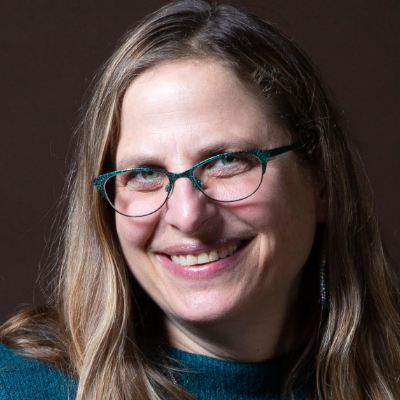
“With 1,000 Israelis killed and 3,000 Palestinians killed, the past four years have had a traumatic effect on both societies,” said Galia Golan. “But at the moment, there seems to be some real hope for optimism.”
That’s because of the disengagement plan, which is the No. 1 topic of discussion in Israel today, according to Golan, a professor in the Lauder School of Government, Diplomacy and Strategy of the Interdisciplinary Center in Herzliya and a founding member of Shalom Achshav, Peace Now.
A native of Ohio, Golan made aliyah in the 1960s. Here on a visit sponsored by American Friends of Peace Now, she spoke mostly about the disengagement plan during a panel discussion at the Jewish Community Center of San Francisco last week. In a conversation the next day, she sounded similar themes.
Golan cited surveys saying that the majority of Israelis support the disengagement plan, and not only that, but the establishment of a Palestinian state in the West Bank and Gaza Strip. A majority of Palestinians support the same, she said, and a full 50 percent of the Israeli public supports East Jerusalem becoming the capital of a Palestinian state.
The prevailing optimism is based on two things, she said. One is that withdrawing from Gaza is just the beginning of a process that will initiate a whole series of withdrawals, and the second is the passing of Palestinian leader Yasser Arafat.
“There is a general sense that there’s an opening here, that we’ve turned a corner,” she said. “That after these truly difficult four years, there is some hope to returning to negotiations and bringing an end to the conflict.”
During the intifada, she said, both sides have wanted to get back to negotiations. But they both, for different reasons, have felt that there was no partner on the other side.
But once the disengagement goes forward, there is no turning back the clock, she said. “I think the disengagement will go far no matter what happens on the Palestinian side. We’re not going to have security, peace or resolution without an agreement about Jerusalem, water and the refugees. If we have no agreement, we won’t have security.”
Golan called the Israeli security barrier a “disgrace,” saying that in many cases, it has split families and farmers from their farmland. “If it had been built on the border we had from 1949 to 1967, I don’t think there would be objection to it,” she added.
While the settlers are engaged in what she called a “scare campaign” to try and prevent the disengagement from happening, she said if they succeed, the results will be disastrous.
While Golan said there were many areas in which the peace camp and Israeli Prime Minister Ariel Sharon “part company,” they feel that he is the one to face the settlers.
“If he can’t take down the settlements, the feeling is that it’s impossible for anyone else to do it.”
Nevertheless, the belief among the left is that Sharon intends to stop there.
“He would like to stop after disengagement and divide [the West Bank] into cantons and have isolated areas that would be part of a Palestinian state, but … such a situation will not bring about security.”