
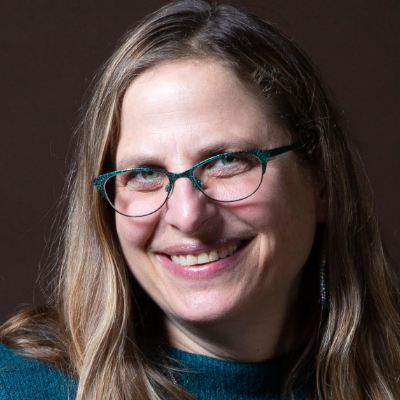
Aaron Blumenfeld is publishing a collection of Chassidic melodies that has 101 songs in it.
Why? Because, he explained, of a quotation in the Talmud that says, “The person who studies Talmud 101 times is superior than one who did it 100 times.”
“I wanted to cover all my bases,” he said.
The composer will perform just a few of these niggunim (traditional tunes) to inaugurate Congregation Beth Israel’s new building in Berkeley. He’s been a member for years.
The 72-year-old grandfather of nine who lives in Richmond calls himself in Yiddish, a chazzan uhne shtinne (a cantor without a voice).
“I once had a job as a cantor, but they wanted to get rid of me,” he said. “They told me, ‘You have a voice like a flute, but we want a trombone.’ It was a nice way to get fired from a job,” he joked.
The fact that he loved Jewish music but didn’t have a strong enough voice led him to become a composer, and he has composed numerous works, both Jewish and non-Jewish, including 10 piano concertos.
He is an expert on blues piano techniques, and has written two books on the subject. He has taught at both Berkeley’s Jazz School and through U.C. Berkeley Extension.
Some of his songs are based on Chassidic melodies and others on the Psalms of David.
Blumenfeld feels a special duty to sing these sacred songs now. With the Israeli withdrawal from the Gaza Strip taking place in August, Blumenfeld thinks that prayers can certainly help during this politically divisive summer.
Blumenfeld said regardless of how one feels about the removal of the settlers, “We’re coming to a crisis point this summer, and I can’t think of anything more appropriate than having a concert of psalms, because there’s a need for prayer and the psalms unify our people.”
He wrote these psalms in 1995, during the Oslo peace process. He called Israel’s decision to give up control over certain parts of the West Bank, a “psychological trauma to the Jewish people,” and again emphasized that prayer was a helpful way to deal with this.
In addition to healing, the music helps to keep alive fragile cultural practices. Composing these psalms, Blumenfeld tried to capture the elaborate, ornamental style of what he called the “golden age” of cantorial music, as the Holocaust all but destroyed this part of Orthodox culture.
Calling this kind of music “melismatic,” which means highly ornamental, Blumenfeld said, “It’s precious and it’s dying out and no longer practiced, and I’m trying to preserve that elaborate style.”
For those classical music aficionados, Blumenfeld said he would compare what he was doing to the music of Schubert, Brahms or Rachmaninoff.
“There’s a tradition of this type of music that’s very artistic and developed,” he said. “And I took that stylistic approach and incorporated cantorial style into this art song form.”
A unique aspect about Blumenfeld’s psalms is that he incorporates blues piano techniques.
“There is no jazz or blues in my psalms, but there are certain techniques that are very different than the classical style,” he said, which gives the psalms more of the authentic cantorial style.
If he happens to sing all 101 psalms in his first collection at Beth Israel, Blumenfled needn’t worry. He has two more volumes coming that encompass 200 more tunes.
Aaron Blumenfeld will perform 7:30 p.m. Sunday, June 26, at Congregation Beth Israel, 1630 Bancroft Way, Berkeley. Tickets: $15. Information: (510) 843-5246.