
“Children are not responsible for the sins of their fathers.”
Rabbi Ted Alexander loosely quoted the Torah when explaining why his synagogue not only welcomed, but honored 15 non-Jewish Germans during Shabbat services last month.
Alexander’s synagogue, Congregation B’nai Emunah, was founded by refugees from Nazi Germany. But what makes this story even more remarkable is that Ludwig Bez, one of those honored and the man responsible for bringing the Germans to San Francisco, is the son of a Nazi.
Since coming to terms with his country’s horrific past — as well as his father’s eager participation in it — Bez has devoted his life to ensuring that Germans know more about Jews than what Hitler tried to teach them.
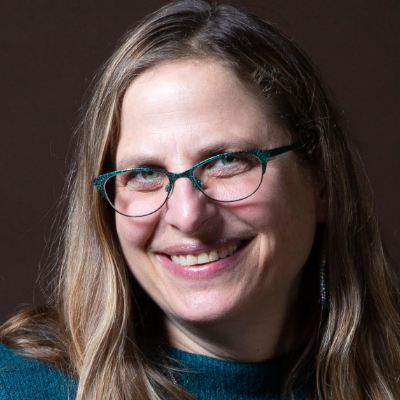
Bez, 56, has short white hair and wears the angular eyeglasses that are favored by so many Germans.
He does not think his father served in a concentration camp but knows he was a cog in the Nazi war machine — continuing to believe in the Nazi ideology until he died.
“My father was a part of this big breakdown of humanity and darkness,” said Bez, searching for the right words. “Nothing can describe what happened because it was so inhuman and brutal. And it happened because people did something to people in the ugliest way.”
His father rarely spoke about it. “It was a closed box,” he said. Though there is a remark he once made, only one, that Bez can remember, and it troubles him greatly.
“He doubted the practice of the concentration camps. ‘Maybe we didn’t treat the Jews right’ was his way of thinking. But he never once doubted the racial theory behind that,” Bez said.
Before the war, Bez’s father worked as a teacher and proudly taught his students the Aryan theory of racial superiority. As a high officer, Bez’s father spent most of the war outside of Germany.
When the war ended, he was captured by the French and kept him as a prisoner of war. He returned home rail-thin and broken down, the result of not only being imprisoned but seeing his seemingly indomitable Third Reich crumble.
It was during a visit to Israel, during which Bez literally came face-to-face with the horrors his father helped perpetrate, that forced him to confront his father’s sins for the first time.
Bez was living in Israel in 1979, volunteering on Kibbutz Shamir, near Kiryat Shmona. He befriended people who came from towns near where he was raised, and they accepted him — no questions asked.
The Holocaust did not figure into his relationships, until Bez’s visit to Yad Vashem.
He hadn’t made it halfway through, when the pictures he saw of the ghettos and concentration camps caused him indescribable physical pain.
“It was as if my stomach and everything rebelled. It was such a shock for me. Of course I had heard of Auschwitz, and I saw the film ‘Holocaust,’ but this was the first time I felt it has something to do with me. This is my history, this is my country.”
He spent three days in a Jerusalem hospital.
When Bez returned to Germany, he was a changed man. “The challenge was to go back to Germany and to face my new identity with the old places, with the people from before, with my family.”
Bez moved to Freudental, a small town near Stuttgart. Not long after his arrival, the town began debating what to do with the synagogue there. It had been burned by the Nazis on Kristallnacht.
Bez was considered an expert in Jewish matters since he’d spent a year in Israel.
“A synagogue is a Beit Knesset,” he told the city council, using the Hebrew term for synagogue. “It’s a house of meeting and studying. These walls have questions to ask and we have to face these questions.”
He turned the synagogue into the Center of Education and Cultural Activities (www.pkc-freudental.de). It serves as a research center to educate Germans about Jewish life, as a repository of information about the Jewish community of Freudental and as a conference center to promote German-Jewish dialogue, in a town where there have been no Jews since they were all deported.
When the Berlin-born and trained Alexander heard of these efforts, it moved him greatly. Alexander fled Nazi Germany with his family, and, after several years in the Shanghai ghetto, he settled in San Francisco. For the past 37 years, he has served as spiritual leader of San Francisco’s Congregation B’nai Emunah.
Now in his mid-80s, Alexander has been back to Germany several times.
“A tremendous effort is being made by individuals to come to terms with the years of the Holocaust in very positive ways, and it’s extremely sincere,” the rabbi said, referring to people like Bez.
Many agree the synagogue in Freudental is unlike other museums. When they enter, they are surprised to find empty walls, Bez said.
“People say ‘There’s nothing to see,’ and I say ‘This is the most important thing you can see. From this rich history, there’s nothing left.'”
Which then provokes them to ask what Bez considers the most difficult question of all: “The neighbors lived a long time together with the Jewish people, and then, one day, they did this. Why?”
RELATED STORY: