
When Ariel Sharon had his stroke, he led the news around the world. Now that he’s comatose, he’s dropped out of the news altogether. Yet in Israel, a very different thing has happened to the former prime minister.
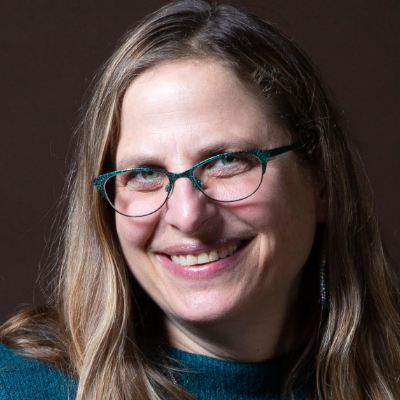
Even though in life he was seen as highly controversial, he’s now turned into “this grandfatherly consensus figure,” said Stuart Schoffman, associate editor of the Jerusalem Report.
“He’s now suspended between heaven and earth, in this limbo state. He was always larger than life, but now there’s some sort of quasi-deification going on where he’s being regarded as this transcendent character who is the spirit of the will of the people. He went from being a man to a symbol instantly.”
Schoffman was in the Bay Area on business with Amuta, the Israeli advisory board of the S.F.-based Jewish Community Federation, which he has chaired for three years.
He is a popular commentator about Israel during his frequent visits to the United States. A New York native, he was a screenwriter before making aliyah in the late 1980s.
While here, he spoke about how Sharon has become such a symbol that the Kadima party — which he founded not long before his stroke — would have put him at the top of its list, if only symbolically, were it able to sign his name. But Israeli law requires a signature, and therefore, Ehud Olmert will remain in the top slot.
While Schoffman said the Hamas victory in the Palestinian elections could give Benjamin Netanyahu and the Likud party the bump they were looking for, he said the Kadima party was filled with stalwarts on defense as well.
Nonetheless, he said, Olmert was taking a centrist position, as seen by the recent removal of Jewish settlers from the illegal outpost of Amona.
The removal of this outpost caused more violence and injuries than anything seen in the withdrawal from the Gaza Strip.
In regard to the Hamas victory, Schoffman warned that “we need to separate between being alarmed and being alarmist.”
It would be interesting to see how Hamas tries to transform itself, he said. After all, “it’s one thing to be this fire-breathing, oppositional, rejectionist, guerrilla, terrorist movement, but then the next day it’s ‘Uh-oh, we won. Now we have to make the trains run on time,’ as it were.”
Hamas is in a difficult position now, he said, because it knows it cannot win an armed conflict with Israel, nor does it want to see a civil war break out with Fatah.
While some may assume that Iran could step in to help fund a Hamas government, Schoffman said “that’s easier said than done. It’s not an automatic assumption that buckets of gold bullion will be parachuted in, and there are questions how transfers can be made, and to what extent Iran is set up to do that.”
Interestingly, after the Hamas victory, the leading daily in Israel, Yediot Achronot, did a poll asking Israelis how Israel should conduct itself vis-à-vis the Palestinian Authority if Hamas controls the government.
“Forty-three percent said cut off from them, 48 said talk to them,” he said, adding the following explanation: “People in our part of the world have an intuition which knows how to separate between theology and rhetoric and the reality of everyone being intertwined with one other. People have not given up hope.”
Stepping aside from his role as commentator and into his role as chair of Amuta, he concluded with some recent statistics about poverty in Israel.
“We can’t allow these volatile developments to deafen us to the more mundane and urgent issues,” he said.
There are 1.58 million Israelis living under the poverty line, and 34 percent of children in Israel are poor, with half of Israeli Arab children living in poverty, he said.
With Israel not providing Arab families the same opportunities in early childhood education or daycare, he said it was up to the private sector to help out.
“A democracy is rightly judged how they treat their weakest members,” he said. “If there is a vacuum in these services, the alternative to us is the Islamic movement within Israel itself. And the last thing you want is for radical Islam to penetrate on a grassroots level. All these things are interconnected.”