
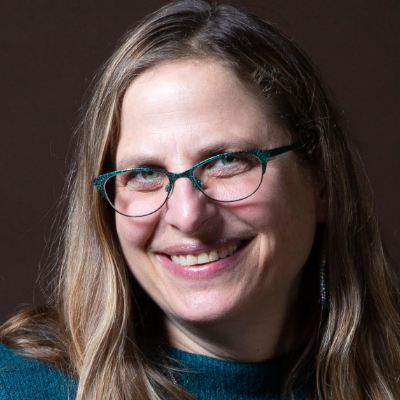
Even though she’s always been a news junkie, once she made the decision to move to Israel, Rachel Canar totally tuned out.
The 37-year-old, who spent the last few years as associate director of the New Israel Fund’s regional office, used to begin her day by checking the Israeli news. But in the weeks before she left, even though she knew bad things were happening, she chose to ignore them.
“All the people who come to me as their source for what’s going on in Israel came to me and I said ‘I have to move, and the last thing I want to do is contemplate what’s going on right now.'”
Even though a cease-fire is now in effect, j. spoke to these people before that time, when rockets were still falling in Israel daily.
Canar moved to Israel on July 10, and is now living in Jerusalem. While she never specifically planned to make aliyah, she was always open to the idea, having spent a lot of time there. When she wasn’t living there, she was fundraising on Israel’s behalf.
So when the right job opportunity came about — she is now working for the Reform movement’s Religious Action Center in Jerusalem — she jumped at the chance.
“It’s frustrating to do all your work for Israel all these miles away, so being able to raise money in the morning and go to the protest in the afternoon was something I really wanted,” she said.
Canar said that as the RAC was raising money and collecting toys for the children in the north, since she is there, she could see the toys piling up in her office.
“I’m making a bigger difference by being here,” she said. “So in that way, I feel better being here than in San Francisco by far.”
While Jerusalem was considered the most dangerous city during the intifada because of the frequency of suicide bombers, ironically, this latest conflict had Jerusalem feeling safer than other parts of the country. But what was happening was, of course, discussed everywhere.
“It feels very much like a serious situation,” said Canar. “Every person I talk to says ‘Welcome,’ and then ‘I’m so sorry that you came right now, what terrible timing.’ No one is saying this is no big deal.”
She talks to her parents regularly using Skype, an Internet phone service.
“I’ve been making lots of efforts to not have people freak out,” she said. “But people are like, ‘Come home.’ But this is my home.”
One of the othertransplants, Aryeh Green, a Bay Area native who made aliyah in 1984, said this conflict with Hezbollah has unified the country in an unprecedented way.
“There is an absolute clarity of the answer,” he said. “What they want from us is that they want to destroy us, and the country is unified in the justification of the effort to defend our northern cities.”
Green said he felt a bizarre calm in the center of the country, as he went about his daily routine, knowing that people in the north and south of Israel had under attack.
“It’s an almost unreal situation,” he said. “One million Israelis were sitting in shelters up north, and those in Sderot and Ashkelon [were] near enough to be under threat of Kassam rockets. And meanwhile, in the center of the country, life [went on] as normally.”
Burt and Betty Edelstein, two San Francisco natives who recently marked their 30th year in Israel, agreed with that assessment.
Like Green, Edelstein said he felt the country was unified in what was happening. “We think the government is doing the right thing, the right and the left are united in this,” he said.
Edelstein said it pained him to see how many soldiers were lost.
“You can’t be happy when you see things like that,” he said.