
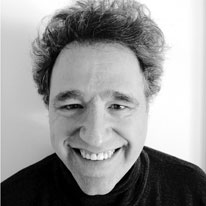
Robert Novak, the diehard conservative columnist whose scoops broke many a career, made his reputation as a journalist by being unafraid to attack his ideological brethren.
The same dynamic underlay the contentious and at times ugly relationship he had with fellow Jews.

Novak, a household face as co-host of CNN’s “Crossfire,” died Aug. 18 in Washington, D.C., after an extended struggle with brain cancer. He was 78.
He was diagnosed with a brain tumor in July 2008, less than a week after he struck a homeless man in downtown Washington with his Corvette and drove away. His career included decades as the co-author of an influential column written with his colleague, the late Rowland Evans, as well as a ubiquity on a number of talk shows.
Novak’s effort to defend the Iraq invasion almost railroaded his career: He was the first to publish the name of CIA operative Valerie Plame, as part of the Bush administration’s retaliatory campaign against her husband, Iraq War critic Joseph Wilson.
His last CNN appearance in August 2005 was a memorable one: After swearing on the air, he walked off the set during a debate with Democratic strategist James Carville. Novak quickly apologized, but CNN never let him back on the air.
Novak was born to Jewish parents, but said he never felt particularly connected to the faith.
“The family was not very observant,” he told CNN in 2005, describing his upbringing in Joliet, Ill. “My father had never been bar mitzvahed and his father was not a very good Jew, but I was bar mitzvahed.”
He converted to Catholicism at age 67 after attending Catholic services for several years. In a 2003 interview with Washingtonian magazine, he said that although he joined a Jewish fraternity in college at the University of Illinois, he was turned off by Judaism.
“I found the same thing in Judaism as a young boy as I did later in the Unitarian Church and then at the Episcopal Church,” he said. “They seemed very ungodly. The clergymen seemed very secular.”
Novak’s distaste for robust Judaism was perhaps most manifest in his review of David Frum’s 2003 book describing his experience speechwriting for President George W. Bush. Novak wrote in the American Conserv-ative: “It is hard to recall any previous presidential aide so engrossed with his own ethnic [Jewish] roots. Frum is more uncompromising in support of Israel than any other issue, raising the inescapable question of whether this was the real reason he entered the White House.”
Frum counterattacked, saying Novak was the first to suggest that the U.S.-Israel friendship was a motivating factor in the 2001 terrorist attacks on the United States.
Novak helped purvey the notion that the Iraq War was fought in Israel’s interest. He also was a rare mainstream voice endorsing the widely rejected claim that Israeli forces had intentionally attacked a U.S. naval ship in the Mediterranean Sea during the Six-Day War in 1967.
In his autobiography, Novak wrote about what he described as the efforts of pro-Israel critics to get newspapers to drop his and Evans’ syndicated column. Novak claimed that shortly after being told by the editor of the Newark Star-Ledger in 1975 that advertisers were complaining about Evans and Novak’s “anti-Israel” reporting, the newspaper dropped their syndicated column.
“It was one of about a hundred newspapers that we lost in a surprisingly short period of time,” Novak wrote. “Whatever the reason — and I had my suspicions — we never built back our base.”
Novak is survived by his wife of 47 years, Geraldine, who was a secretary for President Lyndon Johnson, their daughter, Zelda, and a son, Alex.
The Associated Press contributed to this report.