


In the Jewish community we attribute “kindness” to the character trait of gemilut chasadim. Broadly speaking it means extending yourself on behalf of others so that you are kind, sensitive, and generally caring. In today’s job market, that concept is absent.
Even in not-for-profit volunteer opportunities, staff members are not jumping at offers of pro bono. “It’s summer, you know,” they say. Or they simply do not respond to your offer of help via e-mail. Yet another black hole.
Given the fact our unemployment is hovering at almost 10 percent nationally, and 9 percent in the Bay Area, thousands are out looking for jobs, including me. I worry over the fact there are five applicants for every one job.
Open positions are becoming a “sandwich” position, in that an organization lets four people go and consolidates their tasks into one new job. An applicant has to be prepared to say, “Yes I can do all of that, sure, no problem” — and then start the new position under undue stress and nervousness.
The Jewish community has never been one to orient its staff in a thoughtful way. Most often, new staff just start. Sometimes there is an orientation, or the new employee attends a briefing or two, mainly dealing with medical benefits and vacation. Actual job training, or learning the expectations and culture of the organization, are few and far between. Kudos to those who actually conduct such staff development.
Thus the HR staff, the headhunter or the executive doing the interview become pretty powerful people. They begin somewhat pleasantly, but generally they are not nice. They are stand-offish, seemingly trying to trip you up. They have the product, the goods; you are a shopper, a buyer, you need their product. But first you have to prove you are worthy of their product. And that’s just in person.
On the phone it’s worse. They can’t see you and you cannot see them, so you don’t know if they are interested in what you are saying; maybe they’re even rolling their eyes or otherwise engaged while you are selling yourself (i.e. begging). The long pauses mean exactly what you think they mean: They don’t have any response to your comments. What they do have are the goods: the jobs, the positions.
Then there are the directors of the organizations, or the human resources departments. Again, they have the goods, and your job (who said looking for work was not a job?) is to convince them you are right for them. More
than right given the tons of résumés they receive for this one opening.
You have to sell yourself, your experience, your expertise. You cannot threaten the interviewers. You do not ask why they have not done such and such. Heaven forbid you threaten them. Yes, give those new ideas, but not ones they have already tried (even if you don’t know what they have tried). Don’t ask why they have not sent a proposal to the XYZ foundation. Don’t ask them why so-and-so is not a member of their organization; also best not to ask them why they have such a small membership in the first place.
Oh, and talk fast, because generally the interviewers do not leave enough time for the list of questions you see in front of them. Be friendly, show wit, but don’t be too chatty, or long-winded. They don’t have time because the next person is coming in 23 minutes.
They ask you why you left your last job. They ask you your greatest accomplishment (not your children). They ask you what your greatest achievement is in terms of changing staff attitude.
They ask you about your passion for Jewish identity, for your ability to communicate Israel, your caring about the Jewish elderly or poor, have you worked with Generation X or Y, or services for youth and family? How would you communicate raising money for synagogues, or find new donors? How would you find contributors for a dying organization that has lost state funding and had to let 30 employees go last year? How would you communicate the goals of an organization that hasn’t sold a new “product design” in a decade?
And that’s only if you get the chance to speak to a human. In my experience, and that of other Jewish community professionals, no call back is de rigueur.
Which of course brings me back to acts of kindness and sensitivity. Somehow I expect it to be different in the Jewish communal world. Many applicants spent huge sums of money attaining Jewish-oriented degrees and training. They deserve at least an e-mail that says “Thanks but no thanks.” Or a call. Maybe even some free advice or job counseling.
How many articles are there about the lack of quality Jewish community professionals? Can we afford to totally ignore them, those who are trying? Can we possibly add a little gemilut chasadim? After all, this is part of who we are as Jews; it is part of our culture to be kind, aware and sensitive. That’s why we have the Jewish free loan societies, and Jewish vocational and family service agencies.
Having lived and worked in San Francisco for the last six years, I feel very fortunate to know that I can call on donors from the Jewish National Fund; rabbis and staff, or friends from Congregation Emanu-El (where I am a member). All have offered to be helpful and supportive. My professional colleagues, who perhaps used to work at a JCC or a federation or another Jewish organization, have been helpful, although some are suffering their own similar plights.
I think all of us feel the same way: Regardless of any specifics, we expect the Jewish community to be more responsive and respectful.
I fully expect to have an offer soon, or sooner rather than later. I have 25 solid years in the nonprofit world, most of it in Jewish organizations.
I am smart; communicate well in person and on paper. I have excellent references and numerous anecdotal stories of my success. I chose to leave my last job, which many see as just plain stupid, and others think displays enormous confidence and courage and the willingness to take a risk. It’s not simple, for sure, but lord knows I am trying. I am just looking for a little kindness along with a job.
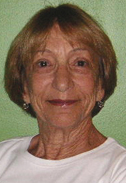
Sherri W. Morr of San Francisco worked for the Jewish National Fund for 12 years, most recently as Western zone director. A version of this piece appeared on eJewishPhilanthropy.com.