
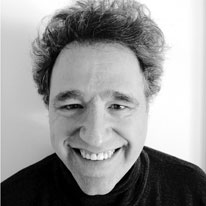
The concession speech that Sen. Russ Feingold (D-Wis.) gave was much like his career in the Senate itself: by turns crystal clear, obscure, ornery, defiant and gracious — and quoting a fellow Great Plains Jew to boot.
“But my heart is not weary, it’s light and it’s free, I’ve got nothing but affection for all those who’ve sailed with me,” the three-term senator from Wisconsin said earlier this month, quoting Bob Dylan while conceding to Republican Ron Johnson, a tea party–backed plastics billionaire who beat him by a 52-47 percent split at the polls.
Then, “It’s on to the next fight. It’s on to the next battle. It’s on to 2012!”
Feingold, who returned to Washington, D.C., last week to finish out his term, wasn’t hinting at a Democratic presidential bid exploration like the one he pursued in 2006-07, a spokesman later said. What the senator did mean he wouldn’t say.

It was typical of the fiercely independent streak that put Feingold into office and may well have pushed him out.
Ira Forman, the former director of the National Jewish Democratic Council, said Feingold’s refusal to accept outside campaign money may have helped elect him in the past but likely was his downfall in this election.
“He wouldn’t accept DSCC ads,” Forman said, referring to the Democratic Senate Campaign Committee, typical of the bodies that run negative ads against opponents. “He often ran against people who were the beneficiary of that kind of advertising. He hoped people would stand up for his integrity, as they had in the past.”
Forman’s voice tinged with regret.
“He’s an independent voice, a loss to Democrats and the Jewish community,” he said of Feingold.
In fact, Feingold’s Jewish identity, while strong, rarely manifested itself in leadership roles on Israel, Holocaust commemoration or the other areas that many Jewish lawmakers have made their own.
That was an approach rooted in a childhood in Janesville, Wis., a Plains town near the Illinois border. Feingold, 57, has described his upbringing as blessedly free of anti-Semitism.
“I was honored [by teachers and other grown-ups] because I was Jewish,” Feingold said in Sanford Horwitt’s political biography, “Feingold: A New Democratic Party.” “It was an amazing way to be treated.”
In 2003, asked by the Wisconsin Jewish Chronicle whether Sen. Joe Lieberman (D-Conn.) stood a chance in his presidential bid, Feingold’s answer was, why not?
“As a Jewish candidate from a state with a small Jewish population, I don’t feel I faced any issues as a Jew,” Feingold said. “In fact, it may sound naive, but I think some voters regarded my being Jewish as interesting. I’ve only had a good experience.”
The Feingold family was socially involved, erudite and reserved — characteristics that continue to define Russ Feingold. His staff is fiercely loyal to him, although he keeps them at a distance.
Feingold is discomfited by forthright fans. The Dylan song he chose to quote in his Nov. 2 concession speech, “Mississippi,” speaks to the senator’s teasing intellect: It is not from Dylan’s heyday in the 1960s and 1970s, but from his 2001 album, “Love and Theft.”
Feingold’s lawyer father, Leon, was the first Jewish president of the local Rotary Club who mingled with farmer clients at 4-H events. (Leon’s father, Max, a refugee from Russia, established the family in the town and immigrated to Israel in 1950.)
Feingold has said that his Jewish legacy is manifest in his political career.
“I understood my religion as the pursuit of justice,” he told Horwitt.
That’s pretty much the extent of his public leadership on Jewish issues, although he routinely joined initiatives launched by other Jewish Congress members, recently expressing concerns to the Turkish government over its distancing from Israel and in 2008 joining a raft of Jewish senators pushing back against rumors that President Obama is a Muslim. He attends services on the High Holy Days, and his sister, Dena, is a rabbi in Kenosha, Wis., north of Chicago.
Still, a national Jewish community that has a soft spot for independent liberals embraced Feingold. He drew Jewish support in his successful 1992 senatorial bid to oust the Republican incumbent, Bob Kasten, even though Kasten had a strong pro-Israel record.
“He is somebody who’s remarkably dedicated to civil liberties and to the Constitution, and has the courage of his convictions,” said Sammie Moshenberg, the Washington director of the National Council for Jewish Women. “He took a lot of gutsy stands,” she said, citing Feingold’s lone dissent in 2001 when the Senate approved the Patriot Act.
That vote drew derision at a time of heightened concerns over terrorism, but eventually made him a hero of the Democratic base. It is a legacy still in dispute: A televised post-election encounter between two liberals, Salon’s Glenn Greenwald and MSNBC’s Lawrence O’Donnell over whether Feingold should have tacked further right to get re-elected — O’Donnell’s position — went viral in the blogosphere.
Feingold was among a handful of lawmakers in the recent election who drew the endorsement of both J Street and donors associated with the AIPAC. Officials in both groups lamented his departure.
Feingold’s independence was his biggest draw. With. Sen. John McCain (R-Ariz.), he crafted a law severely limiting corporate donations to campaigns. Unlike McCain, who won re-election last week, Feingold abided by the rules of his law even after the Supreme Court overturned it.
“This was a public servant who visibly, proudly and courageously stood on principle,” said Rabbi David Saperstein, who directs the Reform movement’s Religious Action Center, which backs election reform. “His effort to make America’s election system more fair and transparent made major contributions to good government.”
It was an independence born of his upbringing and the turbulent 1960s in which he came of age. Feingold’s home, harmonious in its support of liberal causes until the ’60s, was riven by a split between Feingold’s two father figures: His father supported the war in Vietnam, and his brother David, older by five years, opposed it.
Feingold emerged from the era determined to do what best hewed to his philosophical principles, and in the process he occasionally frustrated his party. In 1998 he famously was the only Democrat to vote to consider the House of Representatives’ impeachment of President Bill Clinton — not because he believed Clinton was guilty, but because he believed in the constitutional process of impeachment.
Three years later he voted to confirm former Sen. John Ashcroft (R-Mo.) as attorney general, even though they were polar opposites on critical civil liberties questions. Feingold’s reason: his abiding belief that a president, in this case George W. Bush, had the right to pick his Cabinet. He later also supported Bush’s nominee for Supreme Court chief justice, John Roberts.
His explanation of his Ashcroft vote in 2001, to skeptical Feingoldians at the Progressive, a liberal journal, presaged the vituperative climate that brought about his downfall.
“I believe we have to hold the line and not use ideology alone in making decisions about Cabinet appointments,” Feingold said. “I fear if we keep going, more and more areas of our government are going to fall into the Great Divide and be engulfed in a culture war.”