
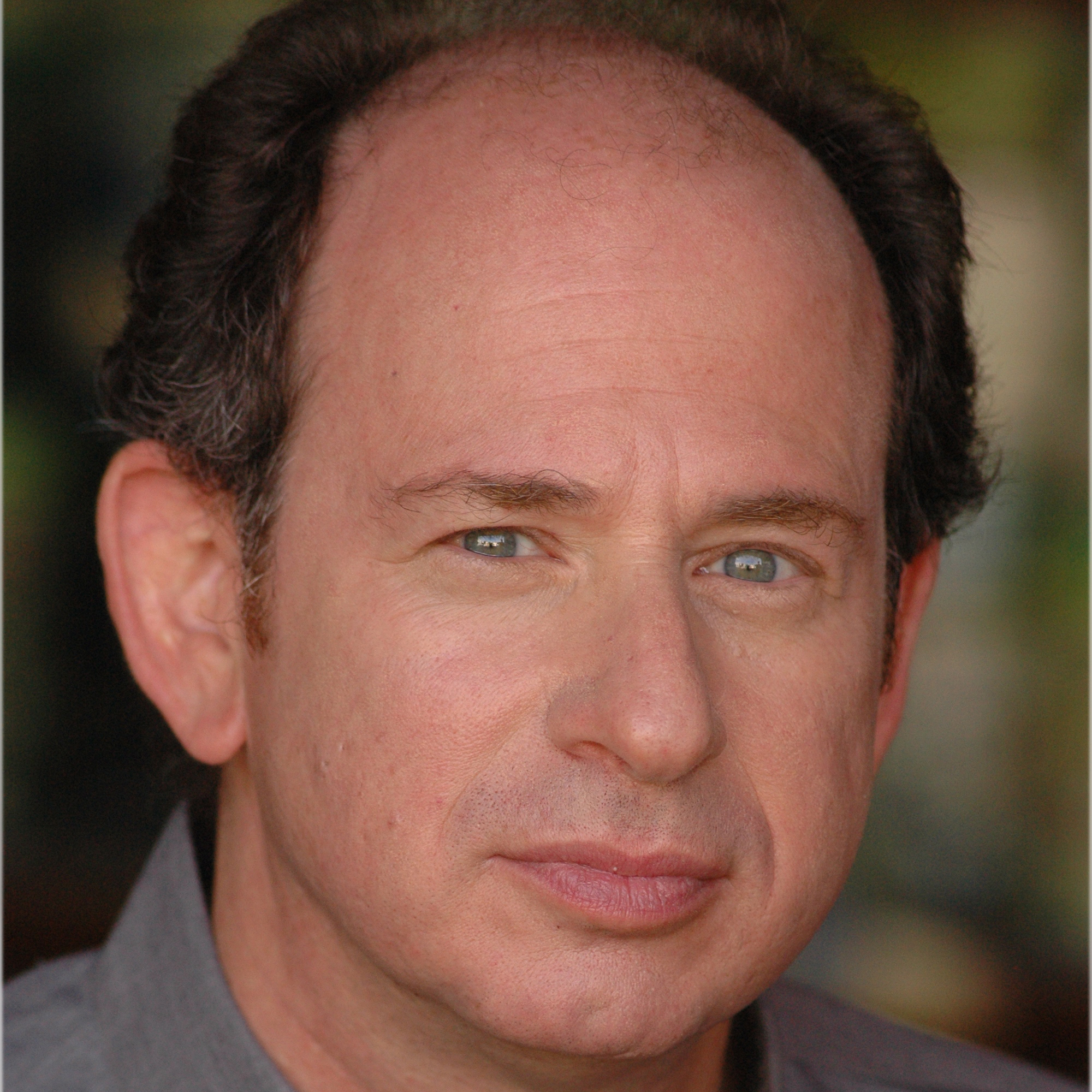
Richard J. Lewis, like a lot of Canadian Jews, read Mordecai Richler’s triumphant final work, “Barney’s Version,” when it came out in 1997. Fresh from his successful adaptation of another comic Canadian novel, “Whale Music,” Lewis set about writing the screenplay — without the rights, and on spec.
It was an audacious but unsuccessful leap of faith — at least on one level. Lewis’ script didn’t pass muster with producer Robert Lantos, nor did various others penned by a succession of writers over the ensuing decade. But when Lantos finally received a screenplay that won him over (by Michael Konyves, a Montreal Jew), Lewis was the natural choice to direct the movie.
“Barney’s Version” stars Paul Giamatti as Barney, a commercial TV producer, and Dustin Hoffman as his father, Israel, a retired cop. A marvelous picaresque that spans Barney’s three marriages and runs the gamut from broad comedy to wrenching pathos, the 132-minute film opens Jan. 21 in San Francisco and Berkeley.
“I grew up a traditional Jewish kid in Toronto, so I relate to a lot of the goings-on in ‘Barney’s Version’ and Richler’s world,” says Lewis, who is not the comedian of the same name. “It’s a world I knew very, very well.”

All of Lewis’ grandparents were Orthodox Jews from the Old Country, though he now considers himself a secular Jew.
Lewis’ path led from Northwestern University to USC’s graduate film program, from children’s television in the United States to a productive Canadian period. He returned to Hollywood and found success producing and directing several seasons of “CSI.” Along the way, Lewis discovered Buddhist teachings, but without diluting his Jewish identity.
“I’m particularly fond of the cultural aspects of being a Jew,” Lewis explains by phone from his Southern California home. “But I’m not a big fan of religion in general, so it suits me to be more of a spiritual person who relates to the philosophical underpinnings of Jewish thought.”
The late Richler, for his part, was an object of both admiration and criticism for his portrayals of Montreal Jews in “The Apprenticeship of Duddy Kravitz” and “Joshua Then and Now.”
“I think that he liked to send up anyone who was over the top,” Lewis muses. “He was ruthless with the Quebecois and he’s ruthless with television people and he felt like his own people sometimes embarrassed him. By no stretch of the imagination was he a self-hating Jew, but he wasn’t one to adopt his own Jewish culture without questioning it, analyzing it and ultimately parodying it.”
Given Richler’s trademark irreverence, the most surprising aspect of the screen adaptation of “Barney’s Version” is the unvarnished emotion between Barney (Giamatti) and his father, Israel (Hoffman).
“Both Barney and Izzy are very proud of their Jewish heritage but are not in any way religious people,” Lewis says. “Izzy really stands for that kind of blue-collar Jew who will punch you in the face for a slur, and would teach his son to do the same. What Dustin Hoffman was able to do was bring a part of him — we all nurture a sense of comfortableness with being Jewish, and at any given moment we love to throw out the Yiddishe [spirit] — and I think he opened that valve.”
Barney and Izzy are often irascible with other people, but tender and vulnerable with each other.
“Some of it is extrapolation,” Lewis says. “It’s not entirely in the novel. Izzy is the only one Barney truly trusts and the only one who believes his son is worthy. For a guy like Barney who’s always trying to prove himself, and always trying to battle his own demons of doubt and insecurity, there’s tremendous solace in this relationship, and it’s a refuge for him. That relationship allows him to be exactly who he is.”
Barney is a complicated figure and far from perfect, especially in his relationships with Jewish women. He’s a throwback to a time before political correctness, when the movies — and audiences — embraced characters who occasionally behaved inappropriately.
“The trouble with modern filmmaking is that they try to wrap the entire essence of the character in one piece of action or one triumphant thing the character does,” Lewis says. “I was trying to get at the idea that the true shape of a man’s place is determined by the many aspects — some are foibles and flaws and some are strengths — that would fall under the category of integrity.”
“Barney’s Version” opens Jan. 21 at the Embarcadero Center Cinema in San Francisco and the Shattuck Cinemas in Berkeley.