

The recent release of a draft strategic plan for the United Synagogue of Conservative Judaism is simply the latest indicator of the challenge facing non-Orthodox Judaism in the United States.
The USCJ press release was accompanied by data showing that the movement has lost 14 percent of its affiliated families since 2001.

Several months ago the Union of Reform Judaism announced an 18-month think tank to include all the major arms of the Reform movement. It came on the heels of significant cutbacks in national staff and the near-closure of one of the campuses of Hebrew Union College. While some of these cuts were driven by a bad economy, of more serious concern was the loss of membership in the movement’s congregations. The think tank was designed to consider the prospects for Reform Judaism’s future.
Similarly, at a recent national gathering at the Reconstructionist Rabbinical College, rabbis were challenged to “rethink the rabbinate” in light of the shrinking market of non-Orthodox Jews and the lack of congregational job opportunities.
In many Jewish gatherings of professionals and lay leaders, fingers are being pointed at the synagogue as an increasingly irrelevant institution. The only Jewish institution that suffers greater criticism is the synagogue’s stepchild, the afternoon religious school.
Jewish funders are more eager to fund alternatives to synagogues than innovations within synagogues. Benefiting from this trend are independent minyans, outreach programs to nontraditional populations (e.g., 20-somethings, LGBTs, interfaith families, etc.), public-space Judaism, environmental programs and social justice initiatives. Many of these new initiatives are propelled by a burst of energy from the younger generation seeking Jewish connection and growing support for social entrepreneurship to reinvent the Jewish community.
There is much to celebrate in these new developments, but it would be unwise to write off synagogues just yet. The cumulative cost of all synagogue buildings and professional staff in America represents the single biggest investment of Jewish communal dollars that exists. As a class, synagogues can be criticized for not adjusting quickly enough to changes in American society and culture, and they are losing market share as a result. However, I don’t know of anyone who believes that what synagogues offer can be replaced by the Internet.
Over the past 20 years there has been some important thinking and experimentation happening in the
synagogue world. Synagogue 2000 (now 3000), STAR (Synagogues: Transfor-mation and Renewal), CLAL: The National Jewish Center for Leadership and Learning and synagogue-innovation grants by the Legacy Heritage Foundation have all produced important literature and program models that suggest that synagogues can be compelling institutions to the next generation of American Jews.
As someone who has been involved in all of these initiatives and who has been consulting to synagogues and working with rabbis ever since the publication of my book, “Finding a Spiritual Home: How a New Generation of Jews Can Transform the American Synagogue,” I know firsthand of pockets of innovation in the synagogue world that can and should be replicated. Where the synagogue transformation effort has fallen short is that these national initiatives have competed more than they have collaborated, and now the philanthropic dollars are moving in a different direction.
I fear that the liberal denominations are about to repeat this mistake. Each denomination, pressured by internal stakeholders and critics, feels a need to “do something.” They will view each other as competitors in a shrinking market and hope to prove that, in the long run, their response is the magic bullet for a Jewish community in decline.
Knowing that in 25 years, some existing seminaries will disappear and some denominational initiatives will need to close shop or consolidate, they mistakenly believe that the “last one standing” represents an organizational victory.
This approach is shortsighted and the Jewish community will suffer if it is not corrected. Now is precisely the time for the liberal movements to look past the turf wars and to collaborate with one another. Now is the time to bring together the small universe of professionals who have been working the vineyards of synagogue transformation and harvest their collective wisdom for a strategic plan forward.
Most Jews do not care one whit about the future of the denominations. However, we know that many Jews are hungry to find communities of meaning that can support them in their search for spirituality, for wisdom, for emotional and communal support in times of joy and sorrow and for efforts to advance peace and justice in the world. This should be the agenda of every American synagogue and there are ways to help them deliver this to Jews in new and exciting ways.
The over-techified, over-commodified society that we live in has produced a generation desperate for settings and experiences that are transcendent, sacred and holy. Now is the time for the non-Orthodox denominations of American Judaism to join together and help their synagogues become these types of communities of meaning.
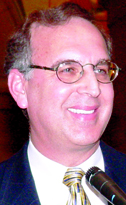
Rabbi Sid Schwarz is a senior fellow with CLAL: The National Jewish Center for Learning and Leadership. The founder of the Panim Institute for Jewish Leadership and Values, he is a consultant to Jewish organizations and synagogues throughout the country. This column first appeared in the New York Jewish Week.