
Regular exercise is good for the body and the mind, and it can help keep depression at bay. Modern science now recognizes these connections. But Jewish sages recognized this wisdom much longer ago.
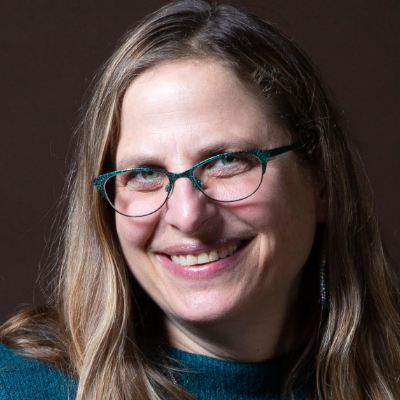
Scholar Hana Matt and artist Susan Duhan Felix propose to guide people to joy through Jewish teachings in a six-series class starting Nov. 6 at Berkeley’s Chochmat HaLev.
In the 18th century, Rebbe Nachman of Bratslav said depression is caused by a “buildup of impurities in the blood and spleen” that can be released through exercise. “The illness-generating toxins in the blood are exuded in the sweat, and the blood is left pure. One then comes to joy,” he wrote.

Jewish sources abound with such references, said Matt, who has been collecting them for several years. But to her knowledge, these teachings have never been amassed in one place, until now.
Matt, a teacher of world religion at the Graduate Theological Union in Berkeley, and Felix, a ceramic artist in Berkeley known for her Jewish ritual objects, agree that Judaism has much to say about how to incorporate more joy into life.
Over the years, as Matt collected such Jewish sources, she shared them with clients who came to her for spiritual counseling. “I realized there were so many of them, much more than in any other religion,” said Matt. In addition to Judaism, Matt has studied Christianity, Islam and Hinduism.
This past summer in Redlands, Calif., at a biannual gathering of the Jewish Renewal movement called the Kallah, Matt offered a first-time course on joy from the perspective of Jewish tradition. She told students about 18 things they can do to increase the level of joy in their lives.
“I decided, as a service to my fellow Jews, to bring these [ideas] out to the wider community, to let them see that [the concept of joy] is so strong in Judaism,” she said.
Matt’s class began with 51 participants and grew to 66, making it the largest course ever at the Kallah.
She declines to take personal credit for the big draw, and instead points to a general level of despair and the current economic situation.

“There are a lot of pressures on people and a general melancholy in our society right now,” Matt said. “People are really looking for ways to find more joy in their lives. They were really hungry for it, with an intense interest and intention and willingness to be active participants, not just stand by passively.”
Matt guesses that perhaps because of their long history with exile and anti-Semitism, Jews had to work harder at cultivating a joyful practice.
She believes it’s an idea whose time has come. “There’s a thirst for learning about ways in our very own tradition that can help us have real lasting joy that doesn’t depend on outer circumstances,” she said. “Even if I lose my job, or if my kids are doing drugs or not doing what I want them to do, I can still have a measure of happiness and contentment.
“Joy shouldn’t depend on my circumstances being the way I want them.”
Having close friends and a meaningful career, helping others — these and other facets of life, even something simple like dancing — can bring happiness.
Anyone coming to the Berkeley class expecting lectures might be disappointed.
“A lot of the class will be exercise and movement, singing, meditation, sharing with other people and a gratitude practice,” said Matt.
She wanted Felix to join her in teaching the class because she sees her friend as a living example of cultivating a joyful practice. “When she dances, she embodies joy,” said Matt. “She is constantly reaching out and helping others and always creating.”
Felix admitted that Matt “has done all the research and hard work. I’m doing this for the joy of it.”
Felix, who is usually the first one up on her feet at any event, said dancing and swimming are two of her favorite ways to bring joy to her life. But, she added, “being joyful is a choice. One has to choose joy and to do the things that make us happy.”
“The Direct Experience of Joy: 18 Proven Ways in Judaism to Come to Simcha (Joy),” 4 to 6 p.m. Sundays, Nov. 6. to Dec. 18 (no class Nov. 27). Series: $100 nonmembers, $75 members. Individual classes: $20 nonmembers,
$15 members. Chochmat HaLev, 2215 Prince St., Berkeley. www.chochmat.org/direct-experience-of-joy.html.