
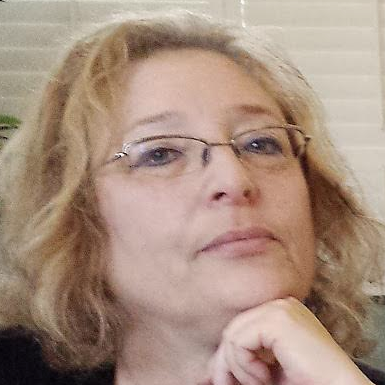
All Moses Mayzeles has left of his pre-Holocaust family is a neatly typed list of their names and former addresses.
Now at age 74, this Holocaust survivor lives in Fairfield with his wife. He has three children and seven grandchildren. For him, these seemingly mundane circumstances are the evidence of his victory over the forces of history that conspired against him: Nazi Germany, the Soviet Union, anti-Semitism, hunger, disease, fear and isolation.
Mayzeles, who immigrated to the United States just 10 years ago from eastern Ukraine, now is reaching out to ex-Soviets who get little or no aid from the organized Jewish community. He helps them find housing, schools and employment.
Lisa Greenberg, assistant director of immigration services at the S.F.-based Jewish Family and Children’s Services, said that most immigrants with refugee status are offered some aid, including basic financial assistance for their first four months in the Bay Area.
But she said few services are offered in Solano County. And if the immigrant family has not received refugee status, she added, services beyond information may have fees attached, though sometimes special arrangements can be made.
That is the situation of several emigres receiving help from Mayzeles, who has also enlisted his grown children’s assistance to help the newcomers.
“In the last two years,” said Ignat Mayzeles, his son, “he has helped four families, about 12 people, to find apartments, appliances, a car, things like that. He asks around people he knows. He gets us, his children, to do that, too. In our family, he is still the authority. He signs the lease and has even had them stay with him in his little apartment until permanent housing is found.”
Among those Mayzeles has assisted is Zinaida Tageyeva, who came to America in 1997 with her husband, son, his wife and children.
“Moses arranged for us to be picked up at the airport,” she said. “He had his children drive us into San Francisco to see the Jewish agency. He found us apartments and filled our refrigerators with two weeks’ worth of food. He got us furniture.
“He gave us his computer and he got us a car. My son still drives it. He arranged for someone to come with us to the health department, hospitals, Social Security office, the supermarket. He participated in our lives.
Recently, her daughters and their families arrived.
“Moses has been helping them, too. He enrolled us in adult school and my grandchildren in public school in Fairfield. He told us to study English as hard as possible, and we’re doing it. We are very grateful for the help of Moses and his family,” Tageyeva said.
Ignat Mayzeles believes in his father’s philosophy.
“Many Russians come here and they feel isolated and sad. My father persuades them [to] take English classes,” he said. “He knows this helps you start a new life..”
Moses Mayzeles, who supports himself with Social Security payments and Holocaust reparations, understands survival.
In Poland’s Lvov Ghetto, it fell to then 15-year-old Mayzeles to help forage for food for his family.
“It was very dangerous,” he said, “But people were starving. I had to help what I could. But everyone was hungry then, the gentiles too. All the good things went to the Germans. You grow up very fast under these conditions. There was danger always.”
He escaped the ghetto and passed as a non-Jewish Pole. He was sent to Germany as a slave laborer. Eventually liberated by the Russians, he was conscripted into their army.
Mayzeles later had the opportunity to visit what was left of Lvov. His family’s home had been destroyed. His grandfather’s apartment was occupied by another family. And no one was able or willing to tell him what had become of his loved ones — only that there was a big hole outside of town, where thousands of people had been shot.
Mayzeles was unable to find any trace of his 84 family members.
Later, after spending three years in a Russian prison on what he calls trumped-up charges, Mayzeles was among those dissidents granted amnesty when Stalin died in 1953.
He met and married his wife and raised children in Kharkov in eastern Ukraine. In 1989, 10 years after they first applied to emigrate, they were permitted to come to the United States.
After learning English, Mayzeles began helping others in small ways, including inspiring many of the Jewish emigres at the Fairfield Senior Center to attend school and learn English.
Mayzeles feels he has a duty. “He’s doing it because it comes from his heart,” his son said.