
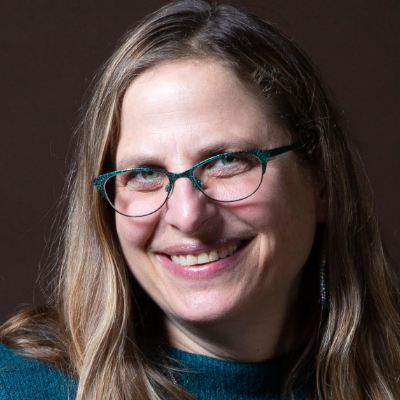
Every six months or so, Penny Diane Wolin used to receive a postcard from a man she had never met. It was always inscribed with a variation of the same thing: “I’m waiting for the book.”
“The Jews of Wyoming: Fringe of the Diaspora” was what he was waiting for. Larry Tromer had seen the exhibit of the same name at the National Museum of American History in Washington’s Smithsonian Institution and he wanted a copy of his own.
Now, the postcards will finally cease. There were many times that Wolin thought about abandoning the project. After all, one can only take so many rejections. Publishers told her repeatedly that pictures of “cowboy Jews” wouldn’t appeal to a broad enough market.
But the Sebastopol-based photographer believed that no matter how many prestigious museums had mounted her exhibit — and there were many — a show did not have the longevity of a book. When an exhibit is not on display, she reasoned, it sits tucked away, where no one can see it. She wanted her body of work bound between two covers, giving it a sense of permanence.
Enter Crazy Woman Creek Press. “The Jews of Wyoming” was published earlier this month, a 9-by-12 inch coffee-table book, on heavy stock.
A native of Wyoming, Wolin got some plum assignments in her career as a Los Angeles-based celebrity photographer; David Geffen, Dolly Parton and Randy Newman were among those who posed for her camera. But in her spare time, the Jews of Cheyenne, Casper, Gillette and Jackson Hole unintentionally exerted their pull on her psyche.
Especially since the prevailing conception among her urban co-religionists was that there was nary a Jew in the Great Plains state. “I understood them; we spoke the same language,” she said of her California compatriots, who grew up in Jewish enclaves like the San Fernando Valley and Beverly Hills. “If Wyoming Jewry wasn’t the real thing, what was it?”
So Wolin set out to prove that it was. The challenge — in addition to securing funding — was that the archives and libraries she visited offered scant information about Wyoming Jewry. So she was venturing into uncharted territory, which for her was home.
Documenting Wyoming Jewry took her more than 15 years. In a state of 481,000, the American Jewish Yearbook numbers Wyoming’s Jews at 400. However, Wolin estimates there are a couple of thousand.
Wolin began taking photographs when she was a teenager, and before she hit 20, she worked as the official photographer for the Cheyenne Frontier Days Rodeo.
The daughter of a businessman, Wolin is the granddaughter of Abraham and Sarah Wolinsky, who emigrated from a shtetl in Russia in the early 1900s. Her grandfather went to Wyoming from Omaha because Abraham heard “the government was giving land away,” her father, Morris Aaron Wolin, says in the book. “Free land he never heard of in Russia!” He sent for his wife later.
Wolin’s father is one of her subjects, and like all those who posed, he was interviewed by Wolin. One thing she deliberately left out alongside the photos is the names of the people she interviewed. Captions are taken from their own words, as are excerpts of their interviews.
She made that decision, she said, because she viewed Wyoming Jewry as representative of the Jewish experience as a whole, rather than of those individuals pictured. “Two sisters called ‘Mishpoche’ is more important than calling them by name because it reflects a larger concept,” she said. Like the one called “Single.” A man in a jacket and tie is sitting cross-legged in a field, trees behind him.
“I’m the most eligible Jewish bachelor in Cheyenne,” he says. “I’m the only one.”
Indeed, Wolin covers issues facing Jews throughout the diaspora: identity, assimilation, intermarriage, the Holocaust, anti-Semitism, feminism, Jewish pride and ritual.
And despite whatever preconceived notions about Wyoming Jewry other Americans may have, Wolin describes her upbringing in Cheyenne as “Conservadox,” never eating non-kosher meat and always observing the Sabbath.
Wolin said that she hoped her photographs would stand as a “roadmap to American Jewry,” and that future generations would see not just a work about the Jews of Wyoming, but also a portrait of the Jews of America.
These are Jews, who “had a rich life in terms of observance, interacting with the existing culture.”
Jews in the diaspora, she said, “have maintained our culture in the desert.”