
Centuries ago, one way to test a woman’s virtue before marriage was for her to straddle a wine barrel. If the scent of wine was on her breath, it was proof that she had previously been deflowered.
This was typical conversation over bagels on a recent Sunday morning at Palo Alto’s Congregation Kol Emeth.
For 25 years now, Rabbi Sheldon Lewis, spiritual leader of the Conservative synagogue, has presided over the weekly Talmud class. And for 25 years, he has kept a core group of people interested in studying the ancient texts.
“We had a wonderful nucleus of people from the beginning,” he said, “while some of the people around the table have changed.”
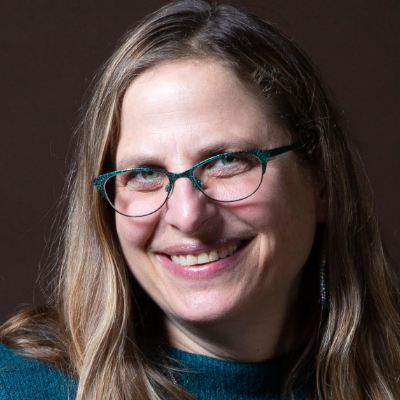
The group will mark its silver anniversary on Jan. 28. The public is invited to hear guest lecturer Charlotte Elisheva Fonrobert, an assistant professor in the religious studies department at Stanford University and a member of the synagogue. The event will also include brunch, klezmer music and dancing.
Fonrobert, who specializes in rabbinic literature and specifically, Talmud, will discuss “The Weeping Rabbi between Difference of Opinion and Dissent in the Beit ha-Midrash.”
Over the years, many of the longtime members have died, and each year, on the group’s anniversary, Lewis reads their names. He jokes that that is the only way to leave the group.
With about 12 regulars and any number of drop-ins, the group meets each week, to “plow through a text,” said Lewis.
Texts like the Schottenstein edition of the Babylonian Talmud, in Hebrew and English, he added, make the Talmud more accessible for people who don’t read the ancient Aramaic.
And why study Talmud?
“It is truly the repository of the building blocks of traditional Judaism,” he said. “It’s the place where the roots that are in Torah were fleshed out into what we know as modern Judaism. Almost everything we do and identify as traditional was shaped in the Talmudic period.”
The class is open to people with no background in text study, but many of the regulars have been at it awhile.
“The talmudic page is filled with disputes and discussions,” Lewis explained. Calling it “dialogical literature,” in that it promotes dialogue among the students, Lewis said, “What happens is we sit around the table, and end up entering those discussions and arguing ourselves.”
Oscar Firschein, a retired computer engineer who lives in Menlo Park, has been in the class since the very beginning, and his mother, Ruth Firschein, remained in the class into her 90s, until she passed away last year.
“She loved it,” he said, “although she would relate things to her shtetl mind.”
Firschein loves it as well. “The Talmud isn’t really known by non-Orthodox Jews. They’re missing incredibly rich literature by reading somebody talking about it secondhand, or not knowing it at all. How they reason out various laws is very intriguing.”
Firschein appreciates the format of the Talmud — how the various commentaries on the original text surround it. “It’s as if they are having conversations with each other, even though they lived hundreds of years apart,” he said.
Michael Hahn agreed. The Palo Alto psychologist, who has been in the class for more than 20 years, said it “makes these folks come alive as you hear their arguments; it’s almost like a deposition document.”
The Talmud “provides an incredible, interesting insight into some of the thinking that has occurred 1800 years ago, that is as relevant today as it was then,” he said.
The topics addressed can be either “totally obscure, and seem odd and quaint,” while others are “modern and clever, while subtle,” according to Hahn.
He also said that study of Talmud often helped him in his professional practice. The psychologist is sometimes called upon to help the courts in custody evaluations.
“Some of the tractates about divorce and marriage are as relevant as they were back then,” he said. “The rabbis were psychologists of their day.”
Firschein isn’t the only one to make Talmud study an intergenerational affair. While Hahn’s daughter is not a regular in the class, she is studying to become a rabbi and has attended with her father on occasion.
“I like to think some of it has rubbed off. Maybe it’s osmosis, seeing the Talmud tomes sitting around,” the psychologist said.
Said Lewis: “To have a dedicated group devoted to Talmud is such an important part of the life of the synagogue. It’s not a mass phenomenon, but it’s one of the foundations and it’s been of immense satisfaction to me. Second to Shabbos, I look forward to Sunday morning. It’s a wonderful part of our community.”