
Even those on the Israeli left have said they were caught off-guard by the outbreak of the Palestinian uprising now known as the al-Aksa intifada in late September.
Terry Greenblatt is not among them.
“Informed people on the left were not surprised,” she said. “We could not believe this pressure cooker didn’t explode before that.”
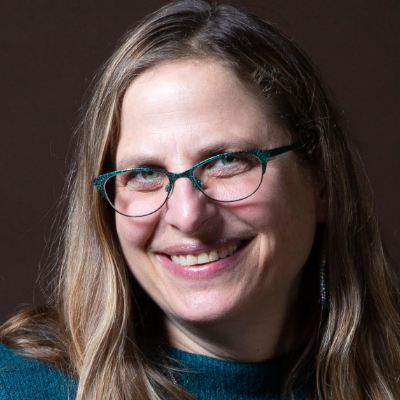
The director of Bat Shalom, an Israeli women’s peace organization, was in the Bay Area last week on a visit timed to coincide with International Women’s Day, sponsored by the Global Fund for Women. The S.F.-based foundation backs projects designed to advance the status of women around the world.
Bat Shalom is a women’s organization in Israel, but it is also one-half of a group called the Jerusalem Link, which unites Jewish and Palestinian women.
In the past five months, however, that cooperation has all but stopped. Whatever communication there is between the two groups is taking place “only underground,” Greenblatt said.
Nevertheless, she came to the United States to speak to a gathering convened by the Global Fund for Women. The other invited speaker was Sumaya Farhat-Naser, one of its Palestinian board members.
A professor of botany at Bir Zeit University, Farhat-Naser has won national awards for her peace efforts. She has a sister in Petaluma.
Although the speaking engagement was planned more than six weeks ago, the Israeli-imposed closure on the territories prevented Farhat-Naser from leaving the country.
After the organization prevailed upon diplomats to intervene, Israel granted Farhat-Naser permission to come for 24 hours only — with the condition that she speak to no one but the Global Fund for Women. She refused.
The telephone lines of her village, Al Bira, were destroyed when roads leading up to it were blockaded. Using her cellular phone, she called her speech in to the Bat Shalom office, which then sent it to the Global Fund’s offices. The president of the fund read it at the meeting.
In her speech, Farhat-Naser spoke of her desire to get to know Greenblatt more as a friend than as a colleague, and for Greenblatt to do the same.
“Such an opportunity, to see each other as normal people in a normal setting — the United States! We anticipated with delight the time — and the freedom — to be ourselves. Far away from a political situation that separates us in every sense of the word. Far away from the political situation we are both imprisoned in.”
But that was not to be.
Asked to comment, the Israeli Consulate declined.
Greenblatt, a native New Yorker who moved to Israel in 1971, has been active in the women’s peace movement for more than 25 years.
Where Bat Shalom makes a difference, she said, is that its board includes 20 women, five of them Knesset members representing three different parties. That they sit on the same board as members of the radical left creates an interesting dynamic, she added. Plus, “women are willing to sit at the table longer.”
But that is within Israel. In the broader scheme — as one-half of the Jerusalem Link — the group’s work is floundering.
What is different now, Greenblatt said, is that all efforts at cooperation have completely broken down. “The Palestinians will no longer participate in any joint work that would be conceived as normalizing relations with the Israelis.”
This is because, despite peace process efforts, nothing on the ground is changing for the Palestinians, she said.
In Greenblatt’s assessment, at the 1998 Wye Plantation talks in 1998, when the Israeli and American Jewish public learned the Palestinians’ idea of a just settlement, “people flipped.”
“Issue by issue, the peace camp has lost people along the way,” she said. Whatever conditions some would be willing to accept, the right of return for Palestinians was not among them.
“As a people, we never understood that this would be a non-negotiable issue for the Palestinians.”
She had harsh words for leftist American Jews, whom she said cannot be concerned with human rights abuses around the world while failing to see what is happening in the territories.
“It’s easier to distance yourself from it. You must hold simultaneously your healthy, rich identity as a Jew, but you must acknowledge that injustice is being done in your name.”