
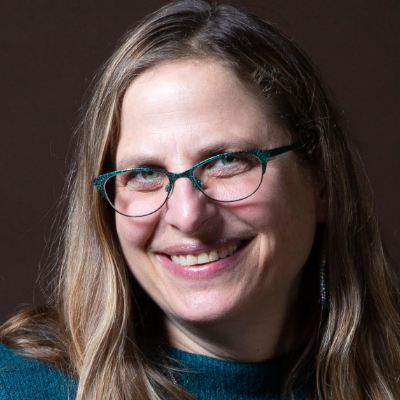
Liliya Levitan arrived from Ukraine in August 1995. Like many Jewish refugees from the former Soviet Union, she took English lessons. She learned about American history and government. And after much studying, she became a U.S. citizen in November.
Levitan, 67, credits the S.F.-based Jewish Family and Children’s Services with easing her way to citizenship. “I am very thankful for the help that JFCS gave me,” she said. “I could not have done it without them.”
But if Gov. Gray Davis’ new budget passes, other new emigres may have a tougher road to naturalization.
“We’re worried that the state will cut citizenship funding altogether,” said Michael Graham, senior program supervisor at JFCS.
That is why Graham joined San Francisco Supervisors Sophie Maxwell, Tom Ammiano, Chris Daly, Aaron Peskin and Gerardo Sandoval on the steps of City Hall Monday to urge the state to retain funding for naturalization services.
Also in attendance were a number of union and immigrants rights leaders, as well as Levitan.
According to Graham, a state naturalization aid program has been in existence since 1998, and JFCS has been receiving state funding since 2000.
“On Nov. 14, when Gov. Gray Davis announced drastic cuts in his new budget, he reduced funding for this program from $6.5 million to $2 million,” said Graham. “That’s his proposal — a 75 percent reduction.”
Graham offered statistics showing that the current sum of $6.5 million could help 18,571 clients, while $2 million would help only 5,714 clients, leaving 12,857 people not served.
JFCS helps more than 700 emigres a year –most of them refugees from the former Soviet Union — file their citizenship applications.
It’s a cumbersome process, Graham said, especially for people who are still struggling to learn English. Graham said one application that used to be four pages is now 10.
JFCS also offers emigres English classes, preparatory classes for the citizenship exam and tutoring for the interview, as well as referral to legal services.
“It would be tragedy if JFCS and other organizations were not able to help people like me,” said Levitan, who lives in San Francisco. “I had a lot of help in learning about the American constitution, American history, the American government and life in America.” She also learned English with help from JFCS.
If the state cuts funding to JFCS, that will lead emigres to rely increasingly on other state and local welfare programs, Graham said, and actually cost the state more in the long run.
“The state stands to lose money if it stops paying for these services,” he said. “Some of our services are paid for from other sources, but everything else comes from state money.”
Graham also emphasized that in this era of new anti-terrorism laws, it is important for emigres to have the rights of due process that go along with citizenship.
Additionally, seniors now face a welfare-reform mandated cutoff of federal benefits if they do not naturalize within seven years after arrival.
“We’re pretty worried about it, and we’re trying to do advocacy now,” said Graham. “It’s quite a small budget item statewide, and it won’t just affect our client base but a huge range of immigrants and refugees.”
Graham sounded hopeful that meetings between immigrant advocates and legislators would have the desired effect.
“This is a valuable service,” he said. “If it’s not funded, then it’s likely that fewer people will become citizens and there will be all kinds of repercussions.”