
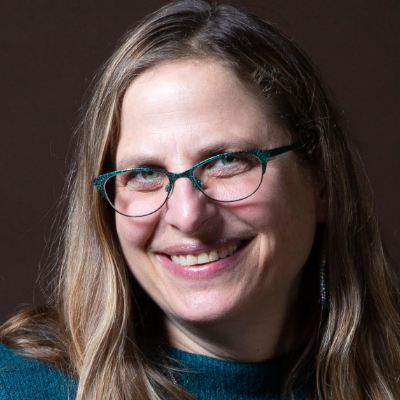
“I always say I’ve written this as a veteran not an expert,” said Schwartz, who was in the East Bay recently on a book tour. “People ask for advice, but I don’t think it’s what they really appreciate. They appreciate seeing what it feels like, the dynamics of a marriage they know. It’s affirming and comforting.”
With this memoir, Schwartz, a Princeton resident and writing professor at Richard Stockton College of New Jersey, decided to write what she knew
Her motivation to write about her marriage spawned from her frustration with the paucity of real-life marriages portrayed on television, in movies and in books. These relationships were either 100 percent happy or just the opposite.
“Most are much more complicated, up and down, and full of nuance,” she said. “I wanted to capture a real marriage at work, looking not so much at the crisis issues but about how the small things in a marriage are about the big things.”
For example, she said, something as small as negotiating how much to keep a window open during the night can be telling.
“It tells a lot about what the larger relationship is,” she said. “How you’re going to negotiate the struggles of everyday life and how they reflect the larger issues.”
The book started to take form in a series of essays Schwartz wrote beginning in 1988, after her husband suffered a heart attack and she was diagnosed with breast cancer. Their health problems occurred within two weeks of one another.
“We were both home six months at that time, and that really did great things not only for us as individuals but for our marriage,” she said. “It helped us help each other back to health in a central way.”
Schwartz found herself writing about their relationship, which served as a springboard for them to talk about it. “I wrote us both out of the grief that came with being ill, and it helped us both back into health,” she said.
In 1940, Schwartz was born to German Jewish refugees in Forest Hills, Queens, N.Y. Unlike many Jews at the time, her entire extended family fled Germany in time to escape the Holocaust. Her father and uncle were in the leather business, and they invented an elaborate scheme of transporting large amounts of cash on trains. They would tape it under seats or toilets, and one of them would await it in Switzerland.
Schwartz grew up trying to assimilate into American culture, as “it was the age of the melting pot, not the salad bowl, and…I wanted to be as American as possible. Most of the Jews in Forest Hills at that time — the 1940s and 1950s — were like that.”
Schwartz married her high school sweetheart, the son of Eastern European immigrants. While there was pressure to marry someone also of German Jewish origin, Schwartz said her father, who only had girls, was so happy to finally have a son that he didn’t object much.
While a few of the essays in her book are specifically about Jewish topics, the book has a “Jewish sensibility and value system that I only really became aware of through the energy of people’s responses,” she said. One reviewer wrote, “You don’t have to be Jewish to like ‘Thoughts from a Queen-Sized Bed,’ but it helps,” she added.
Help or not, non-Jews are appreciating Schwartz’s observations as well. After one reading, an Irish nun told her the book reminded her of her parents. Another reader said, “It seems like you’ve been sleeping under my bed for the last 20 years,” Schwartz relayed.
“One of the strengths of memoir, when it’s working, is when people relate to it on personal terms,” she said. “People come up and beg to tell me their stories.”
Since all her material for the book came out of her own family, Schwartz ran it by her husband and children first. There were a few things they had to negotiate on.
In one particularly funny anecdote, Schwartz writes that the women of her daughter’s generation are totally different from the women who came before.
“Julie has no time or patience for domesticity,” she writes of her daughter. “She once invited me over for a drink and served water.”
In one essay, Schwartz writes about being a bit jealous of her kids’ freedom as young adults.
“But having seen my kids getting married and having kids older, we have a great freedom now,” she said. “Our kids were out of the house when I was in my mid-40s. My daughter and son will have them out of the house when they’re in their late 50s, so in some sense it evens out.”
While Schwartz insists that writing her book did not bestow any advice-giving powers, she happened to offer some for those who want a long, happy marriage.
Avoiding the ruts of predictability is key, she said.
As is finding the time to do something special and not taking the relationship for granted.
“It is a lot of balancing, the ‘I’ and the ‘we,'” she said. “If the ‘we’ takes over so the ‘I’ feels it doesn’t have time to breathe and be its own person, that’s bad.”