
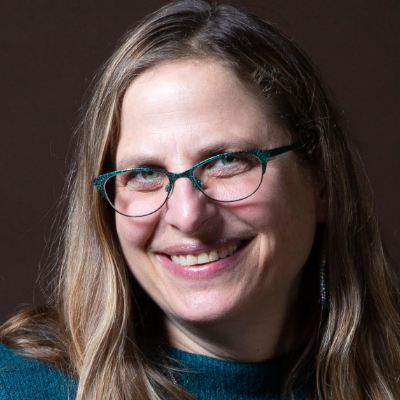
Rita Semel has just returned from an alternate world where a man named Yehuda and a man named Mohammed were so inseparable, that she referred to them as the Bobbsey Twins.
That world was in Rio de Janeiro, Brazil, where the United Religions Initiative recently convened and elected Semel chair of its global council. Yehuda is an Israeli Jew and Mohammed an Egyptian Muslim who have bonded during their participation in the international organization.
Semel, a San Francisco resident, has long been a familiar face in the local Jewish community — working for communal organizations and as a lay leader. A member of Congregation Emanu-El, she began her involvement in intergroup relations when she was associate director of the Jewish Community Relations Council in the 1970s. Later, she became its executive director.
The JCRC remains active in the issue, and its current executive director, Rabbi Doug Kahn, accompanied Semel to Rio.
Semel remembered a 1963 conference on religion and race in San Francisco where segregation was the talk of the day. “That was an integral part of the JCRC and the Jewish community for many years,” she said.
From there, she got involved with the San Francisco Interfaith Council, which led her to URI.
The San Francisco-based URI grew out of an interfaith service that took place here in 1995 to commemorate the 50th anniversary of the signing of the charter to start the United Nations.
“When it was over, we decided it was too important of an opportunity to let go without doing something on a more sustained, ongoing basis,” she said. “We began meeting to see what that might be.”
They felt the other interfaith organizations in existence did not directly involve people on the ground.
Working with San Francisco Episcopal Bishop William Swing, they looked for grassroots activists on religious issues around the world. They came up with “cooperation circles,” which require a minimum of seven people from three different faiths working together on an issue of their choosing, such as poverty or the environment. There are now 185 such circles around the world.
While the Rio gathering was not the first global assembly for this group, it was the first to take place outside the United States. The next one will happen in three years in either Seoul, New Delhi or Nairobi.
Besides fostering interfaith cooperation, the URI — and its gatherings — enable people to meet face to face.
“When people meet people as people, and get to know each other as human beings, there is a chance that stereotypes and misconceptions and fright will be blown away,” she said.
More than 300 people from 37 countries representing the various faiths of the world came to Rio to participate in the conference.
Rio was the perfect place to explore issues of poverty, Semel said, with the unequal distribution of wealth being so noticeable there. Semel and some others toured what’s called a favella, or slum.
Semel spoke of one luxury hotel that went bankrupt and was turned into a community center where families who otherwise would not be able to afford such things could use a swimming pool and take computer classes.
Semel said all her work on this issue has made her appreciate the differences of other religions, while bringing her closer to her own.
She was also grateful for the opportunity to speak with Muslims at the conference, who she said were concerned that extremist elements of Islam are being seen as the dominant form.
“We certainly know people that would distort teachings of Judaism and Christianity, and we have to make sure we all know what the teachings say.”
From her work in this arena, Semel believes that joining forces with others can make a big difference. At the same time, she realizes they cannot solve all the world’s problems.
“Blaming other people who are different is not the answer,” she said. “We have to learn to live in this multireligious, multicultural world of ours because it’s the only one we’ve got.”