
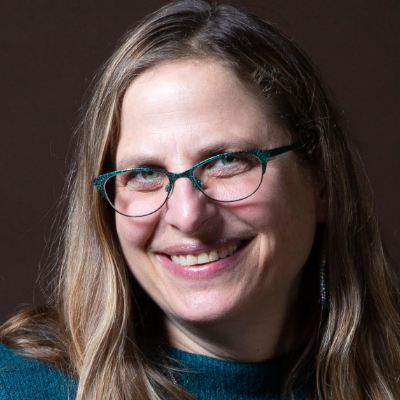
For most of her life in America, Marie Brandstetter worked in her husband’s shoe store and raised her four children. But after her husband died in 1994, she began talking about her past.
With the help of a therapist, she uncovered the wartime memories she had mostly kept buried. She began speaking in schools and wrote a self-published book called “Mania’s Angel,” because she believed an angel had been looking out for her and her family.
Brandstetter, of Burlingame, died Monday, Dec. 12. She was 72.
Marie Brandstetter was born Mania Zelwer in Blaski, Poland, on Jan. 20, 1933. Her father owned several buses with his brothers, and they worked as bus drivers.
Following the Nazi invasion of Poland, her father went off to fight in the Polish Army. Brandstetter fled with her mother and brother, and they spent the war on the run, in the Soviet Union and Central Asia. They traveled by foot and hid on coal trains, not eating for days at a time.
And they had many close calls, like staying in a hotel filled with Gestapo agents. Brandstetter almost died of typhoid.
When the war ended, the family learned that their father had been sent to a concentration camp, where he was killed. Her mother soon remarried, which greatly angered Brandstetter.
She decided to try entering Palestine illegally with a friend.
“I was a little rebel and I wanted to go to Palestine so badly,” she recalled in a 1998 Redwood City talk about the Exodus voyage.
They departed from Marseilles, and “it’s a miracle the ship didn’t tip over and drown us all,” she said.
She described the conditions of the boat as “pathetic,” holding almost 4,500 refugees when it was designed to carry 600.
As the ship approached Palestine, it was attacked by the British. “They attacked us with tear gas and water hoses,” Brandstetter said. “We fought back with tin cans.”
She sustained a flesh wound in her leg, which could not be treated for some time.
Brandstetter and the others on board were refused admission to Palestine by the British and were returned to France. From there, they were sent to displaced persons camps in Germany. She was reunited with her family and immigrated to San Francisco in 1950 with her brother.
In 1953, she married Newell Brandstetter, and they settled in Burlingame.
“When we were children, she never told us about her life,” said her son Victor, of Discovery Bay. “Whenever one of us would act bratty or spoiled, she would threaten us, and say ‘One of these days I’m going to tell you my story about walking through Siberia in the snow, looking for food,’ but she would only tell us bits and pieces.”
It was only in 1994, when her husband died, that she began talking at length about what she went through. She got in touch with the Holocaust Center of Northern California and became one its speakers who went to schools to tell her story.
“This was her therapy to heal herself,” Victor Brandstetter said. “She had been angry for so many years, and the people who heard her would give her so much love and praise. She really touched a lot of hearts, and that became her life purpose.”
Leslie Kane, executive director of the Holocaust Center, described Brandstetter as always eager to tell her story.
“She was also one of the most upbeat people I had ever met,” Kane said. “Considering her story, it was remarkable that she was always upbeat with a smile on her face.”
In 1997, she published “Mania’s Angel.”
At that time, Brandstetter told the Jewish Bulletin, “As I think back on those times, I realize one should never take anything in life for granted. I believe that to live free in the best country in the world, we first had to endure what we did.”
In addition to her son Victor, Brandstetter is survived by sons Hymie of El Dorado Hills and Joseph of Sherman Oaks, daughter Rachelle Doll of Crownsville, Md., 11 grandchildren and two great-grandchildren.
Donations in her memory may be made to the Holocaust Center of Northern California, 121 Steuart St., S.F., CA 94105.