
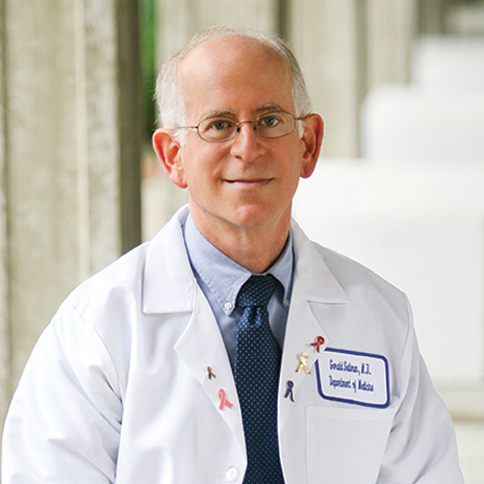
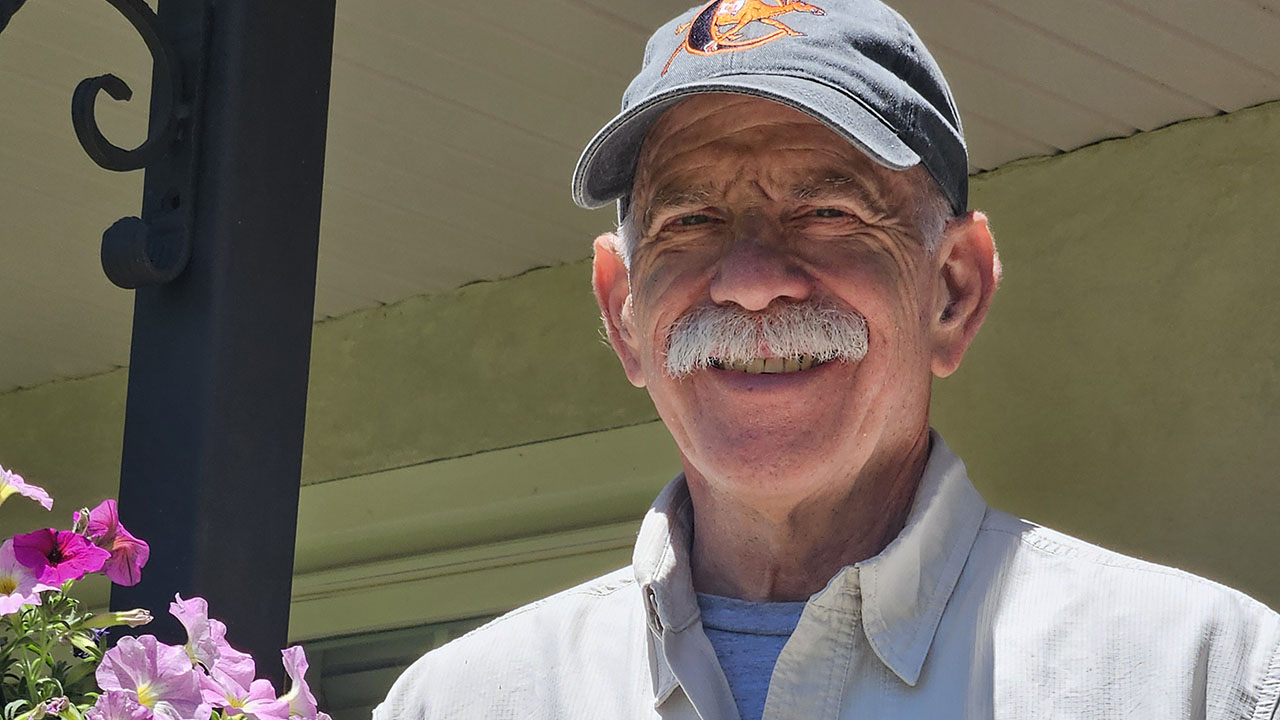
My cousin Alan Saliman was prepared to die. He had been dealing with a serious heart condition called amyloid cardiomyopathy for a long time, and only a miracle could save him.
He had to retire from his internal medicine practice in 2021 because he was too weak to work. In July 2024, he was barely conscious when he arrived by ambulance to the hospital. His prayers were answered just in time when he received a heart transplant.
One year later, Alan received a letter from the heart donor’s parents. He sobbed for three days after he read it. Here is a paragraph from that letter: “We are comforted with the fact that our son made the decision of organ donation and that his gift is allowing you to live and experience life. We will always think of you in our hearts and prayers. We hope the best for you and your family. We know that our son would be proud that he was able to make a difference for someone.”
Before I tell you more about Alan, let me tell you a little about organ donation.
Rabbi and Jewish ethicist Shmuly Yanklowitz of Scottsdale, Arizona, spoke in March on the subject of kidney donation to a packed audience at the Peninsula Jewish Community Center in Foster City. Roxanne Cohen and Michele Solomon, two Bay Area residents, also spoke. Cohen discussed her family’s decision to donate her brother’s organs after a tragic boating accident. Michele described what an incredible gift it was for her husband to receive three different kidney transplants.
After Cohen and Solomon told their touching stories, Yanklowitz stunned the audience. He spoke about his decision more than a decade ago to become an “altruistic kidney donor” in which a living donor has no personal relationship with the recipient. He explained that our bodies can work well enough with only one kidney but we have been provided with two so we can give one to a stranger.
In his book “The Five Ounce Gift,” the rabbi writes: “In Jewish thought, love is not merely an emotion. Rather love is manifest through the deed.” He continues, “We emulate God when we act in a Godly manner in the world.” Yanklowitz hopes that altruistic kidney donations will become a norm. Within the ultra-Orthodox world, that is already happening. Israel has more living altruistic kidney donors than any other country in the world per capita, due in large part to the efforts of the ultra-Orthodox community.
Not to be outdone by her husband, Shoshana Yanklowitz also donated a kidney to a stranger in 2024.
No one should die awaiting a kidney transplant, but the National Kidney Foundation estimates that 12 people die each day in the United States in need of a kidney.
Nearly 90,000 people in the United States needed a kidney transplant as of September 2024, according to the U.S. Department of Health and Human Services, and about 27,000 kidney transplants took place here in 2023.
If you are healthy, you can donate at almost any age including into your 70s and 80s, according to the National Kidney Registry. Clearly, more education is needed to maximize the number of kidney donors.
I asked the rabbi after his talk about who most influenced him to become an altruistic kidney donor. After a moment of reflection, he exclaimed, “Peter Singer!”
Singer is a modern philosopher and author of the book, “The Life You Can Save,” the same name of the organization he founded to address world poverty. In his book, Singer poses this existential question, “What am I doing as a human being on Earth to help the less fortunate? Can I perhaps do a little bit more, and if so, how?”
At the rabbi’s talk, an audience member said that if donating a kidney seems extreme, there are other ways to make a life-saving difference such as donating blood or donating bone marrow. My daughter donated bone marrow while she was in college. It was a painful procedure, but she later learned that her donation saved the life of a young boy.
Following my cousin Alan’s heart transplant, his kidneys failed, probably as a result of cardiac shock that preceded his surgery. He had to go on dialysis. But by another miracle, a half-year later he received a kidney transplant. Alan has enormous gratitude for his organ donors. He told me that he was raking leaves this past fall and thought to himself, “No longer is this something I have to do. This is something I get to do.”
A major principle in Judaism called pikuach nefesh asserts that life is essential and that it is our obligation to save a life in jeopardy. In the Talmud, it is mentioned that if you save one life, it is as if you saved the entire world. Taking into account your own health, what are you willing to do to save a life?
Please visit Donor Network West to learn more about organ donation.