
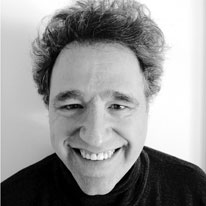
Charles Vanik, the congressman whose name graces legislation that helped free thousands of Soviet Jews, brought liberal civil rights luster to the hard-edged Cold War battle for human rights.
A Democratic member of the Ohio delegation to the U.S. House of Representatives from 1955-81, Vanik died August 29 in Florida. He was 94.
Vanik joined U.S. Sen. Henry “Scoop” Jackson (D-Wash.) in authoring the historic 1974 Jackson-Vanik amendment to the Trade Reform bill that stipulated free emigration markers in order for the Soviet Union to qualify for favored trade status. Leaders of the movement to free Soviet Jews say the amendment was critical to allowing thousands of Jews out of the Soviet Union.
Natan Sharansky, the Israeli leader and former prisoner of the Soviet Gulag, cites the legislation as a hallmark of how governments should approach human rights abuses.
Vanik’s commitment came not just from his lifelong closeness to Jews in his native Cleveland, but to his impassioned support for civil rights. His other famous act was quitting his safe, heavily Democratic seat in 1968 so Louis Stokes could run and win to become the first black congressman elected from Ohio. The same year Vanik took on a popular incumbent Republican in the neighboring district — and won.
“He was one of the real liberals in the Congress, a leader in passage of social legislation,” said Stokes.
His liberal ethos was key to understanding his commitment to Soviet Jewry, said Malcolm Hoenlein, executive vice-chairman of the Conference of Presidents of Major American Jewish Organizations. “For him it was a matter of principle, values, a commitment to justice and freedom,” said Hoenlein, who as head of the New York Council on Soviet Jewry worked with Vanik. “It wasn’t a Cold War strategy.”
Vanik was also praised in a statement from Ed Robin, the chairman of NCSJ: Advocates on behalf of Jews in Russia, Ukraine, the Baltic States and Eurasia. Vanik had worked closely with NCSJ in its former incarnation as the National Council on Soviet Jewry.
“The entire NCSJ family is saddened by the loss of a legislative giant who, with great vision and compassion, authored legislation that changed the course of how the United States confronted the forces of oppression,” Robin said.
Following Vanik’s death, Democrats were celebrating a life they said was devoted to bettering lives in the United States and beyond.
“We are blessed to have known him and worked with him over the years to make both our country and the world a better place,” said Howard Dean, the Democratic National Committee chairman. “Literally tens of thousands of Soviet Jews owe their freedom to Rep. Vanik and Sen. Jackson, who together created legislation that required the United States to link human rights records with special trade privileges.”
Ira Forman, the executive director of the National Jewish Democratic Council, called Vanik “a strong friend to the Jewish community who gave his heart and soul to the cause of Soviet Jewry.”
Vanik’s appeal crossed party lines, said William Daroff, the Washington director of the United Jewish Communities and a former Republican lobbyist.
“When I was a young kid in Cleveland, just getting started in politics, Charlie Vanik was my congressman. I always looked up to him as a senior statesman and a man of virtue,” Daroff said.
“He was an inspiration to many young Jewish activists for literally saving the lives of tens of thousands of Soviet Jews, who owe their survival to men like Charlie Vanik.”
Vankik and Jackson were righteous gentiles,” said Mark Talisman, Vanik’s chief of staff and a founder of Project Judaica. “Both as Christians could have lived a happy life not doing any of this.”
Vanik, the son and grandson of Czech-descended butchers, grew close to Cleveland’s Jewish community just out of college in the 1930s when his first job as a lawyer was working to settle Jewish refugees from Nazi Europe.
The stories he encountered in that role, the friendships he forged and his deep Roman Catholic faith guided him for the rest of his life.