
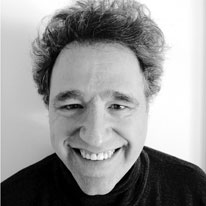
After years of on-and-off policy wars with the pro-Israel establishment, liberal Jewish advocates for a more aggressive U.S. posture in Middle East peacemaking are taking the fight to the street.
K Street, Washington’s lobbying mile, that is.
J Street was launched during a conference call April 15, after weeks of hushed speculation. The lobbying outfit and political action committee is backed by some of the biggest names in the dovish pro-Israel community,
Until now, organizers of J Street have been unwilling to discuss their plans in detail. But in a recent interview with JTA, executive director Jeremy Ben-Ami said the goal is to take on the pro-Israel giants, particularly AIPAC, where they are the most powerful — in Congress.
The new group’s launch video takes aim at several prominent non-Jewish conservative supporters of Israel, as well as Morton Klein, the president of the Zionist Organization of America, suggesting that their criticisms of the current peace process do not represent the views of many American Jews.
Ben-Ami says the new lobby will work the halls on Capitol Hill, where he asserts that the majority of lawmakers are sympathetic to the pro-Israel, pro-peace position and doing more to support Palestinian moderates, but are afraid of the political consequences of speaking out.
J Street wants to show members of Congress that the dovish view commands support among “longtime donors, new donors, leading people in their community,” said Ben-Ami, who has spent at least two years trying to launch various incarnations of the project.
The group is ready to go with a projected annual budget of $1.5 million, about half of which is on hand, and a staff of four. That’s a fraction of the nearly $50 million AIPAC spends — and that doesn’t even include the totals from AIPAC’s legacy fundraising program.
Despite the funding gap, Ben-Ami insists the new lobby will play as tough as its counterpart and suggested consequences for lawmakers who don’t step up.
“It’s so they’ll hear, ‘Please do sign on because if you don’t, I’m going to be upset,'” Ben-Ami said.
Political differences already are part of Washington public life, at least as far as debates go. Americans for Peace Now, the Israel Policy Forum and Brit Tzedek v’Shalom are go-to spots for those seeking the dovish Jewish view.
Over the years, each has carved out a niche: the Bush administration has come to use the Israel Policy Forum — inviting its leaders to top briefings — as a means of reminding the pro-Israel establishment that it recognizes more then one Jewish voice. Brit Tzedek says its base numbers about 30,000 active members who are ready to blitz lawmakers with calls. Americans for Peace Now brings notable Israeli doves to Capitol Hill for briefings, and behind the scenes has played a role in tempering hard-line bills.
However, legislation is where the rubber meets the road in Washington, and in this area the groups’ success has been limited by AIPAC’s years of credibility and influence on the Hill.
The problem, Ben-Ami said, is that the existing dovish groups have failed to convince lawmakers that their approach is “a politically feasible position.”
J Street will attempt to change that dynamic. It has brought to its advisory board not only leaders of the dovish triumvirate but veterans of more mainstream and establishment groups.
They include Sara Ehrman, the doyenne of Jewish Democrats and a former AIPAC board member; Sam Lewis, the former U.S. ambassador to Israel affiliated with the Washington Institute for Near East Policy; Alan and Debra Sagner, veteran United Jewish Communities fund-raisers; and Hannah Rosenthal, the former executive director of the Jewish Council for Public Affairs, the community’s public policy umbrella.
Rosenthal, now an executive with a Wisconsin nonprofit health care provider, says that as JCPA boss, she was constantly fielding queries from constituents about why the word “peace” seemed to be missing from so much pro-Israel activism.
“The story that comes to mind is when we were pulling together the Israel solidarity rally in April 2002,” she said. “It was so important, and it was a wonderful experience participating and organizing the rally,” held during the bloodiest period of the second intifada, when suicide bombings were almost routine.
“But what I remember most is hearing afterward from various communities, ‘Where was the word ‘peace’? Where is the voice that talks about negotiations, about diplomacy?'”
AIPAC declined to comment about the J Street launch; insiders said it was watching the new group with interest but was not overly concerned. They also noted that AIPAC has backed peace efforts when Israel and the United States have endorsed those efforts, most recently and notably the Bush administration’s diplomatic push launched last year in Annapolis, Md.
AIPAC has demonstrated a readiness to heed forceful Israeli calls in favor of bolstering Palestinian moderates. Last year, for instance, it backed a congressional letter from the Bush administration urging an increase in funding for the Palestinian Authority.
Malcolm Hoenlein, the executive vice chairman of the Conference of Presidents of Major American Jewish Organizations, says he is doubtful that J Street is going to have a significant impact on U.S. policy.
“I don’t think that it affects policy,” Hoenlein said. “I think AIPAC enjoys very broad-based support.”
Klein, of the ZOA, said he was “pleased to be shown” in the J Street video “opposing the policies of this group, which I think are naive, simplistic and mistaken.”
While members of J Street’s advisory board include the leaders of a number of dovish organizations, none of the groups is affiliated with J Street because its explicitly political agenda conflicts with their nonprofit status. Separate from the lobbying outfit, J Street also will set up as a political action committee to raise funds for candidates.
Ben-Ami, a Clinton administration domestic policy adviser who has gone on to counsel a number of Democratic campaigns, says ambitions are low for now.
“On the PAC side, we’ll have serious endorsements in no more than a handful of races,” he said. On the lobbying side, “no more than a couple of dozen offices” will be targeted for swaying over to the dovish side.
Lobbyists who now seek to roll back AIPAC-backed legislation count themselves fortunate to garner 40 votes in the House and about a dozen in the Senate.
J Street organizers insist their organization will not always be in competition or conflict with AIPAC and others in he pro-Israel establishment.
“It’s not an institutional competitiveness,” Ben-Ami said. “It has nothing to do with anti- or pro- any organization.”
Ben-Ami says the project has no one single major donor, and hopes to duplicate successes such as MoveOn.org and the Barack Obama presidential campaign in building up small donor bases. Nor does it have offices — Ben-Ami says he has been setting up J Street from Internet cafés.
Significant donors to the startup include Alan Solomont, a Boston philanthropist and a leading Obama fundraiser; Alan Wurtzel, the Circuit City mogul who is also involved in the Israel Policy Forum; the Sagners; Fran Rodgers, a major Democratic donor who founded WFD, an employment consultant; and Gail Furman, a New Yorker who funds Democratic activist groups.
Off the record, leaders of established Jewish organizations are watching the group with interest, but also are anxious that it included figures who have stirred controversy. Among them are Eric Alterman, a media critic who has been lacerating in his criticism of AIPAC, and Eli Pariser, the MoveOn.org founder whose group’s strident anti-Iraq war activism has spooked some centrist Democrats.
Notably absent is George Soros, the billionaire philanthropist identified with confrontational liberal politics. His interest in Ben-Ami’s earlier efforts drove off mainstream Jewish donors.
Solomont told JTA that focusing too closely on who is and who isn’t on the list was narrow-minded.
“This is too difficult and dangerous a problem to be left to a minority of folks to decide what the right course is,” he said. “We have shut off certain kinds of debate, and that’s not in our interests as Americans and as Jews.”
JTA staff writer Ben Harris contributed to this report.