
When Adalah, an Israeli Arab legal rights group, joined an initiative in 2007 to create an Israeli constitution that would dilute — if not remove — the state’s Jewish character, it unleashed a furor in pro-Israel circles.
Much of the anger was directed at the New Israel Fund, a fundraiser for an array of progressive Israeli organizations that sent or directed at least $70,000 to Adalah in 2007.

That controversy — and others involving the New Israel Fund —helped spur the formulation of new guidelines for NIF grantees. Made public last week, the guidelines require that grantees commit to avoiding actively undermining Israel’s Jewish identity.
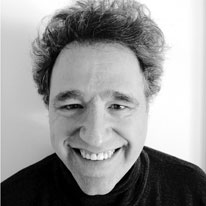
Daniel Sokatch, NIF’s director, says the Jewish identity issue will become integral to the group’s pitch to donors.
“We believe that Israel is the vehicle for the national sovereignty of the Jewish people and simultaneously an open society conferring equality on all its citizens,” said Sokatch, who was the CEO of the S.F.-based Jewish Community Federation from July 2008 to September 2009. He still lives in San Francisco.
A participant in an NIF conference call Sept. 20 said the new guidelines were intended to clarify NIF’s mission and did not represent a shift in philosophy.
Still, the change follows a noisy campaign this year calling for NIF to change its ways.
For decades, NIF has supported a handful of groups that track alleged Israeli abuses and accommodate the non-Zionist outlook that prevails in Israel’s Arab sector.
After years of muted criticism over such support, this year many critics had had enough. Some Israeli lawmakers wanted to impose legal controls on how NIF operates in Israel.
In addition, critics, led by NGO Monitor (an organization set up to track nongovernmental groups it says undermine Israel), said that NIF, wittingly or not, was allowing itself to be sucked into a movement that seeks to delegitimize Israel as racist in the hopes of replacing it with a binational or Palestinian state.
Ultimately, the calls to censure NIF were rebuffed by top Israeli officials and the criticism of NIF abated. An array of public figures, including important leaders on the political right, defended the right of nongovernmental organizations to operate without excessive scrutiny.
But Sokatch, who became NIF director 11 months ago, still isn’t resting easy. He is an evangelist of the notion that NIF is honoring both adjectives — “Jewish” and “democratic” — that pro-Israel groups attach to virtually every mention of Israel.
During an interview, Sokatch repeatedly pointed to a copy of Israel’s Declaration of Independence gracing an otherwise bare wall, making the point that both elements appear in the founding document. It was the basis, he said, for item seven in the newly published guidelines, under a section beginning, “Organizations that engage in the following activities will not be eligible for NIF grants or support.”
The item bars funding for groups that work “to deny the right of the Jewish people to sovereign self-determination within Israel, or to deny the rights of Palestinian or other non-Jewish citizens to full equality within a democratic Israel.”
It was the first time that NIF cited Jewish self-determination as a factor in funding.
“Whenever anyone applies to the New Israel Fund for funding or when they apply for re-funding, that will be the lens through which we make that evaluation,” Sokatch said. The guidelines are not retroactive.
In the past, NIF leadership has said it does not agree with all that its grantees say or do, but it would support their right to speak as they wish in a democratic society.
Sokatch said last week that now, “if we had an organization that made part of its project, part of its mission, an effort to really, genuinely organize on behalf of creating a constitution that denied Israel as a sovereign vehicle for self-determination for the Jewish people, a Jewish homeland, if that became the focus of one of our organizations’ work, we would not support that organization.”
After JTA published that quote, it raised a storm of controversy. Sokatch subsequently contacted JTA to clarify, saying that such a “mission” would have to be central to an organization’s activities in order to result in a suspension of funding, and that NIF would be the one to make the determination.
Gerald Steinberg, who directs NGO Monitor, was among the NIF critics wondering how the new guidelines would be applied.
“The question is how is it going to be implemented — when and how — and how are the internal battles are going to be resolved,” said Steinberg.