
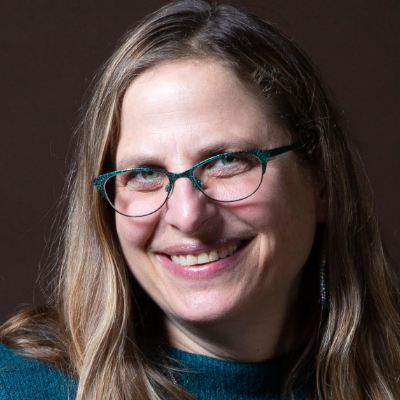
Name: Jon Rosenfield
Age: 46
City: Berkeley
Position: Conservation biologist with the Bay Institute

J.: How did you decide to become a conservation biologist specializing in fish?
Jon Rosenfield: I grew up with a love of the outdoors, animals and trees, which I got from my mom. I was raised in Nyack, New York, and we spent our summers in the Catskills. The question of “How did we get so many different kinds of people and birds and trees?” led me to evolutionary studies, which then led me to conservation work.
After I graduated college, I came West and worked at a nonprofit law firm, protecting winter-run Chinook salmon in the Sacramento River.
J.:
Why did salmon become your focus?
JR: Chinook salmon have different ways of solving the problems they’re presented with. That diversity interested me because it was very rich ground for studying evolution. I was more interested in bird ecology, but as I studied more about fish and worked to protect them, their behavior began to interest me more. When I was applying to graduate school at U.C. Davis, a professor told me: “I like birds too, but study fish; they’re cool and they really need our help.” That’s how I began to wander down the fish avenue.
J.:
How is the drought affecting the Chinook salmon and other species you study?
JR: Native fish of the San Francisco Bay estuary are being impacted by the drought, but even more by the human response to the drought. These fish have lived in the Central Valley watershed for millennia; they’ve survived droughts like this and worse. But even a normal year seems like a severe drought to fish and wildlife of the estuary, because humans take more than 50 percent of the water out of Central Valley rivers feeding the bay estuary. During an actual drought, we take out even a larger proportion. Many fish species listed under the Endangered Species Act are already in bad shape, and we’re taking out so much water that we could lose these species and do other permanent damage to the ecosystem.
J.:
What can the average person do?
JR: We can all take shorter showers and use low-flush toilets. But of the water that humans take from the rivers and estuary, 80 percent goes to agriculture in the Central Valley. People can let elected officials know they care about the bay’s estuary and that they care about Chinook salmon. We can also be smarter about what we eat. We’ve all heard about how much water almonds use, but eating meat and dairy raised in the San Joaquin Valley is also not sustainable. Send a message with your wallet that you support fruits and vegetables produced in a sustainable fashion, and eat less meat, dairy and nuts.
J.:
You don’t believe in eating farmed salmon under any circumstances, even so-called “eco-friendly” farmed salmon. Why?
JR: Farming salmon pollutes the environment. Farmed salmon is a completely different species of salmon, and when they escape from their net pens, they wreak havoc on our estuaries and oceans. Farmed salmon also isn’t good for you. Studies have shown that these fish don’t contain nearly as much of the good omega-3 fatty acids that wild salmon contains. Because they eat so much higher on the food chain than wild salmon do, farmed salmon accumulates more toxins, which you then consume. Wild salmon is one of nature’s healthiest foods, while farmed salmon is not even close.
J.:
I understand you were one of the founders of Wilderness Torah. How does Judaism figure into your work?
JR: I’m a scientist, but I don’t see any conflict between Western science and the wisdom in the ancient teachings of Judaism, when those teachings are approached as metaphors. Also, the God I read about in Jewish teachings is a God of life, and I am privileged to have a job focused on keeping that life around, in all its spectacular diversity. My religion and my spiritual studies really support me in the otherwise tiring and frustrating job of trying to save fish species and protect functioning ecosystems.
“Talking with …” focuses on local Jews who are doing things we find interesting. Send suggestions to [email protected].