
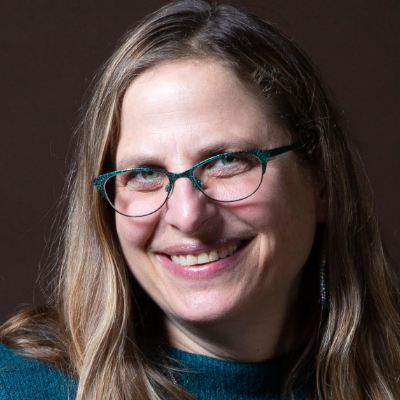
Name: Randy Shaw
Age: 58
City: Berkeley
Position: Executive director, Tenderloin Housing Clinic
J.:
You co-founded and have been executive director of the Tenderloin Housing Clinic, the leading provider of permanent housing to homeless single adults in San Francisco, for 35 years. How did you first decide to set up shop in the neighborhood?
Randy Shaw: I started law school at Hastings in 1979, which is in the Tenderloin. I had never been to it prior to that. Some students wanted to set up a legal clinic in the neighborhood, doing tenant counseling. Come July, we’ll have over 300 staff working here.

Did you have some kind of political awakening that inspired your work?
My parents are very conservative, but my grandmother was a big New Deal Democrat. Although I grew up in the most progressive part of Los Angeles, I didn’t become an activist until college. The more I learned, the more I felt I have to do something to change this. In the mid-’70s as a Berkeley student, I started hearing about tenants being evicted for no reason and started getting involved.
You’ve written several books about social activism. Can you describe your new book, “The Tenderloin: Sex, Crime and Resistance in the Heart of San Francisco”?
It’s really the first history of the Tenderloin and answers the question of how a neighborhood surrounded by Union Square, Hayes Valley and the wealthy condos of SoMa remained primarily low-income. Throughout its history, the Tenderloin always had marginalized groups fighting to save it and they prevailed. The gay and lesbian movement began in the Tenderloin, with the first gay bars here in the 1950s. There were also [single-room occupancy] acti-vists who refused to stay in their rooms and took to the streets.
How has the area changed?
It’s improved dramatically. The conditions and quality of the housing have improved visibly. The city enforcement is better and the streets are cleaner. It’s not as far along as many of us would hope by now — we still have a lot of problems with crime and public drug dealing, but we have turned the corner, and there’s now been more private investment going on there in the past few years than there was in the preceding 50.
You also led the effort to establish the Tenderloin Museum, which opens July 16. Is it aimed toward tourists, or locals?
Locals will go once, but this is an effort to get tourists to spend money here. It will give people a reason to come here, and then they’ll stay and eat lunch or dinner. There will be resident-led tours [on the area’s
history]. The museum will especially appeal to those who are curious about the origins of the gay and lesbian movement in San Francisco and Grateful Dead fans. The album “American Beauty” was recorded here and Jerry Garcia lived in the Cadillac Hotel right where the museum is. Crosby, Stills, Nash & Young, the Jefferson Airplane, Prince, Miles Davis and Thelonius Monk all recorded here.
You founded Beyond Chron in 2004. The site covers stories that are, in your words, “ignored or distorted by mainstream media.” How did it start?
We were motivated by the 2003 mayoral race and the way in which the San Francisco Chronicle covered it in such a one-sided fashion, favoring Gavin Newsom over Matt Gonzalez. We felt there needed to be some other source beyond the Chronicle. We also thought tenant issues were not getting what they deserved. It used to be that if the Chronicle didn’t cover it, no one heard about it.
What was your Jewish upbringing? Does Judaism inform your work?
I was not bar mitzvahed and my parents did not belong to a temple, but I’ve always felt very Jewishly identified. Jews are often the ones willing to challenge the establishment and the status quo. There are a disproportionate number of people willing to rock the boat who are Jewish. Jews also tend to be pro-immigrant. Jews are disproportionately connected to the movement for social justice.
“Talking with …” focuses on local Jews who are doing things we find interesting. Send suggestions to [email protected].