
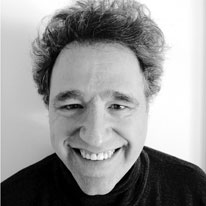
Bernie Sanders reads from the haggadah in Hebrew and jokes with his seder hosts about finding hametz, traces of leavening, after they have thoroughly cleaned the house in preparation for Passover.
The presidential candidate, a socialist competing for the Democratic nomination, also follows Israeli politics close enough to understand the influence of the haredi Orthodox parties in government. And like many Jews of his generation, Sanders, 74, chafes at what he considers disproportionate critical attention applied to Israel.
But little of this emerges in his public profile.
More has been written about the Judaism of his Brooklyn childhood than his interactions with the faith and community today.
“I know he’s Jewish and I know he has a good heart, but give us something, make us feel proud of you,” said Rabbi James Glazier of Temple Sinai, a Reform congregation in South Burlington, Vermont. “I can’t tell him what to do — that’s not my business. He owns his own spiritual journey. But we need a Jewish hug from him every once in a while.”

As a politico, Sanders appears averse to hugs, Jewish or otherwise. Consider his awkward handshake with Hillary Rodham Clinton during the Democratic presidential debate last week after he said her use of personal emails while in government shouldn’t be a campaign focus.
“It’s not like he’s embarrassed or ashamed of [his faith],” said Richard Sugarman, an Orthodox Jew and a professor of philosophy who is among Sanders’ closest friends. “He continues to be a universalist; he doesn’t focus on those issues.”
The Jewish Vermonters who know Sanders say his reluctance to make his Judaism central to his public persona is a function of his preference for the economic over the esoteric, as well as a libertarianism typical both of the state and its Jewish community.
Sanders moved to Vermont in the mid-’60s, attracted by the state’s open spaces. With his first wife and his older brother, he bought 85 acres of land for $2,500. (Sanders has been married twice, and neither his first wife nor his current spouse is Jewish.)
Susan Leff, who founded Jewish Communities of Vermont two years ago to coordinate Jewish activities in the state, said counting Jews in Vermont is a challenge, precisely because the Jews who arrived in the ’60s value the state’s nonconformist ethos and resist organization.
Before launching her startup, Leff asked around at Jewish congregations about setting up an affiliate of the Jewish Federations of North America, but it was a nonstarter.
“People would say, ‘Why send our money to New York?’ ” she recalled.
Leff said her mailing list suggests that there are more than 20,000 Jews among the state’s 600,000 residents. That’s four times the 5,000 Jews that appear on outdated databases. From three functioning synagogues in 1975, when Leff arrived in the state to study at Bennington College, there are now 14 with rabbis, along with an array of lay-led prayer communities, or havurahs. Of the 10,000 students at the University of Vermont, where Leff served as Hillel director for a decade, she estimates 2,000 are Jewish. The campus has a kosher kitchen.
Michael Steinweis, who heads the University of Vermont’s Center for Holocaust Studies, said the state’s libertarian traditions created a convivial environment for diverse Jewish expression.
“It’s a comfortable place for Jews to move to,” he said.
Steinweis noted that the boycott, divestment and sanctions (BDS) movement against Israel had failed in its bids to gain a foothold at the university, despite its reputation for being among the most liberal in the United States.
“It’s traditional Yankee libertarianism,” he said. “It’s OK to criticize, but don’t censor.”
Sanders’ fraught encounter with BDS supporters who challenged his defense of Israel at a town hall meeting in Cabot last year was captured on YouTube. Sugarman said he was not surprised that his friend stood up to the hecklers, telling them to “shut up.”
“Many of us were gratified, not amazed, that Bernard had the beitsim to stand up against these nihilists,” said Sugarman, using the Hebrew colloquialism for “balls.”
Sugarman, who has known Sanders since the mid-’70s, encouraged him to run as an independent for Burlington mayor in 1981, following several hopeless third-party bids for statewide office the previous decade; Sanders defeated the Democratic incumbent by just 12 votes.
He has chosen friends who complement his wonkishness: Sugarman, the philosopher, and Stanley “Huck” Gutman, a professor of poetry at the University of Vermont who has written about the Israeli poet Yehuda Amichai. In 2010, the Washington Post profiled Gutman, who for four years was Sanders’ chief of staff, because Gutman routinely sent his favorite poems to Senate staffers. Gutman acknowledged he got nowhere in talking poetry with his old friend and boss.
Sugarman said the candidate’s Jewish identity is principally expressed in his understanding that elections make a difference, sometimes with catastrophic consequences.
“He once said that as a child in Brooklyn, he learned there was an election in Germany in 1932,” Sugarman recalled of Sanders, whose father lost family in Holocaust-era Poland and who is on the board of the U.S. Holocaust Memorial Council. “And although it was not decisive, it was quite important.”