
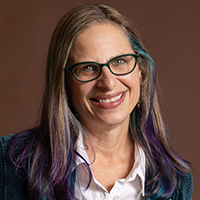
Name: Peter Schattner
Age: 67
City: Foster City
Position: Scientist, educator and writer

J.: You recently wrote “Sex, Love and DNA: What Molecular Biology Teaches Us About Being Human.” You also wrote a textbook. How does writing for fellow scientists differ from writing for a lay audience?
Peter Schattner: It’s completely different. I wanted it to be entertaining as well as educational. The science was the easy part, and it was relatively easy explaining things clearly, but the challenge was in making things entertaining. That was not on my mind when writing a textbook.
You started your career in physics. How did you get interested in molecular biology?
I worked in the field of medical instrumentation, designing and developing ultrasound and MRI machines, and I came to the realization that although pictures of organs and the insides of our bodies are interesting, what was most helpful to doctors was what was happening inside our cells.
How does our DNA determine choices we make in our sex lives and our love lives?
In the book, I describe the story of a man, and there are a number of them, who has two X chromosomes and no Y chromosome. Many will say “that must be a woman,” but genetic variations of that kind can lead someone to be part man and part woman. Things can happen inside our cells that are microscopic and lead to people who have some male and some female characteristics. I think it makes it easier to appreciate the diversity of people and realize we don’t all fit into simple boxes. Just because some people are different in some ways doesn’t make them deviant or abnormal. There are biological reasons determining who is transgender or intersex, or whom you’re attracted to.
In the last 20 years, it’s become possible to trace family history using DNA. Could this have negative ramifications?
Be prepared for surprises. You may find out that you or a relative was adopted or there was infidelity in your family. If you’re willing to find out whatever’s out there, I don’t think there’s much danger. But some people do it to learn about their health, whether they’re susceptible to getting diabetes, cancer or heart disease. Those tests are in their infancy and it’s easy to misinterpret them and get frightened if they are misinterpreted.
Can you get cancer from a gene?
I write about BRCA1, one of the most important ones protecting someone from breast and ovarian cancer, but when there’s a variation in that gene that affects the protein, then one is more susceptible to these cancers. Most often it’s the combination: what you inherit from your parents and the environment that you live in.
How has DNA testing been used to learn about the genetic identity of the Jews?
My favorite story has to do with a tribe in South Africa called the Lemba. These are not Ethiopian Jews. They have a tradition that they’ve enforced quite strongly, that only women can marry into the tribe. If you test the male section of the Y chromosome that’s passed purely from father to son, the Y chromosomes of the Lemba men are very similar to those of people coming from the Middle East. Another example is with Jews who are known as Cohens. Again, this is passed on from father to son. In the past 15 years, it’s been discovered that men who are Cohens are much more similar to one another than to Jews who are not Cohens, so they most likely are all descendants of Moses’ brother Aaron.
Did your own Jewish background make you interested in the genetic makeup of Jews?
I’m not fond of stereotypes, but the stereotype I guess I believe is that I was brought up with intellectual curiosity. Jews typically want to know themselves and understand the world, and I certainly learned that attitude from my parents. Also, my parents are Holocaust survivors and I don’t have siblings, so I don’t have many close relatives. Using ancestry and genetics to find out about my more distant family appealed to me.
“Talking with …” focuses on local Jews who are doing things we find interesting. Send suggestions to [email protected].