
When Israel’s government announced in mid-July that the next national election will take place Oct. 27, Israelis across the world, including many in the Bay Area, jumped online to book flights home to vote.
A significant Israeli immigrant population lives in the Bay Area, many of whom came for jobs in tech and stayed to raise their families. Even as they integrate into American society, they tend to consider Israel a home. There are no reliable estimates of their total, but they are among hundreds of thousands of Israeli voters living outside the country.
Israel, unlike most democratic nations, doesn’t allow for absentee voting, meaning Israelis living abroad who are eligible to vote must return to cast their ballot in person.
“I booked myself a ticket, and then sent text messages to all of my Israeli friends here, saying, ‘Come on, we are going!’” said Shimrit Braun Kamin, an Israeli American who lives on the Peninsula and works for a Jewish nonprofit.
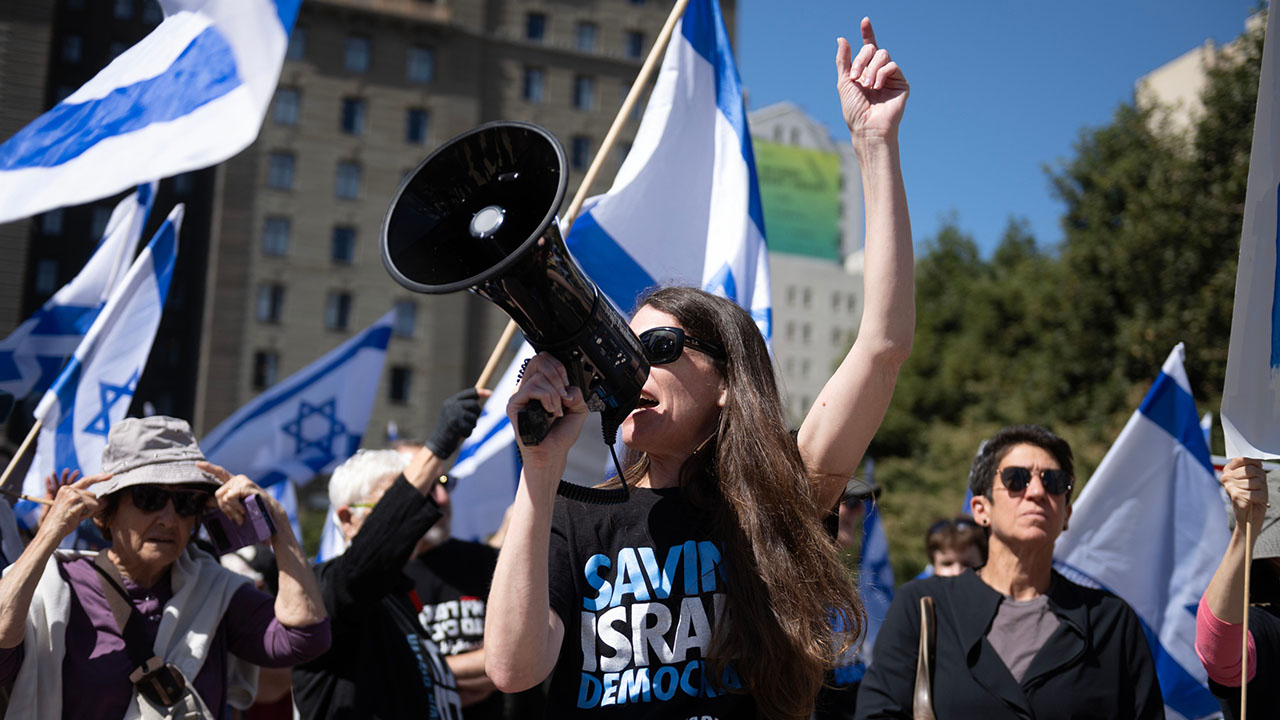
“I think we’re honestly going to fill a whole airplane here at SFO,” said Braun Kamin, who is a volunteer leader with UnXeptable, a grassroots protest movement of expats critical of Israeli Prime Minister Benjamin Netanyahu.
Starting in February 2023, when Netanyahu and members of his coalition introduced controversial changes to the judicial system designed to greatly reduce the power of Israel’s courts, hundreds of Israeli and American Jews in the Bay Area joined large public protests against the effort.
Since the onset of the Israel-Hamas war in October 2023, their fury against Netanyahu and his coalition has only grown.
For David Meyers of Belmont, a New Jersey native who made aliyah and served in the IDF, this will be his first time to participate in Israel’s elections since he voted for Yitzhak Rabin in 1992.
“This election is critical to determining whether Israel continues as a liberal, Jewish, democratic state, or declines into some sort of theocratic autocracy,” said Meyers, who volunteers as an English translator and organizer for UnXeptable.
Israeli American Ricki Alon of Los Altos Hills also plans to fly to Israel in October, but she will be voting for Netanyahu, despite some reservations.

Alon and her husband, Zvi Alon, co-lead American Friends of LIBI, a U.S.-based nonprofit that supports IDF soldiers, veterans and their families. She said her vote is meant to protect Israel’s security as it faces threats from its Arab neighbors and Iran.
“I will make my choice with a heavy heart because there are many reasons why I do not want to vote for Bibi,” Alon said. “Before the war, I was not going to support Bibi one more time. I thought we could concentrate on the internal issues.”
Now she sees him as the only candidate with the foreign affairs and economic experience to protect Israel from foreign threats.
Support for Netanyahu is not popular among Bay Area Israelis, Alon said. But she’s had private conversations with friends here who also reluctantly plan to vote for Netanyahu.
Israeli American Offir Gutelzon, co-founder of UnXeptable, said he hopes that tens of thousands of Israelis living abroad will return to vote — or at least enough of them to push Netanyahu out.

“This election needs to be very decisive,” the Palo Alto resident said. “Lots of people have left since the war, and now it’s an even bigger number of people that need to come back.”
Reports that Netanyahu might seek to limit or cancel flights into Israel ahead of the election have added to the tension.
“I was active in the war last year, helping people get in and out of Israel by boat, and I’ve had inquiries about whether we’re going to do that again in case the government tries to mess with the flights, which is something we’re worried about,” Meyers said. “People are going to metaphorically walk over broken glass to get there.”
Cost is a barrier for many. Meyers and Braun Kamin each paid around $1,500 to get on a round-trip flight from SFO to Tel Aviv, scheduled to arrive a few days before election day.
“It’s not something I’ve done easily,” Braun Kamin said. “But it’s the best investment.”
A groundswell of support has emerged to help Israelis who need financial assistance to get back to vote. In WhatsApp and Facebook groups, UnXeptable leaders have already received offers from people living in Israel who can host visitors in their homes during election week. And in the Bay Area, some frequent travelers are offering to donate their airline miles to cut down on the expense of flights.
Dozens of academic conferences have suddenly been scheduled days ahead of Oct. 27 across Israel by the nonprofit Mind Israel, which is marketing them as part of a brand-new “science and academia week.”

Meyers said the conference dates are not by coincidence. He sees them as an avenue to give Israelis employed at universities abroad the opportunity to travel to Israel as a business expense.
“Often academics can get funded by their institutions to go,” Meyers said.
The AID Coalition, a U.S.-based nonpartisan nonprofit, is helping Israelis get back for the election through its Fly & Vote initiative, which enables people to search for flights within their budget and navigate travel logistics. It is also planning to charter flights to the country, with passengers paying their own way.
Meyers said other groups are emerging to help expats check their voting eligibility, acquire a current ID card and reacquaint those who haven’t voted in many years with current voting procedures. UnXeptable is encouraging everyone, even those ineligible to vote, to consider supporting those efforts financially.
“We believe strongly that not only Israelis abroad, but the entire Jewish community has a stake in Israel, and especially in these elections,” Meyers said. “We see how what happens in Israel influences us around the world, our lives as Jews. There are ways for those people to participate, even when they can’t vote.”