
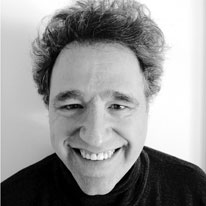
Framed by a projected image of two young guys in jeans and tees playing ping-pong on Facebook’s Menlo Park campus, Jonathan Greenblatt described an event hosted by the social media behemoth.
“Some of the stuff we’ve done has been really exciting, like in Silicon Valley,” Greenblatt, the new director of the Anti-Defamation League, said during an October talk before the ADL’s national commission in Denver. He cited the ADL’s participation in an effort to combat cyber hate.

It was his first major address before the commission, and it burst with business speak, with terms like “operating environment” and “reshaping markets.” It may have nonplussed the crowd accustomed to the soaring rhetoric leavened with Yiddishkeit that characterized speeches by Greenblatt’s predecessor, Abraham Foxman; the first applause came 30 minutes in.
Greenblatt took the helm of ADL in July, and already there are subtle but significant differences in how he is leading the venerable civil rights organization. Last month he hired Shari Gersten, a former Silicon Valley executive and fellow veteran of the Clinton-era Commerce Department, to handle ADL’s external relations.
“We’ve got to figure out how to use the contemporary vernacular,” Greenblatt said in an recent interview in New York. “Having been in a couple of White Houses, I have a tendency to want to succeed and execute objectives. You tend to be smart and strategic about leveraging your assets to succeed.”
Greenblatt’s Silicon Valley example was a telling one for the new ADL chief, a former California entrepreneur and White House staffer who took over from the iconic Foxman.
Foxman, who had worked for the league for 50 years — 28 as national director — led the group through a period in which the Internet emerged as fertile territory for the dissemination of hatred. He even wrote a book on that subject.
But unlike Greenblatt, who evinces enthusiasm for new media born of a dozen years mixing with the California tech world, Foxman remained frustrated by his limited success with Internet companies. Just four years before Greenblatt’s speech, Foxman’s address to the same crowd itemized the various ways Facebook was failing to police the hateful content posted by its users.
“We have been talking to the geniuses at Palo Alto,” Foxman said in a 2013 interview. “We have said to them, ‘Thanks, but no thanks. You developed a technology that has some wonderful things but also has unintended consequences.’ ”
The difference in approach is emblematic of the broader challenges facing ADL, founded in 1913. An organization that once mediated between the Jewish community and the American establishment is grappling with tectonic changes in both.
Comparisons to Foxman, who defined ADL for a quarter-century, are inevitable.
Foxman and the others were attorneys, skilled in the art of persuasion and unabashed advocates for the Jewish community. Greenblatt is a policy wonk and a businessman high on synergy, with an emphasis on relationship building. He is a social media savant best known for his successful foray into the new economy with the bottled water company Ethos. He also headed an Obama White House office matching new business titans with social service projects.
Greenblatt’s relationship with ADL began when he interned at its Boston office as a college student. His boss there later introduced him to his wife, Marjan Keypour Greenblatt, who was the associate director of ADL’s Los Angeles office for eight years. Greenblatt went on to work in the Commerce Department in the first Clinton administration.
In 2003, he and a classmate from Northwestern’s Kellogg School of Management launched Ethos, which donates a portion of its profits to finance water programs in developing countries. After Starbucks bought the company, Greenblatt went on to serve on the board of Water.org, a nonprofit co-founded by actor Matt Damon. He also started an open-source platform for volunteers called All for Good and served as CEO of the media company Good Worldwide.
It’s hard to say whether Greenblatt’s attempt to steer the ship in a more youthful direction is going to resonate. His first applause line in Denver came only after he committed himself to the ADL’s original mission “to fight the defamation of the Jewish people and to secure justice and fair treatment for all.
Yet even as he pushes to the old guard to loosen their collars, Greenblatt still cherishes ADL’s role as arbiter — even more so at a time of increasingly heated and polarizing political rhetoric.
It remains to be seen if the Jewish community is still willing to have the ADL act as the standard-bearer of permissible discourse. Recent years have seen the organization hit from the left for opposing an Islamic cultural center near Ground Zero in Manhattan and from the right for focusing too much on domestic hate crimes and defending Muslims — and not enough on Israel and rising anti-Semitism in Europe.
Greenblatt is eager to turn the spotlight back on domestic concerns. After assuming his new role last summer, his first initiative was #50StatesAgainstHate, a bid to establish a uniform definition of hate crimes for the entire country. With a $50 million budget, 27 regional offices and 300 employees, Greenblatt argued that ADL was uniquely well positioned to lead the fight.
If ADL wants to galvanize the next generation, Greenblatt said in Denver, it better adjust to a world in which black lives and transgender rights are of as much concern to young Jews as anti-Semitism.
“They see themselves as privileged and they see themselves as wanting to be part of movements of social justice,” Greenblatt said of millennials. “Guess which organization knows something about that.”