
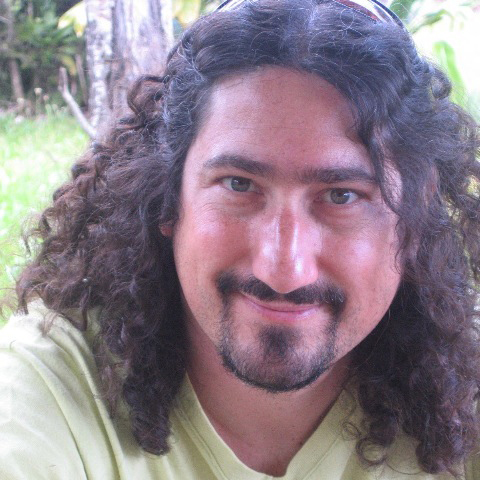

The joke almost writes itself. Given our often-benighted history, why wouldn’t Jews play the blues? In fact, Jewish involvement in the African American idiom dates back to the emergence of the blues as a cornerstone of American popular music in the 1920s.
Sacramento harmonica ace and singer Rick Estrin’s immersion in bluesology exemplifies the emotional pull that has drawn so many Jews to the top ranks of the blues. The award-winning Rick Estrin & the Nightcats have several upcoming performances this spring across Northern California, starting with Yoshi’s in Oakland on March 27.
Born in 1949, Estrin grew up in San Francisco on the younger cusp of a generation of Jews smitten with the potent grooves emanating from Chicago’s Southside in the 1950s and early 1960s.
Too young to check out the scene in person, he discovered the music via his older sister, a “semi-Beatnik kid, six years older” who got into blues, jazz and folk music, recalled Estrin, 74.
“She gave me Ray Charles’ ‘The Genius Sings the Blues’ for my 12th birthday and something about it really spoke to me inside,” he said. “I imagined he really understood how I feel.”
His sister’s record collection provided a portal into another world. Estrin plunged right in, absorbing the sounds of blues and boogie woogie pianist Champion Jack Dupree, folk blues guitarist Big Bill Broonzy and the widely influential Jimmy Reed, “the first harmonica player I ever heard,” Estrin said.
There are things about Jewish culture that I identify with, and other things where I almost feel like a dog watching television.
The family attended San Francisco’s Congregation Emanu-El, where he became a bar mitzvah, “but growing up I’ve never been real religious,” he said. “There are things about Jewish culture that I identify with, and other things where I almost feel like a dog watching television.”
His integrated middle school was divided equally between Black and white students. Much like he was drawn to the blues, Estrin felt an attraction and affinity for the culture of his Black peers, who “had more style,” he said. “There seemed to be more freedom of expression, more imagination in the way they expressed themselves verbally. I loved that language. To an extent, that’s my language after all these decades.”
A dreamy, artistic kid in a middle-class family, Estrin thwarted his parents’ hopes that he’d get a steady job like his father, who worked in real estate. Music became an outlet for his angst.
Whether a trickster, lover, fighter or cool-eyed observer, a blues musician is meant to exorcise suffering with incantations that keep demons at bay. The power of the blues, however, isn’t primarily as a vehicle to express personal suffering. Rather, a blues musician’s role is to transform that heartache and loss into communal celebration with a “disposition that is both elegantly playful and heroic in its nonchalance,” according to the late bluesologist Albert Murray.
The Nightcats, two-time winners of the prestigious Blues Music Award for band of the year, feature guitarist Kid Andersen, who fell in love with the blues growing up in Norway. (Andersen’s Greaseland Studios has turned San Jose into a hotbed for blues recording over the past decade.) Keyboardist Lorenzo Farrell and drummer Derrick “D’mar” Martin, who spent seven years touring with Little Richard, round out the band. Guitarist Anson Funderburgh will join the band at Yoshi’s as a special guest.
While musicians worldwide have long been drawn to the blues, post-World War II Chicago was arguably the most consequential convergence of blues masters and worshipful acolytes. The Great Migration had brought Delta-reared artists like Howlin’ Wolf, Muddy Waters and B.B. King to the Windy City, where they plugged in and often recorded for Jewish-owned Chess Records.
By the mid-1960s, a young coterie of aspiring white musicians, including Paul Butterfield, Barry Goldberg, Elvin Bishop, Nick Gravenitis, Mike Bloomfield and Corky Siegel, were frequenting the Southside clubs to glean anything they could.
Much like his Chicago peers, Estrin was smitten at 17 with half-Jewish harmonica player Paul Oscher, who was the first white musician hired for an ongoing spot in the Muddy Waters band. They immediately bonded and “were friends until Paul died in 2021,” Estrin said. “That band with Otis Spahn, Pee Wee Madison, and Luther ‘Snake’ Johnson was the greatest shit I’ve ever seen in my life. They’re wearing red brocade Nehru jackets, and they all had processed hair and an evil look on their faces.”
Estrin was still a teenager when he established himself on the San Francisco scene, “playing in Fillmore District and Hunters Point nightclubs and bars as almost a novelty act — a white guy who plays the blues,” he said. Estrin talked his way into sitting in with blues great Lowell Fulson one night. “People were shocked and the club went crazy,” he said. He was on his way, with the help of established players like soul singer Rodger Collins and guitarist Fillmore Slim.
While the white Chicago players were heading to San Francisco, where they connected with budding impresario Bill Graham and quickly convinced him to start booking their Black mentors at the Fillmore, Estrin made the reverse trip. Moving to Chicago he worked regularly with top players like Sam Lay, Johnny Littlejohn and Eddie Taylor, though a missed connection kept him from joining Muddy Waters.
By the mid-1970s, he was back in the Bay Area, where he co-founded Little Charlie & the Nightcats with guitarist Charlie Baty, a band he took over under his own name when Baty retired in 2008.
Estrin wears his Jewish identity lightly and hasn’t attended synagogue since he was a teenager. He doesn’t have an elaborate theory about the profusion of Jewish players from his generation who made an impact as blues artists, “but maybe there’s something about how traditional Jewish music is mournful and minor and resonates with the blues,” he said. “Jews have been persecuted too. Maybe they identify with the Black experience. Beyond that I just don’t know.”