

Books coverage is supported by a generous grant from The Milton and Sophie Meyer Fund.
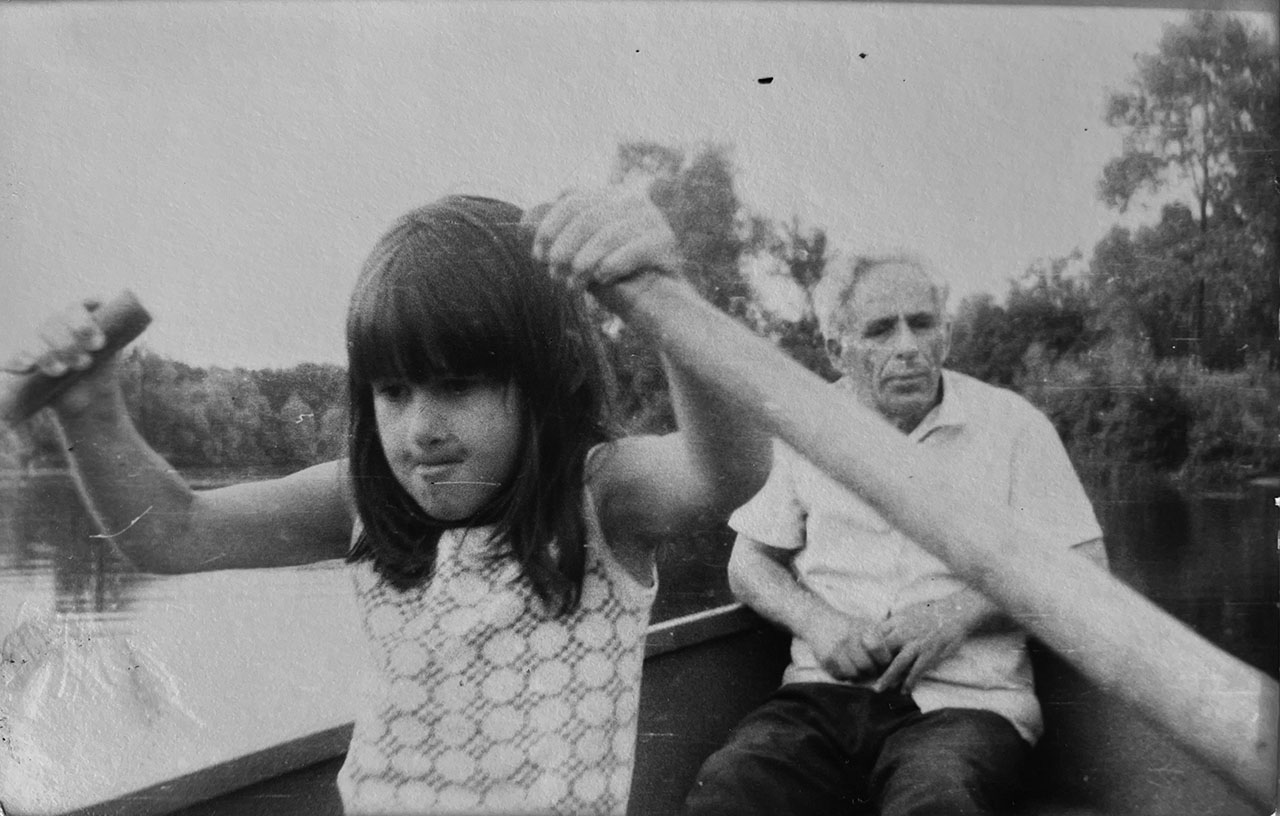
When Sasha Vasilyuk’s grandfather died in 2007 in Donetsk, Ukraine, his wife and daughter found a letter to the KGB written more than 30 years earlier, confessing that his life was based on a lie.
Instead of fighting the Germans as a Red Army soldier during World War II, as his friends and family believed, he spent most of the war as a prisoner or an escapee. First, he was captured and became a POW. He eventually escaped and managed to hide his identity by passing himself off as an ostarbeiter, or forced labor conscript, working on a farm in Germany.
If that truth had been known at the war’s end, he would surely have been sent to a Soviet labor camp or suffered execution as a deserter.
Furthermore, his survival as a Jewish soldier on German territory was remarkable. Of the estimated 200,000 Soviet POWs who were Jewish, just 5,000 returned home.
Vasilyuk, a San Francisco-based freelance journalist who writes for a variety of national publications, often about Russia and Ukraine, has based her debut novel on her grandfather’s secret.
“Your Presence Is Mandatory,” which comes out April 23, opens with the discovery of the grandfather’s two-page letter to the KGB, which he wrote in 1984, and then moves back and forth between the war years and the 2000s, ending with the 2014 Russian invasion of the Donbas, the region of Eastern Ukraine where Donetsk is located. The story is told mostly from his point of view, as he struggles to survive during WWII and then spends decades burdened by his secret.
Vasilyuk and her family left Ukraine for San Francisco in 1996 when she was 13. She attended Lowell High School and UC Berkeley, but spent her summers back in Donetsk with her grandparents. She knew them well, or so she thought.

“I immediately recognized [the letter] as a good story idea, but didn’t feel confident I should be the one writing it,” Vasilyuk, 41, told J. “I was in my 20s and doing other things with my life.”
Later, in 2016, during a relatively calm period amid Russia’s first invasion of Ukraine, Vasilyuk revisited Donetsk, which then lay in ruins. Along with the destruction, she was shocked by the Soviet-style propaganda billboards showing Russian soldiers being greeted by happy Ukrainian children, as well as the bumper stickers on cars reading, “We made it to Berlin once. We can do it again.”
“It made it clear to me how World War II and this new war are very much connected,” she said. She was also there for the annual Victory Day parade, still celebrated in Ukraine, Russia and other post-Soviet countries, and saw veterans of the new war marching alongside WWII veterans.
“So these two ideas were being mixed and kind of used to excuse this Russian-backed takeover of a piece of Ukraine,” she said.
Sickened by Russian President Vladimir Putin’s use of the invasion as a political tool to boost his power, she knew it was time to tell the story of her grandfather, who she called Yefim in the book. (Vasilyuk declined to give his or other relatives’ actual names to help conceal which characters in her book are fictional and which are real.)
Her grandfather was indeed Jewish and grew up in a Ukrainian village with four siblings. He served in WWII and then married a non-Jewish Ukrainian woman. Beyond the details in his letter to the KGB, she knew nothing about his life between 1941 — when the USSR entered the war — and 1945. She filled in the gaps by researching the experiences of Red Army soldiers, POWs in German camps and ostarbeiters working on German soil. She was also helped by her grandmother’s memoirs.
Unlike many Holocaust-era books, Vasilyuk doesn’t demonize the German people. There are plenty of Nazis in the book but also kind German villagers. One German girl that the grandfather meets near his work farm asks him, as she puts her head on his shoulder, whether he thinks their countries will be friends again after the war.

“I didn’t want to play into the stereotypes of black and white,” Vasilyuk explained. “I think people’s relationships are more complicated than that. I was asked in an interview whether Ukrainians all hated the Jews and collaborated. That’s ridiculous. Some did, and a lot did not.”
Another theme in the book is the danger of keeping secrets, both within families and as part of state policy, as in the Soviet Union. In the novel, her grandfather’s life is embittered by the shame he harbors in his heart, which ultimately stunts his relationship with his wife, Nina.
“He was so sick of all the little ways in which he’d had to avoid the truth,” the now-middle-aged character muses at one point in the novel. “Sometimes it took all his self-restraint to protect the many things they didn’t know about him: that he spoke German and cringed whenever Nina mispronounced a German word; that he’d lied on every bureaucratic form until the questions about the war had been removed three years ago.”
Vasilyuk spent much of her childhood in Moscow, and she still has family in both Russia and Ukraine. Some of her relatives remain in the war zone in Ukraine; others have scattered.
She was editing the last chapter of her book in February 2022, when Russia’s second, full-scale invasion of Ukraine began. It added an urgency to her work.
“If a whole generation of people keeps what happened to them a secret, which is essentially what’s been happening in Soviet history, it creates a vacuum of information,” she said. “And what tends to fill this vacuum is somebody like Putin, somebody like Stalin, a totalitarian or an autocratic [leader.] The only thing left is the state version of events, which I think is basically what is happening in Russia today.”
She added, “The only thing that would combat this message is private stories of real truth, of what really happened to somebody.”