
J. is a media sponsor of the San Francisco Jewish Film Festival. See full coverage here.
“What is the biggest risk you have taken in your life?”
That is the profound question that opens “The Ride Ahead,” a documentary screening at the San Francisco Jewish Film Festival on Aug. 4. Using an augmentative and alternative communication device, Samuel Habib asks this question of seven accomplished adults who, like him, have disabilities.
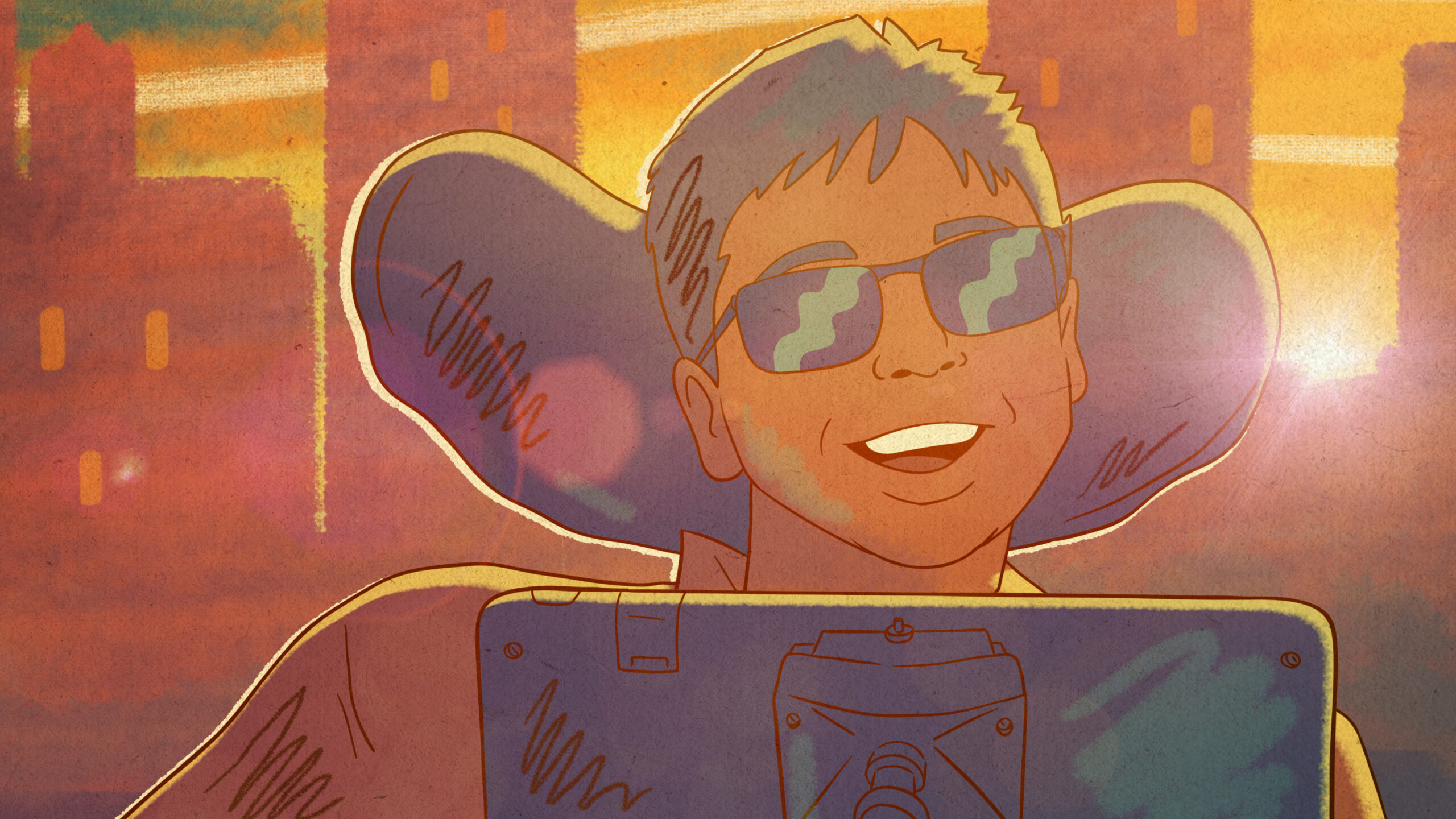
Habib was born with a rare genetic condition that causes multiple disabilities, including cerebral palsy, epilepsy and a swallowing disorder. After graduating from high school in New Hampshire, he became determined to move out of his parents’ house, go to college, find employment, date, and yes, even have sex. In other words, he’s ready to become a full-fledged, successful adult.
The die-hard Red Sox fan realized, though, that his path to independence wouldn’t be easy.
Habib, who is 21 in the film, conceived the idea for this poignant, powerful documentary, which he co-directed with his father, the veteran director and producer Dan Habib. It is the feature-length version of the Emmy Award-winning short “My Disability Roadmap.” Bay Area filmmakers Jim LeBrecht and Sara Bolder, part of the team behind the 2021 Oscar-nominated “Crip Camp: A Disability Revolution” (a film in which I appeared), served as executive producers.
“The Ride Ahead” uses a blend of cinematic techniques to portray a compelling and conscientious coming-of-age story. Most of the creative behind-the-scenes crew is made up of people with disabilities.
The film is a cinematic panacea of interwoven scenes of warm family interactions, an intimate heart-to-heart talk between Habib and his older brother Isaiah, fun tattooing sessions, scary medical crises and incidents of in-your-face condescending treatment by clueless strangers — combined with animations of complex medical procedures and slice-of-life illustrations (one even including a condom), complete with an upbeat soundtrack.
These scenes are interspersed with excerpts from Habib’s wisdom-seeking conversations with those seven mentors: Americans with Disabilities Act legends Judy Heumann z”l and Bob Williams; Tony Award winner and wheelchair-using pioneer Ali Stroker; comedian/actor with cerebral palsy Maysoon Zayid; disabled hip-hop artist Keith Jones; autistic and queer activist Lydia X.Z. Brown; and marathon runner and disability activist Andrew Peterson.
The dual cameras mounted to Habib’s wheelchair allow us to see the captivating impact their words have on him. In a voiceover, he says, “The interviews were awesome. They blew my mind.”
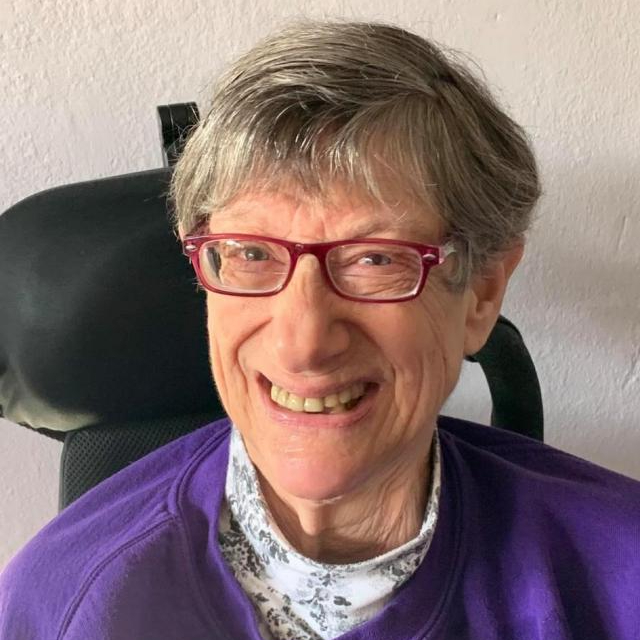
I found myself marveling at Habib’s gutsiness in figuratively grabbing the bull by the horns. Similar to Habib, I have cerebral palsy with disability-affected speech, usually understandable. I don’t use augmented communication. In fact, one noteworthy criticism I have of the documentary is its lack of representation of someone with my type of speech manifestation. That’s significant because those of us who rely on our own disability-affected speech to communicate are subjected to a whole other dimension of discrimination.
In terms of the film’s intention, though, I faced many of the same struggles and had many of the same questions as Habib when I grew up in the 1950s and ’60s and came into adulthood in the ’70s. But I feared voicing those questions. I had no idea if they were valid, and I didn’t want to make the nondisabled people around me uncomfortable.
Those were the years before the disability rights movement, when children like me just felt grateful that our parents didn’t listen to the doctors who recommended that we be put in institutions. Besides, I had no one to ask. I had no badass disabled role models to field my questions and help me explore answers.
While the struggles and the questions haven’t changed that much in the last 50 years, Habib has dared to create a platform to raise the level of conversation regarding the future for youth and adults with disabilities, which will enable us to feel like we truly belong in this world.
As Heumann, the mother of the disability rights movement, tells Habib at the close of the film, drawing from her Jewish roots: “Believe the world can be a better place than it is … and you can make a difference. I know you can ’cause I know you are.”