

When Berkeley native Elle Gennis moved to Israel in 2022, she wasn’t sure she’d stay.
She had always felt a deep connection to the country, cultivated during summers as a Camp Newman camper and counselor, as well as a semester away from Berkeley High School spent living on a kibbutz. But she questioned whether the Israel of her younger imagination existed in real life, especially as she often found herself disagreeing with Israeli government policies.
“I didn’t know if I fully wanted to commit,” Gennis, 25, told J.

Everything changed for her on Oct. 7, 2023. Gennis was back in the Bay Area to visit family as she watched news of the Hamas terror attack unfold. She had a powerful epiphany.
Being outside of Israel during a time of crisis “really showed me something about my identity,” she said. “I felt more Jewish and more Israeli than I did American in those following weeks. I only wanted to be surrounded by other Jews who could understand what I was feeling and going through. I especially wanted to be surrounded by Israelis. We didn’t have to say anything to each other. We just all got it.”
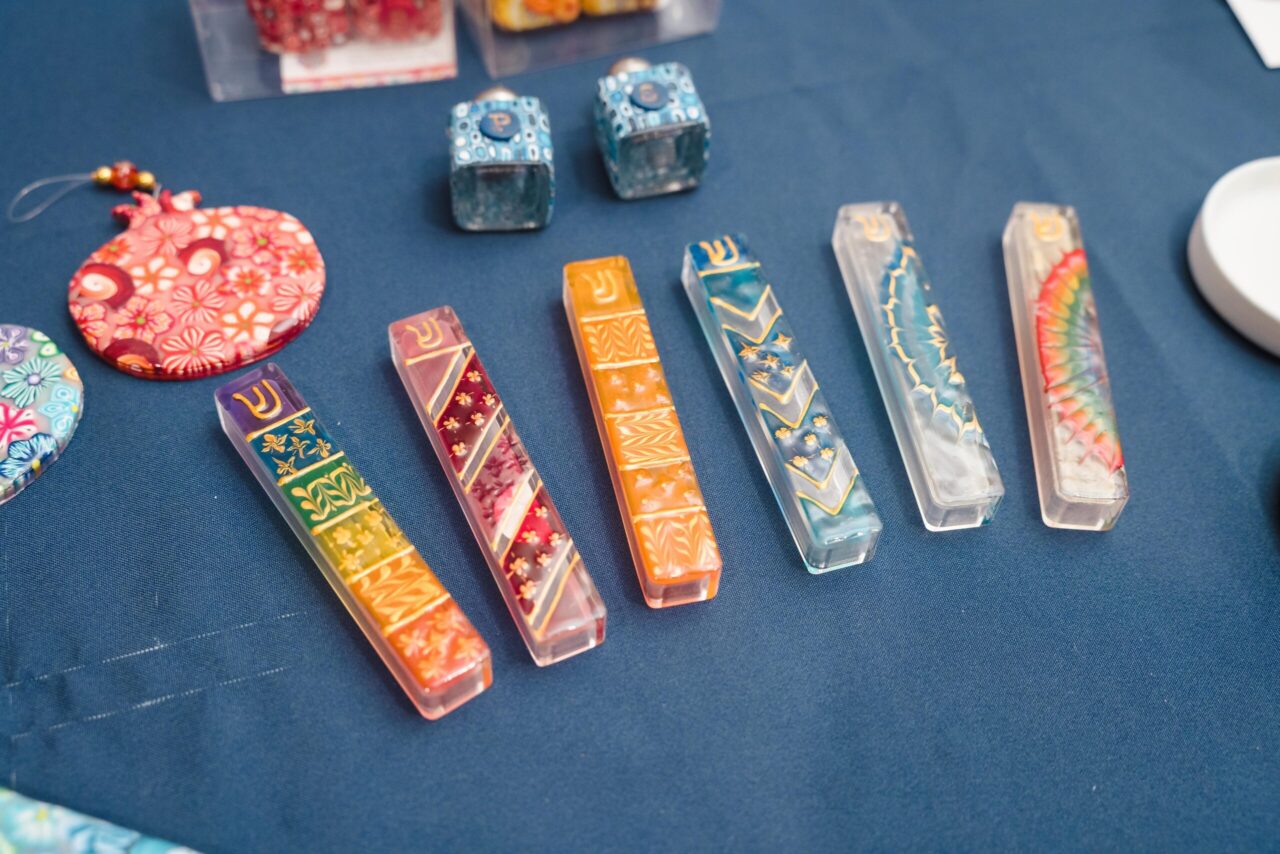
Oct. 7 prompted Gennis’ decision to become an Israeli citizen; she made aliyah in February. It also inspired the creation of Oosh, an online marketplace she co-founded that sells Israeli goods such as jewelry, ceramics, watercolors, hats, socks and candles — from small businesses or handcrafted by artists still reeling from the devastating impacts of the ongoing Israel-Hamas war.
Gennis and her business partner, Danielle Eisenberg, met at a party in Tel Aviv shortly before Oct. 7.
“We really want to try to use our brand to help rebuild our community that has been so broken over the past year,” Gennis said over Zoom from her Tel Aviv apartment. “The way that we’re doing that is by connecting all of these different artists and people and small businesses together and sharing them with the world.”

Ooshbox.com visitors can shop for individual gifts or select themed packages, like the Tel Aviv Oosh Box, which starts at $150 and contains four to seven items: streetwear from local brands, art prints and canvas tote bags that capture Tel Aviv scenes, and painted espresso cups that evoke the city’s lively cafe culture. The Tzfat Protection Box, which also starts at $150, assembles talismans symbolic of Israel’s mystical epicenter, including hamsas and symbols to guard against the evil eye.
“Every item is a piece of Israel’s soul, packaged to bring you a sense of comfort and the warmth of home,” the Oosh website says.
Gennis, who grew up attending Temple Isaiah in Lafayette, said her goal is to make Oosh an “Israeli version of Etsy,” the popular e-commerce site that sells handmade and vintage items across a range of categories.
Gennis earned a bachelor’s degree in communications and international relations from the University of Southern California and has experience in product marketing.
Eisenberg, 33, a veteran of startups with an MBA from the University of Michigan, grew up spending summers in Israel and now lives in New York, where the company will sell Oosh gifts at a Hanukkah pop-up market on Dec. 12. The event will raise funds for One Family, which supports terror victims in Israel.

Oosh is commonly used Israeli slang that doesn’t mean anything in particular but often gets appended to names as a term of endearment. Elle becomes Elle-oosh, for example, and Danielle is Danielle-oosh.
“It feels like a nickname you would give your best friend or a nickname your mom would call you, but people use it with each other no matter how close they are,” Gennis said. “It embodies what is so special about Israeli culture, that we really do all feel like family, and the proof is in the way that we communicate and speak with each other.”
Gennis and Eisenberg discovered another layer to the term when they realized “oosh” could be an acronym for “out of shattered hearts.”
“Oosh has really been a light in the darkness,” Gennis said. “It’s been the way that I feel like I can make a difference, give back to my community and feel some sort of hopefulness and purpose during a time when everyone really needs that.”