

As someone who has dedicated her career to helping others, I thought I was doing good work with like-minded people who wanted to leverage their expertise to create a more inclusive, equitable and positive community.
In fact, my previous professional role — working as a mental health clinician at a Silicon Valley chapter of a national nonprofit dedicated to eliminating racism and empowering women — was supposed to accomplish just that.
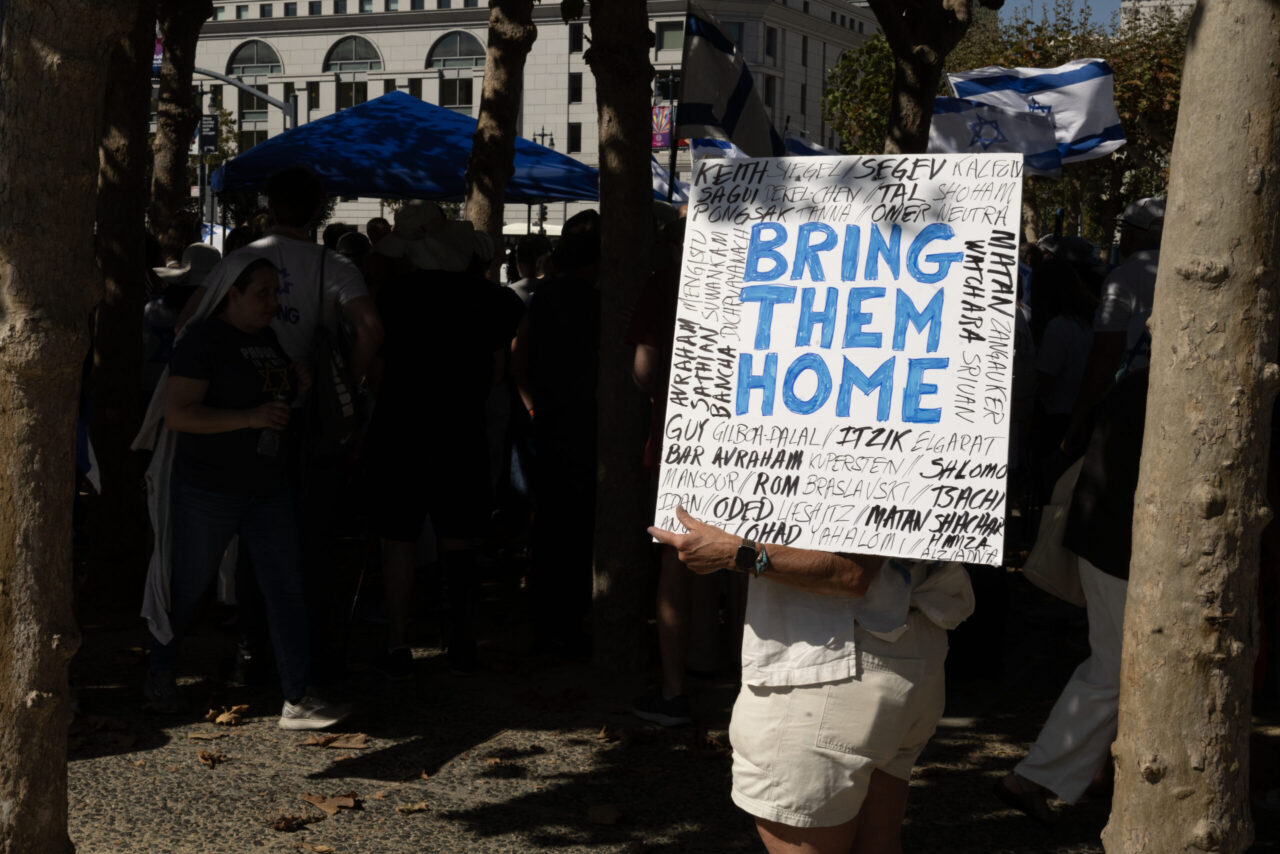
Then Hamas attacked Israel on Oct. 7, 2023, and I quickly realized that Jews were excluded from my nonprofit’s mission. For a few days, my chapter said nothing about the attack, where women were raped, brutalized, murdered and maimed because they were Jewish — an extreme form of racism and gender violence.
When I voiced my concerns, I was told that only the larger organization could speak on global issues and that I should refer to its statement. I was devastated and infuriated to discover that the global statement didn’t mention the Oct. 7 attack or the more than 250 hostages taken into Gaza. Instead, it called on the international community to condemn Israeli occupation.
It was then I realized that I not only needed a new job — I needed to find a new community altogether.
The decision wasn’t an easy one, but one I had to make. I think of Israelis as my family, and I couldn’t allow myself to work for an organization that blamed the victims.
And so, on Oct. 12, I quit my job in a very public way, feeling like I needed to make clear the reason for my departure and the impact of the organization’s action (or inaction) on one of its employees. This came with risk and fear over my future job prospects — worries that I had just blown up 15-plus years of building a professional network.
I spent the next four to five months meeting with anyone who would talk with me in the Jewish philanthropic and social impact arena. I was humbled by all of the people who generously shared their time, insight and connections with me. I was lucky to work with an amazing Jewish day school for a few months supporting its fundraising efforts, until I ultimately landed at a private family foundation that does incredible work supporting the Jewish community in the U.S., Israel and beyond.
Luckily, I also found emotional support among fellow Jews as I sought to rebuild a sense of community. The Peninsula JCC in Foster City, for example, offered a space where people could process what happened on Oct. 7. Hearing those comforting voices had actually given me the strength to quit. From there, I got increasingly involved with that community, which eventually introduced me to Momentum.
This organization, which offers initiatives to help Jews worldwide connect to their community through their shared values, religion and heritage, has encouraged me to speak up against antisemitism and to advocate for Israel. Some of its initiatives include professional development seminars, networking events and solidarity missions to Israel.
Recently, I participated in one of its fellowships, where I met with dozens of other like-minded professional women who are also dismayed by the anti-Jewish and anti-Israel rhetoric we’ve seen online and in person.
At the fellowship, which took place in Santa Clara, our group discussed ways we can combat antisemitism. The most feasible solution was to recognize the assets already found within our community; many non-Jews visit or belong to our JCC and can be tapped as allies to fight antisemitism in our community
In our last group session, the Momentum facilitator shared Talmudic sage Hillel’s approach of active listening and curiosity, which ultimately helped him become an iconic Jewish leader. Using this approach in handling professional and personal conflict can often yield more effective outcomes.
That experience prompted me to ask myself, as someone who has spent her career advocating for individuals in marginalized communities: Why as Jews are we so quick to advocate for others but not ourselves?
Many people of color are members of the JCC and are also potential allies in our cause. Momentum has shown me how I can reach out and ask for their allyship. Like other minorities fighting against hatred, we know that every voice counts.
The JCC is made up of a diverse community, beyond its Jewish membership. We have the opportunity to engage these community members as allies in our cause. Momentum has shown me how I can reach out and ask for their allyship. Like other minorities fighting against hatred, we know that every voice counts.
We plan on reaching out through one-on-one conversations with non-Jewish members of PJCC and by establishing an advisory council. We want to find out what would motivate them to become more vocal advocates or allies in combating antisemitism.
On a personal level, as someone with a daughter in PJCC’s preschool, I imagine some parents may also be motivated to speak up as a way to protect and support the Jewish friends of their children attending the preschool. We hope to leverage the personal connections we’ve cultivated with these members.
Looking back, I sometimes reflect on why I believe my former employer was devoid of empathy. The only conclusion I can come to is the one that worries me the most: antisemitism. Today, it is becoming increasingly easy to hate Jews. It’s certainly ironic that this sentiment seeps out of an organization that defines itself as anti-racist.
Striving for an anti-racist society is valid. Let’s make sure Jews are included in that quest.