
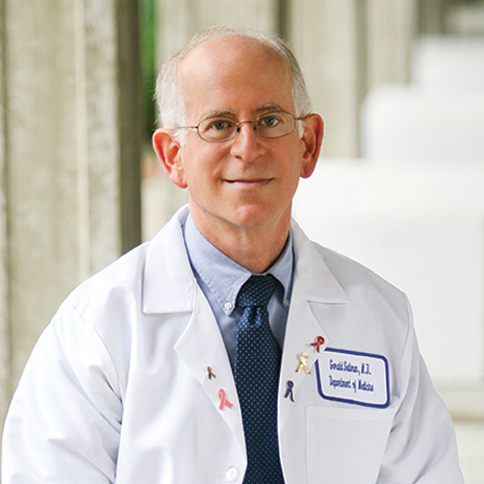

I had only been working at Kaiser for a few months in the early 1980s when a 60-year-old woman, whom I will call Ruth, came to my office saying she’d had right upper abdominal pain for one day.
It wasn’t severe, but she informed me that it was the same kind of pain that prompted the removal of her gallbladder a year ago. She was concerned that she was having another gallbladder attack. I told her that her pain could not be due to her gallbladder since it was no longer there and that most likely her pain was due to acid reflux.
I prescribed a medication to reduce stomach acid and advised her to go to the emergency department if her pain got worse. Well, the next day her pain did get worse. She went to the ER, and it was determined she needed emergency surgery.
The surgeon called me to explain she had a condition called choledocholithiasis. He said a gallstone had lodged in the common bile duct, the tube that carries bile from the gallbladder into the small intestine. This stone may have been there for years, or a gallstone may have slipped into the common bile duct during her gallbladder removal the year before. He assured me that she should have an uneventful recovery.
A month later I received a summons from the California Medical Board to appear in person for a hearing. Ruth apparently had reported my diagnostic error, and I regretted the anguish I must have caused her.
Medical errors are common. A 2014 analysis from the National Library of Medicine determined that diagnostic errors affect at least 1 in 20 U.S. adults every year. Other common medical mistakes include surgical errors, medication errors, equipment failures, patient falls, hospital-acquired infections and communication failures. According to a report from the National Institutes of Health in early 2024, “Medical errors have been recognized as a serious health problem, reported as the third leading cause of death in the U.S.” The article notes the estimation that more than 200,000 deaths annually are due to preventable medical errors.
The day arrived for me to appear before the medical board. Kaiser had arranged for me to meet with its head legal counsel beforehand. He told me to keep my answers short and, most importantly, not to volunteer information.
I felt my heart rate accelerate as I entered the medical board’s conference room, and I was directed to sit in the chair next to the chairman of the board. The hearing started abruptly. The chairman turned to me and fired, “Have you heard of choledocholithiasis?” Without hesitation, I responded “yes.” There was a brief pause as he mentally registered my response and then he said, “You can leave now.”
Two weeks later I received a formal notification from the medical board that my case was dismissed.
Even though the board absolved me, I did not absolve myself. I reflected that I had not behaved professionally with Ruth. I had felt too embarrassed to apologize, visit her in the hospital or even call her. I surmise that the encounter with the medical board probably would not have happened if I had demonstrated humility and acted responsibly. Early in my medical career, Ruth taught me a valuable lesson: We all make mistakes in life, but it’s how we behave afterward that defines who we are.
I learned another important lesson from this experience — to check with a patient at the end of a visit to see if expectations have been met. I now ask, “Have I addressed your concerns?” If I detect a patient’s needs have not been met, I may follow up and ask, “What were you hoping for from this visit?”
What can a patient do to avoid medical errors? The answer is to be involved with your health care. Don’t be timid to ask your medical provider if you have questions about your diagnosis, medications or tests that have been ordered. If you don’t agree with your doctor’s diagnosis, you should ask, “What else might explain my symptoms?” If you are unclear about followup, ask, “If I don’t get better as expected, what might be the next steps?”
While there are ways that doctors can be more attentive to their patients, the practice of medicine should be a team effort to provide the best care possible. As my case demonstrates, doctors must bear the responsibility to not cause any harm. Patients, too, must be active participants in their own care.