

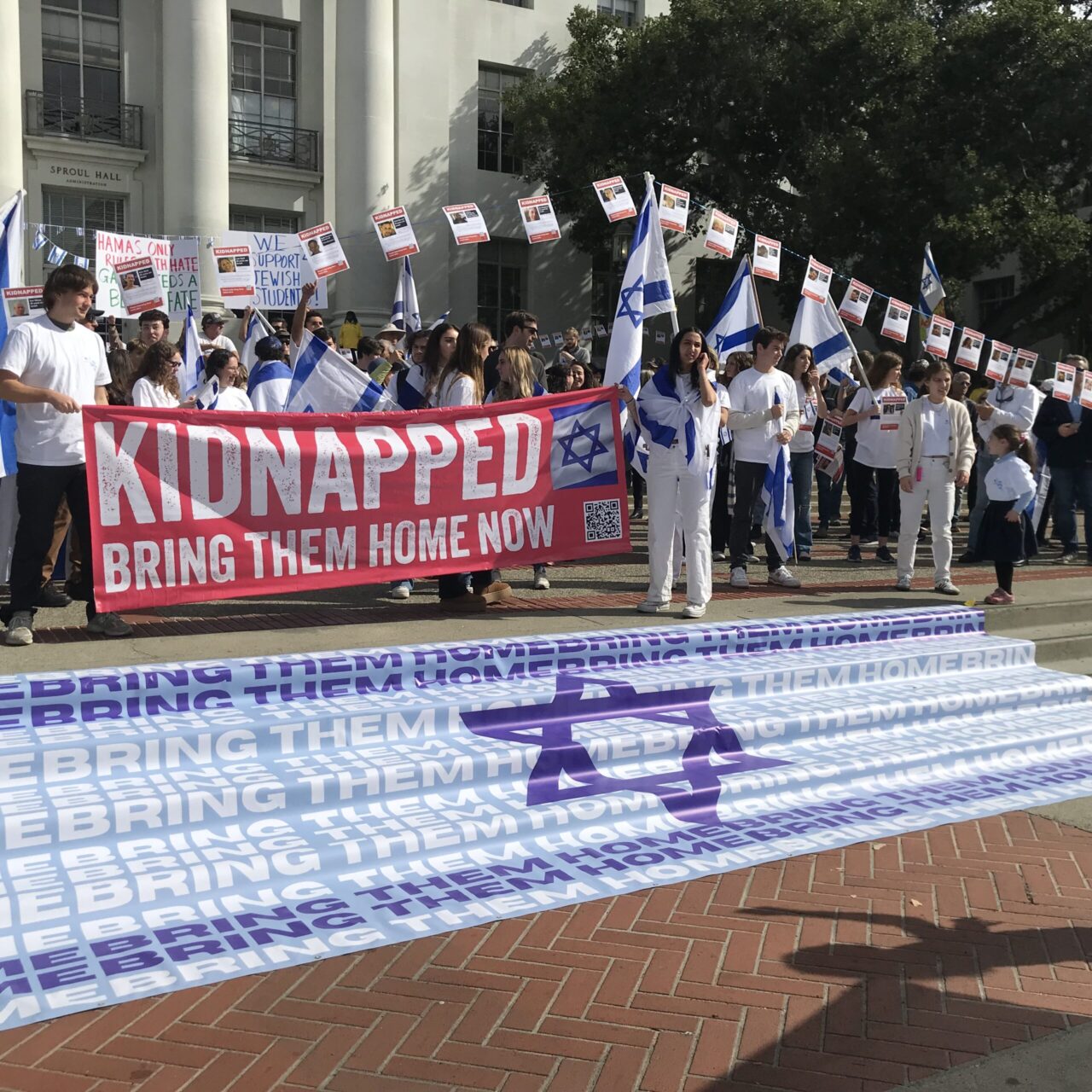
Jewish community leaders across the Bay Area are expressing reserved optimism that an end may finally be in sight to a dire chapter in Jewish history.
Israel and Hamas, the terrorist group that has controlled Gaza for nearly 20 years, reached a deal on Wednesday to cease hostilities after a 15-month war, the deadliest and most destructive of the Israeli-Palestinian conflict.
According to news reports, the deal would require Hamas to release the roughly 98 hostages, living and dead, in a series of excruciating phases, in exchange for the release of Palestinian prisoners and Israel’s withdrawal from Gaza.
Thirty-three hostages — children, women, the elderly and others with acute medical needs — would be released in stages over the first 42 days, according to press reports.
“It’s a clear mitzvah to bring home captives,” said Senior Rabbi Mark Bloom of Conservative Temple Beth Abraham in Oakland. Still, Bloom worries about the concessions made to Hamas and the possibility that the terrorist group could regroup and strike again.
“It could turn out bad,” he said Thursday. “I think most Americans don’t understand that there is a price that might be too high.”
The Israeli cabinet must still vote on the agreement. If everything falls into place, it could go into effect on Sunday or Monday. Conflicting reports add to the air of uncertainty and anxiety. In the meantime, fighting continues in Gaza.
Bay Area Jews who spoke with J. noted that other potential agreements have fallen apart. Still, the announcement this week of a deal allowed for a touch of hope after the heartbreak that began on Oct. 7, 2023, when Hamas invaded Israel, killing 1,200 people and taking 250 hostages and sparking a multifront war.
“The Federation rejoices with the people of Israel that a deal has been reached and many of the hostages will finally return home,” Joy Sisisky, CEO of the S.F.-based Jewish Community Federation and Endowment Fund, said in a statement. “At the same time, we remain concerned about the 65 hostages still held captive after this first phase and strongly urge their prompt release.”
Offir Gutelzon, an Israeli expat and tech entrepreneur in Silicon Valley who co-founded UnXeptable, a pro-democracy activist group, sees hope in the deal.
“The majority of Israelis believe we should choose life over war,” said Gutelzon, whose group formed to fight Israeli Prime Minister Benjamin Netanyahu’s judicial overhaul but then turned much of its attention to advocating for the hostages after Oct. 7. “Now that the door is open, we must make sure it doesn’t close.”

Jan Reicher is president of the Jewish Community Relations Council Bay Area and a former board member of Shalom Bayit, the domestic-abuse prevention nonprofit. “I’m very much bracing myself because it’s not completely celebratory,” she said about the release of hostages. “We’re going to be getting a lot of bad news, especially the women coming out and what they’ve endured — things we can’t even imagine, we’re going to learn. It’s going to be a triggering event, and it’s going to be prolonged. How can any of us with any ounce of compassion not be triggered?”
The impacts of the Israel-Hamas war have reverberated in Jewish communities across the globe as images of the destruction in Gaza filled newspapers, television screens and social media feeds, unleashing waves of anti-Israel and anti-Jewish animosity in schools, workplaces and in chambers of local governments.
Senior Rabbi Jacqueline Mates-Muchin of Reform Temple Sinai in Oakland said the war has led to a “heartbreaking” amount of hate in Oakland, including in the public school district, which dozens of Jewish families have left because of antisemitic harassment and staunch anti-Israel activism from teachers.
“I’ve heard of people breaking up relationships,” she said, over issues surrounding the war. “People have talked to me about feeling more isolated, feeling like the political circles that they used to be a part of don’t feel welcoming — or feel inappropriate at this point.”
While she is hopeful that a cease-fire could improve the situation in the Middle East, she is not optimistic it will calm anti-Jewish sentiment in the Bay Area.
“I think things are too far gone,” she said. “I think the roots of antisemitism run really, really deep.”
Bloom’s congregants, too, are intimately tied to Oakland. With every new development coming out of Israel, he said, they felt its effects in their daily lives whether in the form of hateful graffiti or tense interactions at school or work.
“They face this stuff every day, so there is hope in anticipation that it will die down slightly,” Bloom said. “But there are an awful lot of people invested in the destruction of Israel, still.”
For Myrna Melgar, a member of San Francisco’s Board of Supervisors, news of a deal brought some modicum of comfort after a year of destruction.
“Let me just say I am relieved and have prayed and desperately yearned for [the] release of the hostages and peace,” she texted J. while traveling Thursday.
The JCRC Bay Area, which has been actively combating antisemitism and strident anti-Israel sentiment across the region for the last 15 months, called the deal a “moment of hope.”
“Since October 7, 2023, the Bay Area Jewish community and Jews around the world have been in anguish over the mass murder of Israelis, the hostage crisis and ongoing war in Gaza, and the global surge of antisemitism,” JCRC CEO Tye Gregory said in a statement. “We hope this hostage deal — if executed in full — will mark the beginning of the end of this 15-month nightmare.”