
Food coverage is supported by a generous donation from Susan and Moses Libitzky.
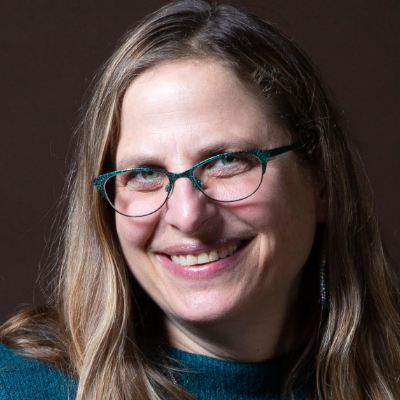
Hélène Jawhara Piñer understands that at first mention, a cookbook about matzah and flour might not grab the imagination. After all, she said, matzah has a long-held reputation as the “squared, crunchy, untasty” food we eat on Passover.
But Piñer is an academic who has studied medieval Jewish food culture in Spain and France, and she accepted the challenge of winning over matzah skeptics by writing a historical cookbook about it.
“Most people don’t know how matzah can be so exciting,” she said.
“Matzah and Flour: Recipes from the History of Sephardic Jews” (Academic Studies Press) will bring Piñer to the Bay Area next month for two appearances. She will appear at the JCC in San Francisco at 7 p.m. March 5 ($42 includes a copy of the book) and again at the Magnes museum in Berkeley at 5:30 p.m. March 6 ($20, book sold separately).

Piñer, 44, who teaches medieval history at Bordeaux Montaigne University and the University of Tours in France, said the idea for the new book grew out of her award-winning “Sephardi: Cooking the History. Recipes of the Jews of Spain and the Diaspora from the 13th Century Until Today.” After it was published four years ago, she was left with many recipes and stories connected to breads and flours that she didn’t have room to include.
She also wanted to expand people’s perceptions of what unleavened bread can be, especially since the term “flour,” at least in Sephardic cooking, can refer to varieties beyond wheat, like chickpea, chestnut, almond and semolina.
“At least for Sephardic Jews, going back to the 15th century, we have so much scientific evidence concerning different unleavened breads they were eating for Passover, but for other holidays, too,” she said.
Piñer’s academic interest in Sephardic Jewry is connected to her interest in her own identity. While she wasn’t raised Jewish, she said she was drawn to Judaism and Jewish people at a young age, and she believes she has Jewish roots on both sides of her family.
Her paternal grandmother’s roots are in Andalucia, Spain, where a Jewish community flourished before the Inquisition. Her grandmother has spoken at length about preparing certain foods for Easter (falling right around Passover), even going so far as to say, “You shouldn’t make this dish with flour, so use chickpea flour.” (Chickpea flour is a common Sephardic ingredient that under Sephardic dietary laws is kosher for Passover.) Her grandmother also prepared special meals for Friday night dinner, without making any reference to Shabbat.
“It’s very bizarre, but quite common,” Piñer said about women of her grandmother’s generation, many of whom follow certain Jewish traditions while seemingly unaware that they are doing so, or of their origins. She has also found variations of her last name in historical records of Inquisition trials of Jews from Brazil and Mexico.

While she prefers to keep specific details about her own Jewish journey private, she said, she is “returning” to Judaism.
Piñer’s academic studies began in the Spanish language, but she’d always been fascinated by the connection between food and religion and how they influence each other. Food is also more than just a passing interest in her family; on her mother’s side, most of her relatives are in the food industry in some capacity, as butchers, caterers and chefs.
“I think every job in the food field” is covered, she said. On her father’s side are enthusiasts who just love to eat.
“It’s a great combination of giving me the background in both the technique in cooking, and the practice of eating,” she said.
Piñer’s book is interesting from the get-go. It opens with a recipe for “Ancient Judean Bread,” in which cooked leek, shallot and garlic are kneaded into a flatbread dough. There are also recipes for the breads cited by Moses Maimonides, otherwise known as the Rambam. This Jewish sage had much to say about how to stay healthy, and eating well was part of that.
“Everyone knows of Maimonides as a rabbi and doctor and lawyer, but he was also a dietitian, and his writings about dietary practices were always informed by Jewish dietary laws,” she said.
Also notable is that matzah appears in many holiday recipes that are not for Passover. For example, before the Yom Kippur fast, flour is kneaded with chicken broth to make an unleavened bread to eat with a Spanish chicken soup called puchero. (The recipe is included in the book.)
Piñer also relied on what’s known as “The Cookbook,” a 13th-century manuscript from Andalucia written in Arabic that is widely considered among the first of its kind. It includes Jewish recipes.
“Matzah and Flour” is full of recipes for mouthwatering dishes that Converso Jews ate, but so many of these dishes have an unfortunate history. What these undercover Jews ate often pointed to their secret origins, and their neighbors would use the clues to report them to the authorities. Many of the recipes’ headnotes tell such a tale.
One example is a delicious and unusual (to Ashkenazi taste buds) sweet soup for Passover called hormiguillos, with milk, honey, almonds and unleavened bread crumbs as its main ingredients. When a woman named Elvira made it for her household during Passover in 1486, one of her servants reported her to the authorities.
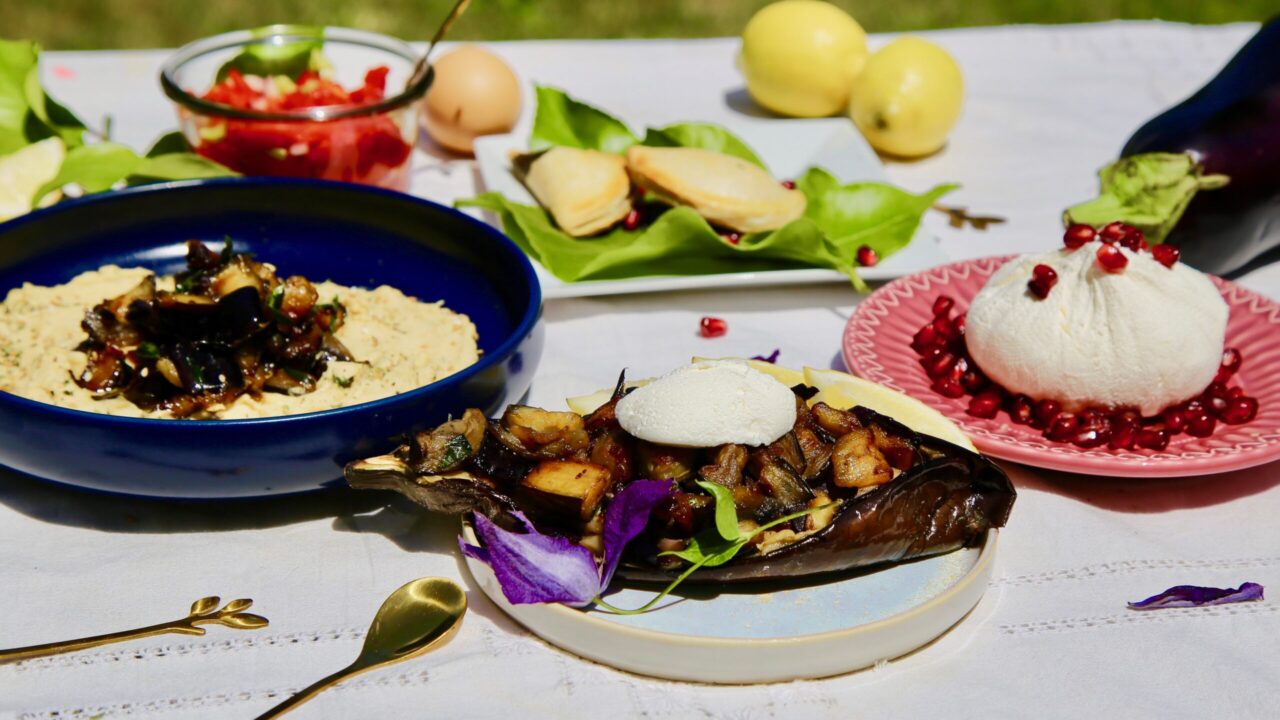
“Matzah and Flour” is a cookbook of its time, with abundant and gorgeous photography, and readers are bound to learn something with each recipe headnote. For example, we learn about a bitter-tasting herb called sow thistle that was used by Andalusian Jews.
In addition to the recipes found in historical sources is a section called “Creations,” which features some of Piñer’s own recipes inspired by Sephardic ingredients, like a date and pomegranate cake for Rosh Hashanah.
“This book is very important to me because it’s a tribute to our ancestors, and because I’ve heard people say there’s no Sephardic food,” Piñer concluded. “I wanted both of my books to prove the richness of our different Sephardic cuisines. These recipes are not from my grandma, but I found them from historical sources dating back centuries, and this proves that our Sephardic heritage has existed for a very long time.”