

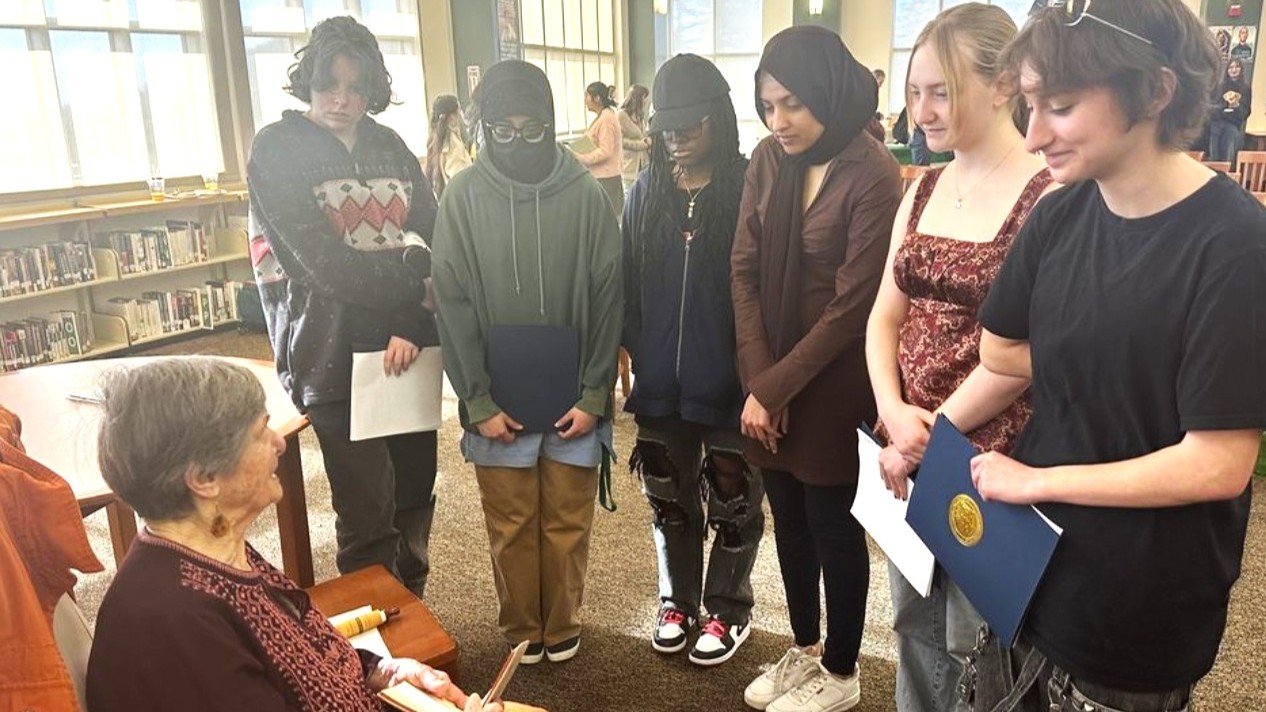
At a time when Millennials and Gen Z have shown staggering levels of ignorance about the Holocaust, a new bill in California seeks to create state-level oversight of such curriculum in local schools and provide grants to help teach it.
The bill’s introduction follows the January publication of a statewide study of Holocaust and genocide education that found little consistency in how the topic is taught in K-12 schools. Only 26% of the local education agencies — public school districts and publicly funded charter schools — that responded to the survey, from both urban and rural areas, had a formal curriculum in place, the study found.
Authored by state Sen. Henry Stern (D-Los Angeles), Senate Bill 472 would establish the Holocaust and Genocide Education Grant Program, which would provide direct allocations to school districts.
“The fact that so few school districts … attested to teaching about the Holocaust was alarming and deeply troubling,” Stern told J. this week in a text message. Speaking of the rapper Ye, he added, “as Kanye sells millions of swastika T-shirts, and Nazi salutes become commonplace sightings, California’s public schools may be our last line of defense from a future where the truths, and lessons of the Shoah are forgotten.”
The bill, introduced on Feb. 19, includes reporting requirements for all districts about how they implement Holocaust and genocide education.
The reporting requirements, supporters of the bill said, is key to ensuring that schools follow the long-established mandate for Holocaust curriculum.
“The annual reporting requirements will increase implementation of existing law while encouraging accountability and transparency,” according to the S.F.-based Jewish Family and Children’s Services Holocaust Center.
Holocaust and genocide education was mandated in California in 1985, but not all school districts have incorporated it into curriculum.
In the Bay Area, the recent statewide study found, just 25% of the local agencies that responded to a survey indicated that they offer Holocaust and genocide education.
State Sens. Ben Allen (D-Santa Monica) and Scott Wiener (D-San Francisco) coauthored the new legislation. The Jewish Public Affairs Committee of California (JPAC) and the JFCS Holocaust Center are the bill’s sponsors, meaning they helped develop it and will advocate for its passage. Stern is a member of the California Legislative Jewish Caucus; Wiener is co-chair of the group of 18 state legislators.
For Stern, who has family who survived the Holocaust, the legislation is a personal issue. He previously told J. that Holocaust curriculum used by many of the state’s schools is “pretty stale,” noting that most haven’t updated it since the 1980s.
David Bocarsly, executive director of JPAC, described Stern as a “leader in the legislature on this topic” and an “incredible champion for expanding Holocaust and genocide education.”
The bill would establish a Holocaust and Genocide Education Grant Program Fund. The state Department of Education would determine criteria for the grants and administer the program. The size of the grants isn’t part of the bill. SB472 would also require local education agencies to submit annual reports about their genocide and Holocaust education, regardless of whether they receive grants.
Bocarsly told J. in a phone interview that Stern’s bill is the “first effort” in implementing the policy recommendations outlined in the recent statewide study. “In future years, we’ll look to administer additional proposals,” he said.
SB472 is the latest display of support for strengthening Holocaust education in California.
In 2021, Gov. Gavin Newsom formed the Governor’s Council on Holocaust and Genocide Education. The council, which convened for the first time in 2023, is tasked with promoting and improving education about the Holocaust and other genocides. The council is co-chaired by Stern, JFCS executive director Anita Friedman, state Superintendent of Public Instruction Tony Thurmond and state Attorney General Rob Bonta.
The state’s Holocaust and genocide education is “top notch,” Friedman said in a statement, but “we need to see it included in more classrooms so that our students are taught these important lessons.
Friedman praised the new bill for including grants and reporting requirements.
The “best pedagogical practice requires both resources for teachers to be able to teach and assessment of teaching results in order to ensure that our efforts are successful,” Friedman said in an email to J.
With antisemitic and other hate incidents on the rise, the strengthening of Holocaust education is viewed as an effective way of building empathy and more pluralistic attitudes among young people, Bocarsly said.
“Holocaust and genocide education is anti-hate education,” he said. “It’s critically important to create a more tolerant generation. This is something we’ve prioritized over and over again. Now we’re looking forward to ensuring all schools have it.”
The bill’s chance of passage isn’t clear yet. But Stern is unambiguous in his belief that Holocaust education can help fight the rapid rise of antisemitism.
“It’s just so in our face, and I swear this has got to be the antidote,” Stern told J. in a phone call. “So, that’s the hope here.”